Start with the holder you use
Graded cards may be in holders from different services, and your collection may contain more than one format. Record the holder types and measure an example when checking a supply listing. A general phrase such as graded-card sleeve is a category description, not confirmation that the product matches every slab in your collection.
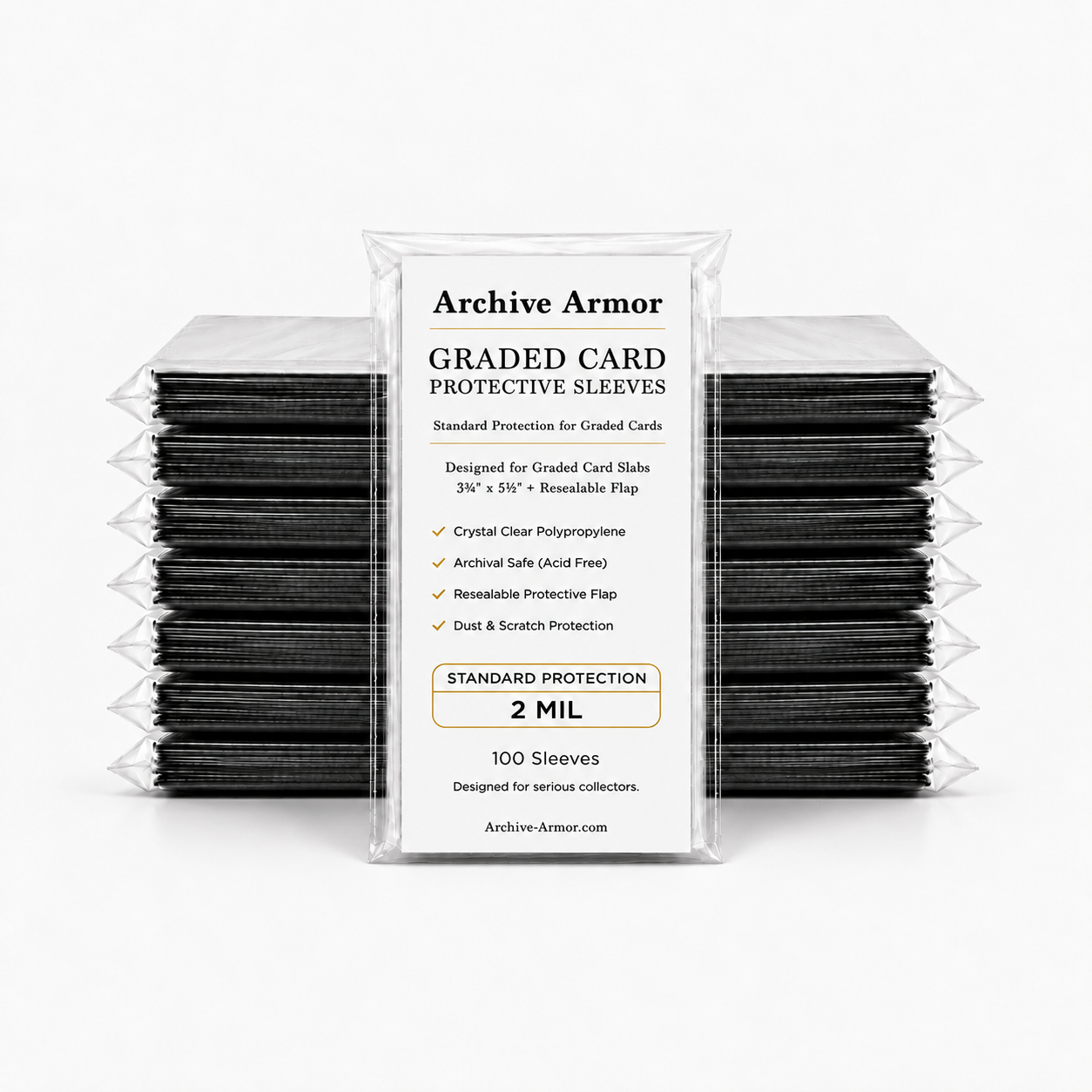
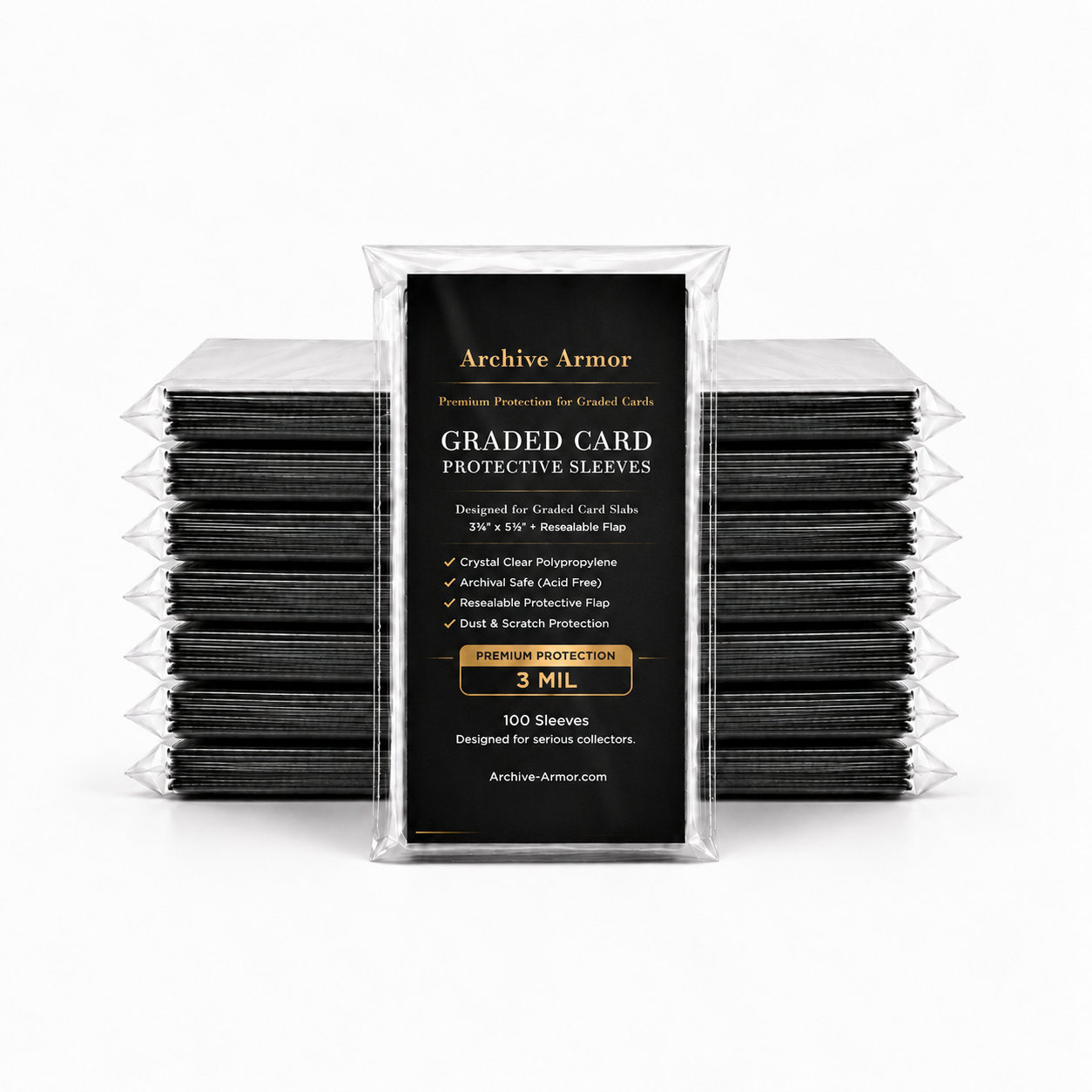
Compare the product's stated dimensions and intended use with your actual holder. Look at how the listing describes the opening and closure, and review the product photographs. If fit is unclear, resolve that question before choosing a large quantity. A small, deliberate compatibility check is easier than reorganizing an entire supply system around an assumption.
Archive Armor sleeves for graded card slabs
Archive Armor provides protective sleeves for graded card slabs. Use the linked Archive Armor site and marketplace listings to review specific products, dimensions and pack quantities. Match the particular product to the particular holder rather than applying a claim from one listing to the entire product range.
An outer sleeve is a separate item from the grading company's holder. It does not change a card's grade or authenticate the slab inside it. Select it for its stated purpose and follow the product information provided. Do not infer water resistance, ultraviolet protection, chemical composition or archival certification unless the exact listing supports that claim.
Choose quantity around actual use
A personal collection, an actively traded group and a dealer's handling workflow can consume supplies at different rates. Count the holders you intend to sleeve, note any formats that require separate products and identify how many replacements you reasonably need. This is a more useful starting point than selecting the largest pack simply because it is offered.
Read quantity wording carefully. Distinguish individual sleeves from packs, and check whether a listing offers multiple selectable variations. Confirm the chosen size and count again before completing the marketplace transaction. Save that product identification in your records so a future reorder matches the supplies you have already found suitable.
Make supplies part of an organized workflow
Keep unused products identified by size and intended holder rather than combining similar-looking sleeves in an unlabeled drawer. If several people handle the collection, a simple size reference beside the supplies can reduce mix-ups. Separate unused supplies from materials removed from incoming packages so that their condition and origin remain clear.
Check the fit and visibility of the label after applying a sleeve. Keep certification numbers and the card itself easy to inspect. If a supply interferes with reading or identification, review whether it is the correct product or whether a different arrangement is needed. Organization should make inspection simpler, not conceal information.
Connect supplies with collection records
For graded sports cards and Pokémon cards, retain the card identification, service and certification information independently of any outer packaging. A sleeve can be replaced; the collection record should still identify the item. For other collectible categories, seek supplies intended for that object rather than assuming a card-slab product serves the same purpose.
Review the current product listing for specific dimensions, quantity, included items and transaction terms. Use the sports-card and Pokémon sections to continue browsing collectibles, or return to the collector guides for condition and identification context. The goal is a repeatable system in which the right supply is easy to identify, use and reorder.
Archive Armor
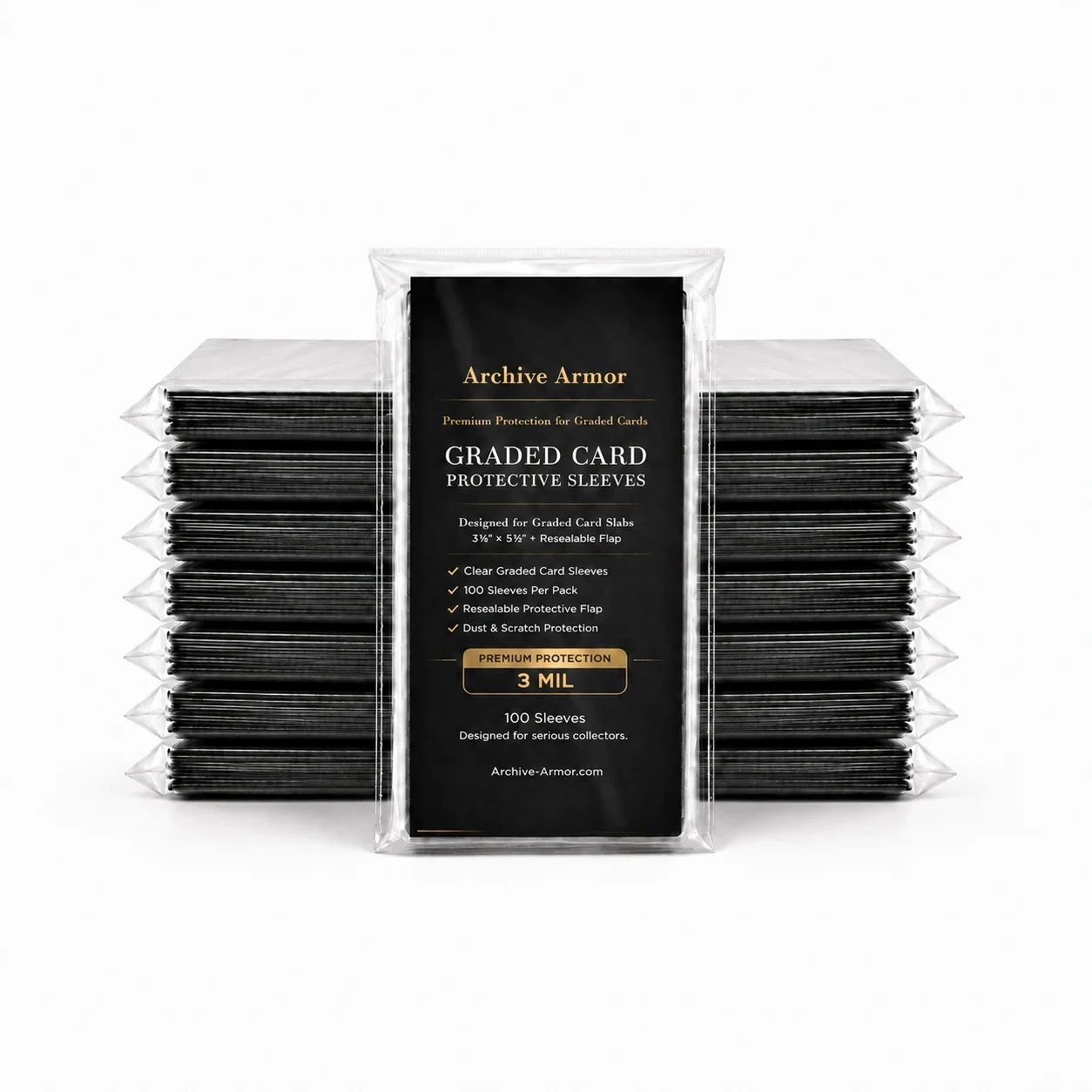
Protective sleeves for graded card slabs. Choose the size and thickness that fit your holder and handling needs.
Explore Archive Armor ↗Explore the actual listings.
Read the item description, photographs, condition notes and terms on eBay. Selection and availability change.
Browse Current Collecting & Storage Inventory ↗Explore Collecting & Storage ↗