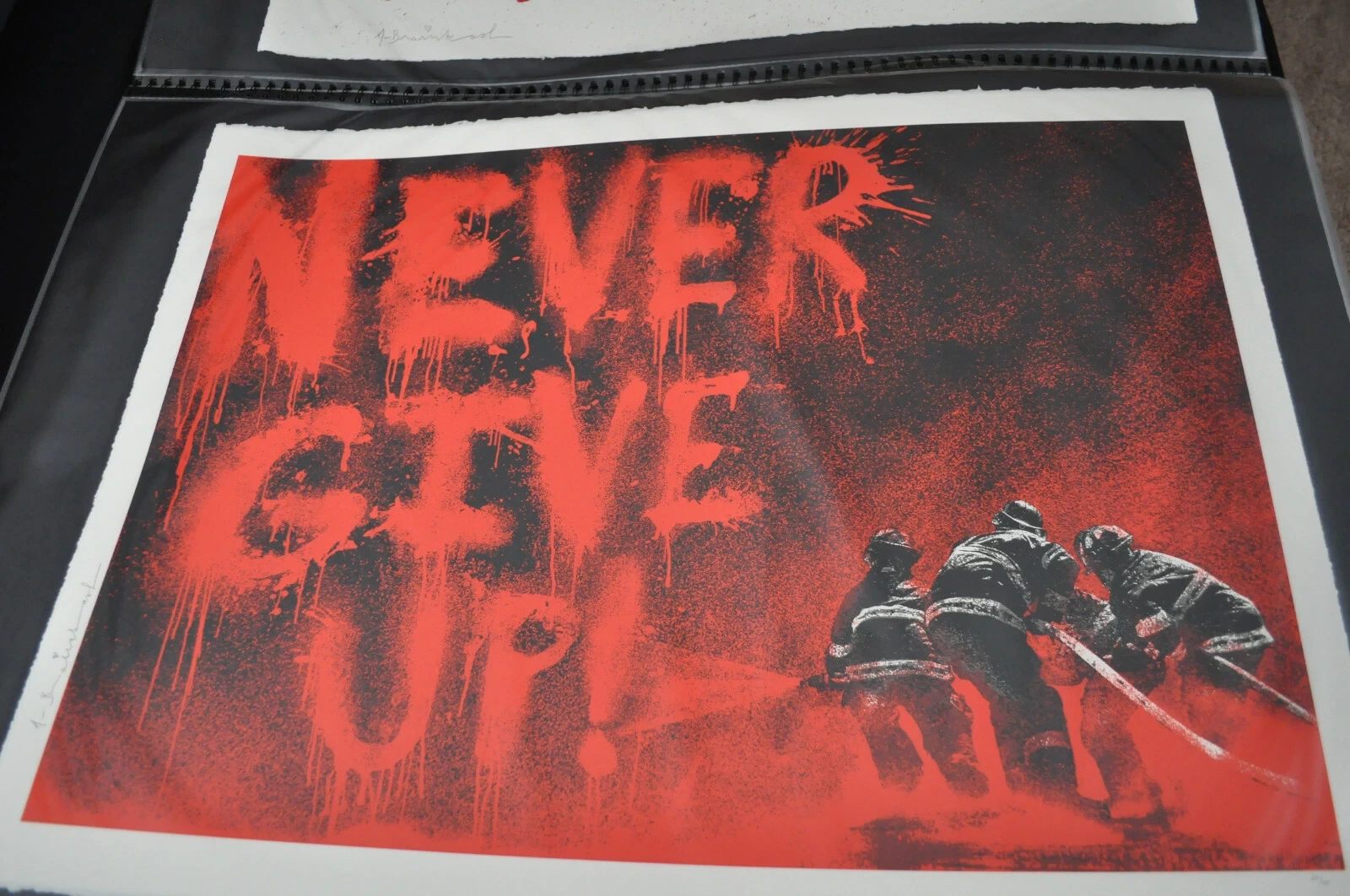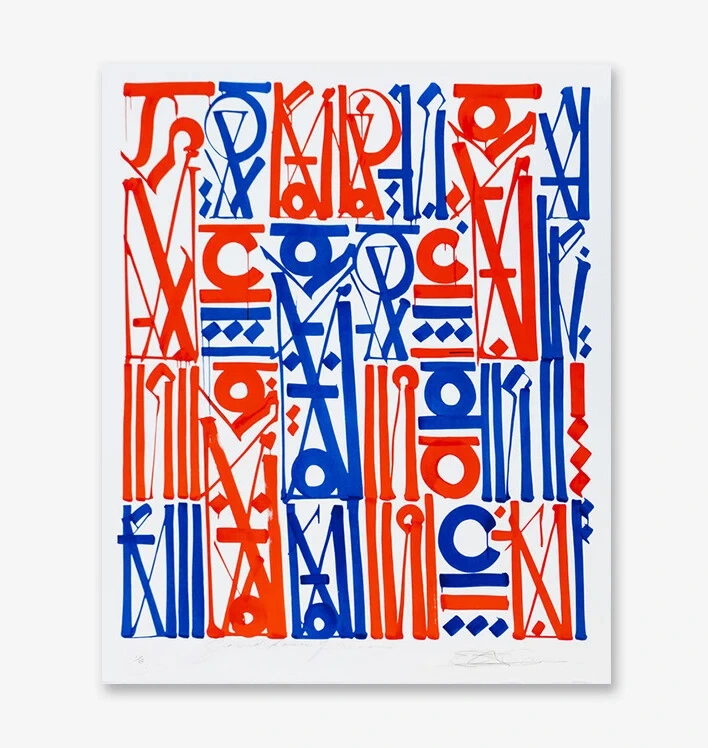
Explore the artists
The artist directory includes Shepard Fairey, Mr Brainwash, KAWS, Ben Eine, RETNA, Dave Kinsey, Jeremy Geddes and Zach Johnsen. Each page explains practical distinctions relevant to that artist’s work, from identifying a print release to checking a portfolio’s contents. Follow the artist links to narrow your browsing without losing the supporting collector information.
If you are still choosing a direction, compare what draws you to the work: lettering, a figure, a composition, color or the way the image occupies a wall. That preference is a useful starting point. The next step is identifying the actual object that carries the image.
Understand the format you are buying
A screenprint, an offset print, a hand-finished edition and a painting need different descriptions. Read the stated medium and support, then check the dimensions. An image may appear in more than one format, so matching a familiar design is not enough to establish that two listings offer equivalent objects.
For works on paper, distinguish image size from sheet size. For framed art, add the frame’s exterior measurements. These details affect both comparison and display: a tightly cropped photograph can make a modest sheet look as imposing as a much larger work.
Read editions and signatures with care
A signature and an edition number describe different aspects of a print. Record them separately and compare them with the relevant release information. Proof marks, color variants and hand additions require their own explanation. The guides below show how to read those terms without treating them as automatic quality rankings.
If documentation is included, ask who issued it and how its details connect to the artwork. A useful record brings the title, medium, dimensions and identifying marks together. Preserve that record after purchase so the object remains accurately described.
Look at condition beyond the main image
Request clear views of the full work and any area that matters to your decision. For prints, corners, margins and surfaces deserve attention. For framed pieces, establish whether the seller has examined the work outside the frame and what remains concealed. A polished presentation should not replace a concrete condition description.
Judge disclosed issues in relation to your collecting goal. A margin defect may matter differently if you plan to display the full sheet. Do not assume framing can repair an issue, and include appropriate presentation costs in the purchase decision.
Use the guides to answer a specific question
Start with the limited-edition buying guide for a complete review process. Use signed versus numbered prints when the listing’s markings are unclear, or the edition-number guide when you need to transcribe a fraction or variant correctly. The artist-proof guide explains proof terminology, while the storage guide helps plan what happens after delivery.
You do not need to research every technical term before enjoying art. Concentrate on the unanswered questions that could change your decision about the particular work in front of you.
Browse the available work
Current purchase opportunities and transaction details appear in TrendingArt’s eBay listings. Follow the relevant artist or fine-art inventory link, then review photographs, condition, included materials and delivery terms. Availability can change while these collector pages remain useful.
If you have artwork to sell, use Sell Your Collection to share photographs and identifying information. Include dimensions, medium, signatures, edition details and available documents so the collection can be reviewed without relying on a vague artist-name list.
Sources & further reading
Primary references for the terminology and factual details discussed above.
Explore the actual listings.
Read the item description, photographs, condition notes and terms on eBay. Selection and availability change.
Browse Current Art Inventory ↗Explore Art ↗