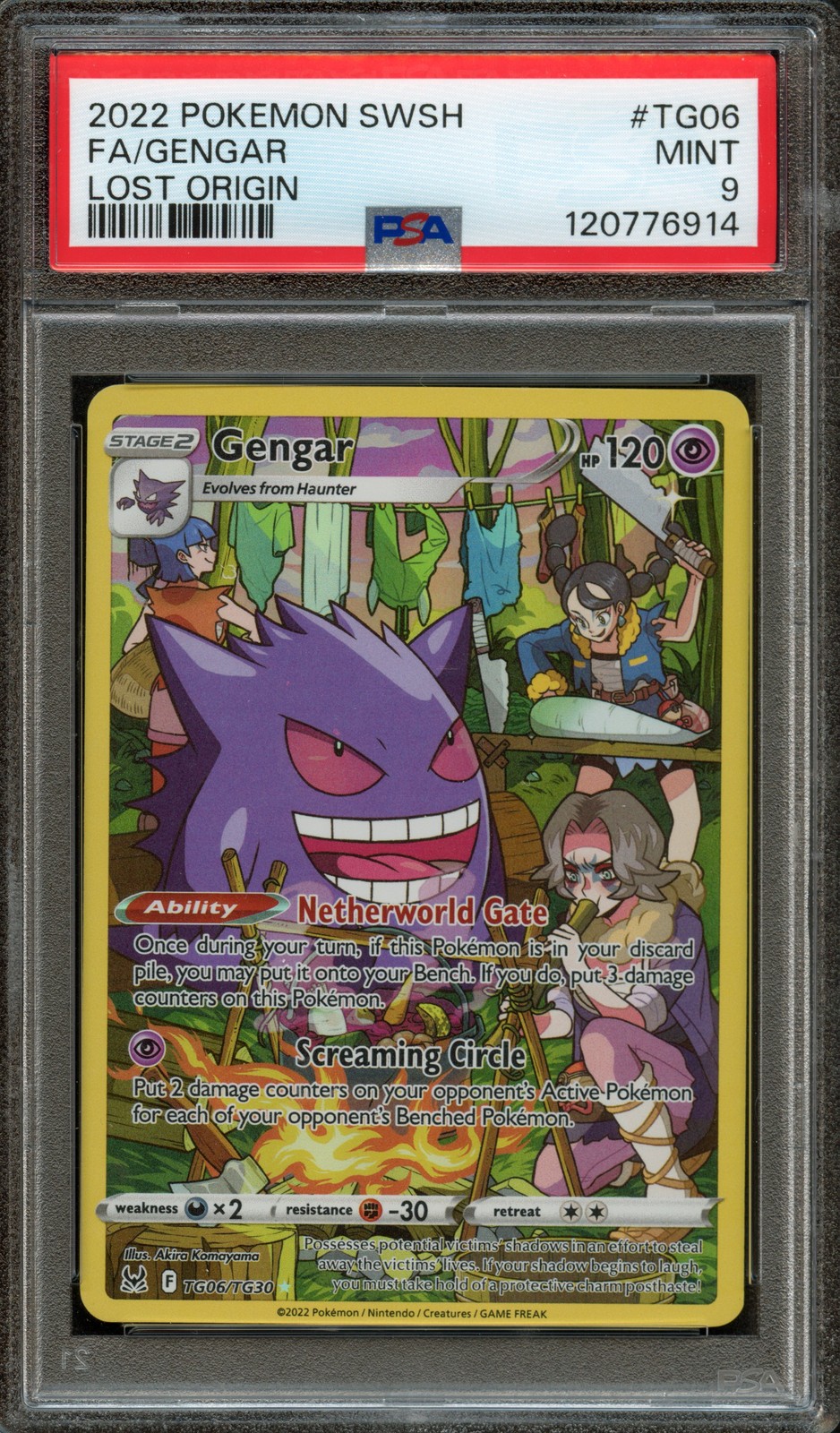
First locate the mark
View the holder under soft light from more than one angle. A reflection, a mark on an outer sleeve and a scratch on the plastic can look similar in a single photograph. Remove only the separate outer sleeve if needed, handling the intact slab carefully. Do not pry at the case to investigate something that appears internal.
If the card is being purchased online, ask for an additional view showing the specific area. A seller should distinguish disclosed holder damage from card condition. Save the images and clarification with the purchase record. When uncertainty cannot be resolved, judge the purchase on the evidence available rather than assuming the easiest explanation.
Create a clean handling area
Set aside a clear workspace before opening a box of slabs. Remove loose packing staples, tools and objects that could contact the holder. Keep food and drinks elsewhere. Lay out only the cards needed for the current task and return them to storage promptly, reducing the chance of a temporary stack becoming a permanent desk fixture.
Lift slabs instead of sliding them across the work surface. Handle one at a time when photographing or sorting. If you use a mat, inspect it for debris first and maintain it as carefully as the cards. A soft-looking surface is not helpful if it contains particles that can rub against the case.
Use a fitted outer sleeve
Choose a sleeve sized for the holder, with room for its thickness and closure. Forcing a slab into an opening makes handling more awkward and can damage the sleeve. Test a sample before committing to a large quantity, especially if your collection contains several grading companies or older holder styles.
Insert and remove the slab with the sleeve opening fully clear. If the product uses an adhesive flap, keep that adhesive away from the holder. Replace a sleeve that is torn, dirty or badly scuffed. The goal is a replaceable layer that takes routine contact; the sleeve does not erase existing scratches or establish any new protection guarantee.
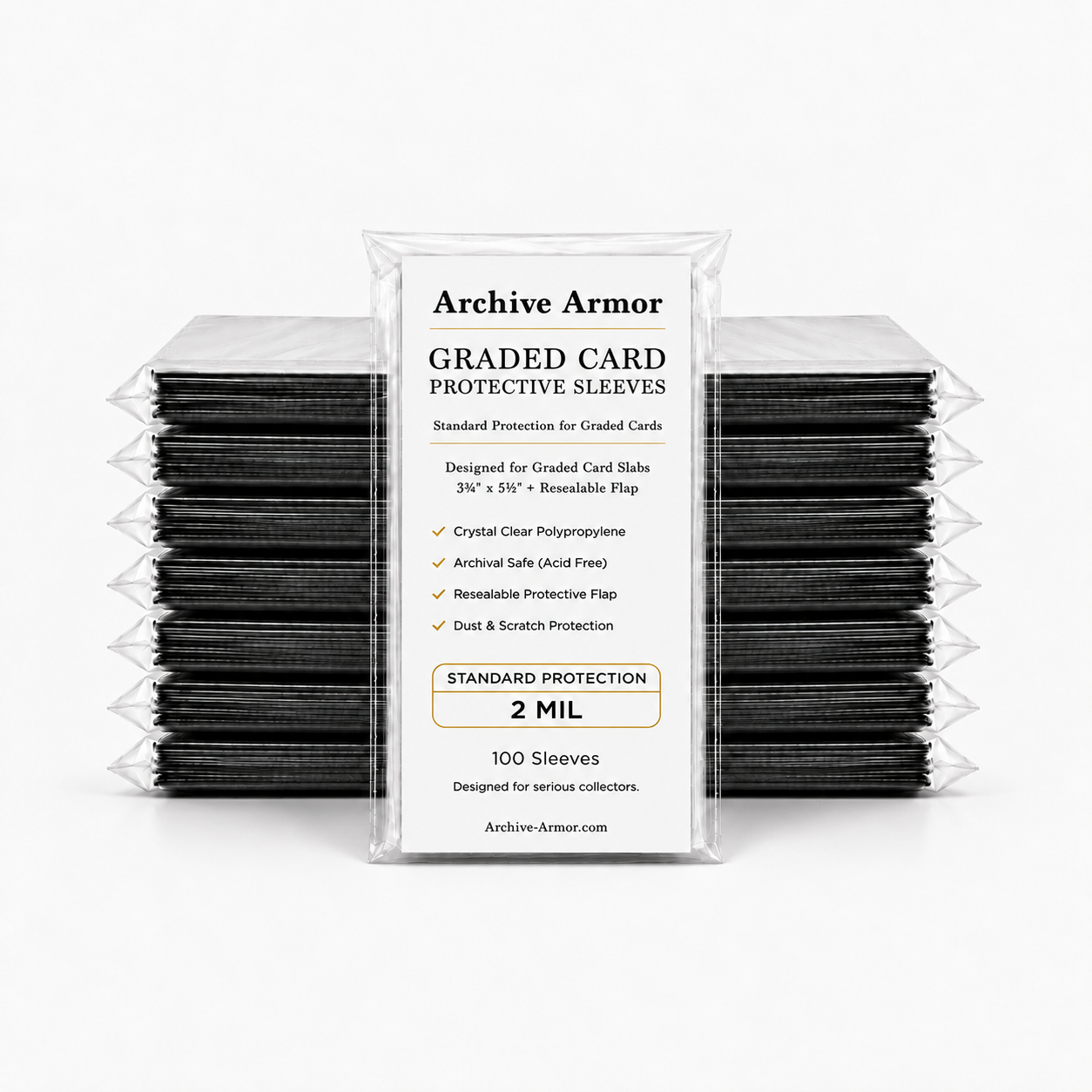
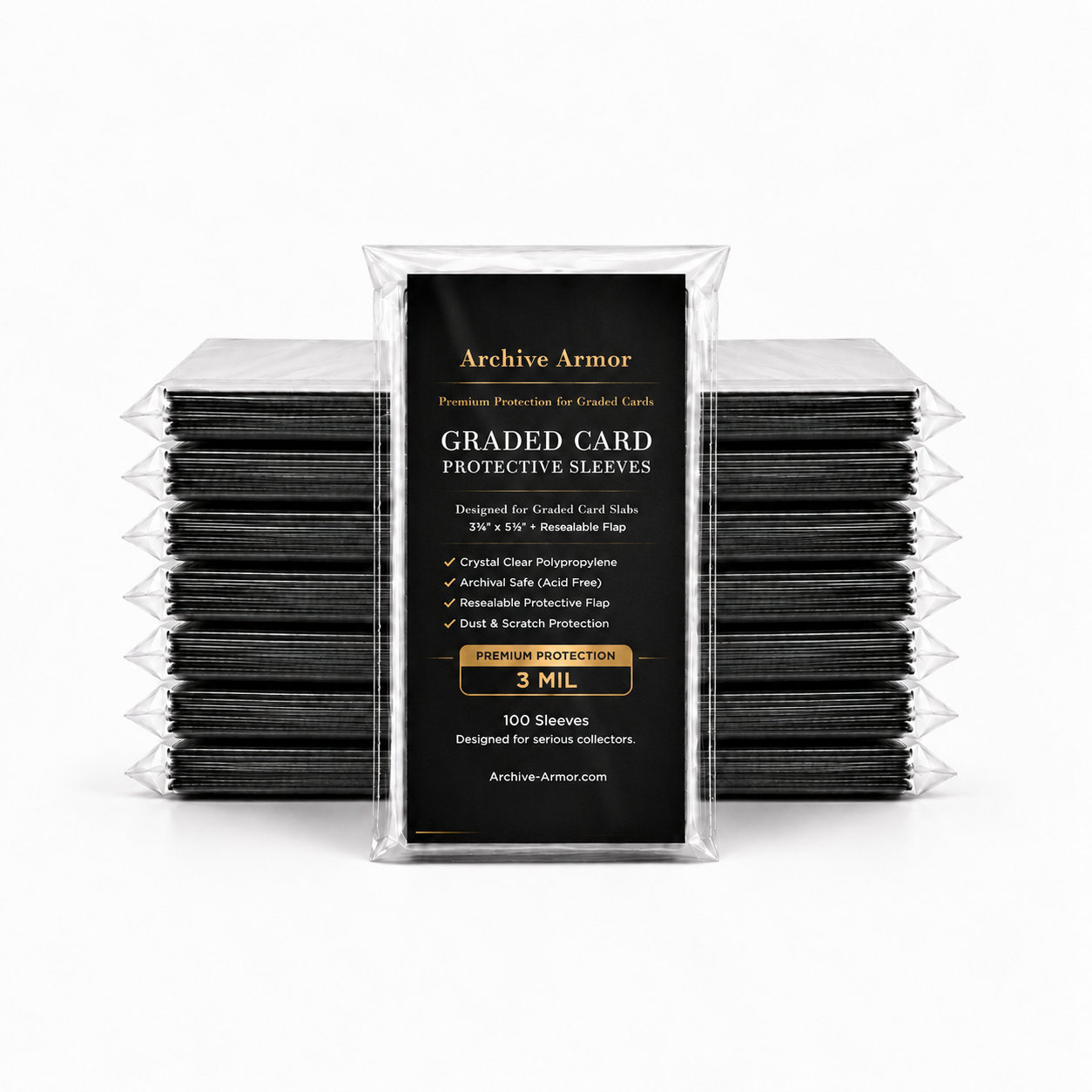
Archive Armor offers protective sleeves for graded card slabs. Review the current size and material information for the particular product. Thickness alone does not prove a sleeve fits better or provides UV, water or archival protection.
Stop holders from rubbing in storage
Use a box or case that supports slabs without overcrowding. Leave enough access space that you can lift a card out without dragging it tightly against its neighbors. Secure partially filled rows with suitable dividers. If a lid presses on the holders, the container is not correctly fitted for that arrangement.
Separate unusual slab sizes and inspect display stands for rough contact points. For transport, ensure holders cannot move freely and strike each other. Recheck the packed container gently before travel; an attractive case with poorly fitted contents still allows movement. Avoid placing loose keys, price clips or other hard objects in the same compartment.
Be cautious with cleaning and polishing
Do not assume a household glass cleaner or plastic polish is approved for a grading holder. Case materials and finishes vary, and a cleaning experiment can create haze or residue. Follow the holder manufacturer's guidance. If a mark does not come off through an explicitly supported method, stop and ask rather than escalating to abrasives or solvents.
Never attempt to clean the card through a gap or introduce liquid into the holder. A damaged seal is a reason to consult the grading company, not an invitation to repair it with tape or glue. Preserve photographs of the case as received if the issue concerns a recent purchase.
When reholdering is the sensible question
PSA identifies superficial scuffs, scratches and certain other exterior wear as common reasons collectors use its reholder service. Eligibility and inspection still apply. Its published process generally preserves the grade and certification number for eligible items, but that is not an unconditional promise for every damaged holder.
Compare the cosmetic concern with the service cost, shipping and handling involved. A minor mark that does not impair viewing may not justify immediate action. A crack, questionable seam or internal concern deserves direct guidance. Other grading companies have their own procedures, so consult the company named on the label.
Common questions
Does a scratched holder lower the card's printed grade?+
An exterior scratch and the condition of the card are separate. The existing label remains the record of grading, but a buyer may still care about holder condition. Internal damage or a compromised case requires separate evaluation.
Should I polish a slab before selling it?+
Use only guidance supported by the holder manufacturer. Disclose visible case wear and consider the grading company's reholder process rather than experimenting with abrasive products.
Sources & further reading
Primary references for the terminology and factual details discussed above.
Explore the actual listings.
Read the item description, photographs, condition notes and terms on eBay. Selection and availability change.
Browse Current Collecting & Storage Inventory ↗Explore Collector Supplies for Graded Cards & Collectibles ↗