Identify the format before the image
Ask for the title, full sheet dimensions, signature and edition notation. An image alone may not distinguish a large limited print from a smaller reproduction included in a portfolio. If the listing uses “portfolio,” establish whether it refers to an original group of reproductions or merely the seller’s storage folder.
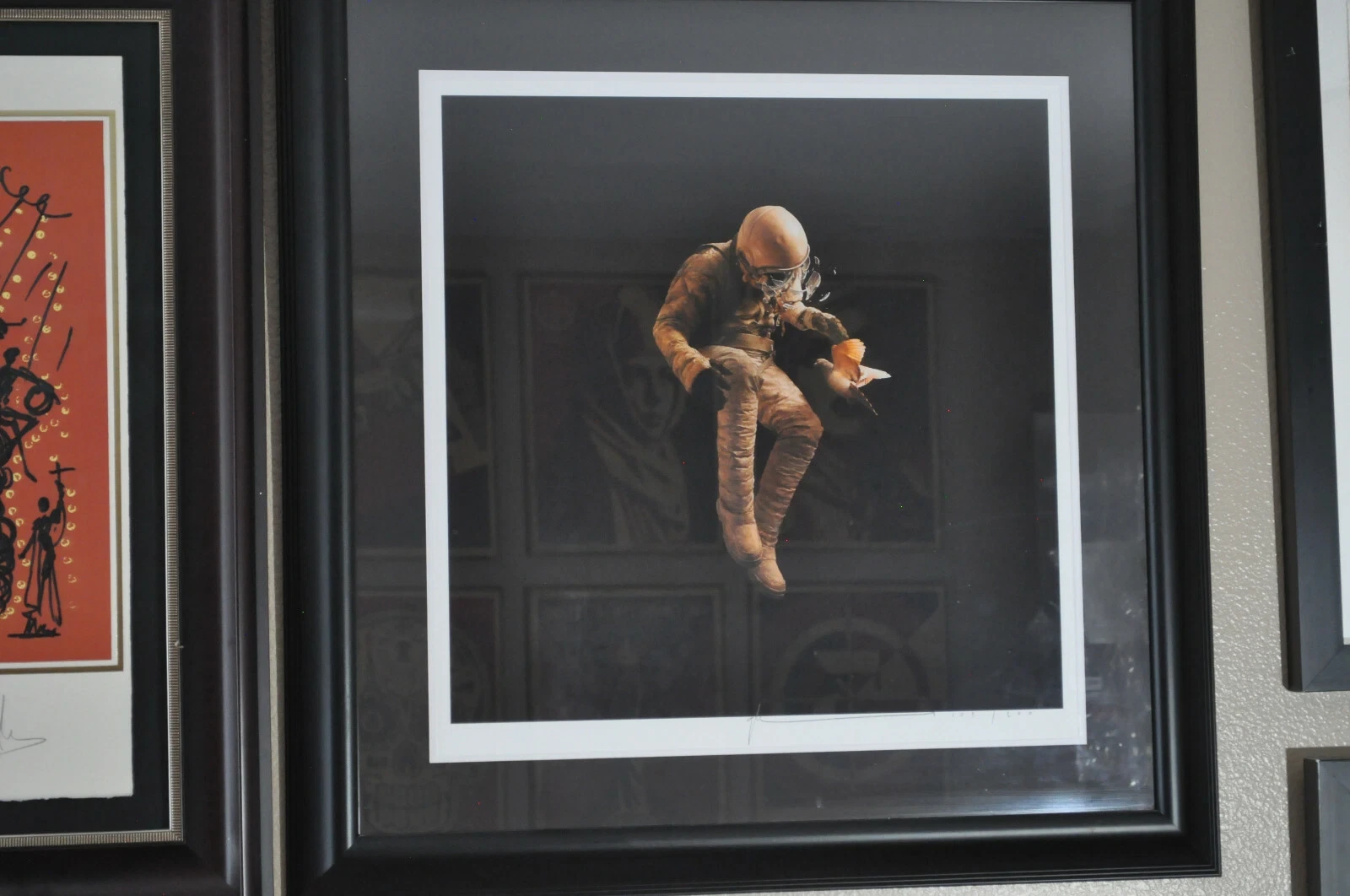
Do not assume that an unsigned work is missing a signature that should be there. It may belong to a format intentionally released without one. Equally, an image presented in a frame should not be described as a limited print unless the physical object and documentation support that description.
Check the studio’s information for the release
The official site describes its limited prints as produced by Image Science using fine-art paper and archival inks. Use the individual release record to identify the relevant size and edition, rather than applying a specification from another work. When a seller supplies an original order confirmation, compare the item description with the sheet being offered.
If an edition includes more than one format, keep the format in your notes and searches. A title can identify an image while leaving out information about which physical version you are reviewing. Matching the image is only one step in matching the object.
Look closely at quiet areas of the image
Where a composition contains pale backgrounds, subtle tonal transitions or open areas, surface marks can be more apparent in person than in a small listing photograph. Ask for detailed views of those areas, along with the corners and margins. If a mark might be a reflection, ask for a second angle.
Photographs should be sharp enough to evaluate the object without using extreme processing that changes its appearance. A dramatic close-up of the image is attractive, but it is not a substitute for a clear photograph of the entire sheet. You need to see how the image sits within the paper.
Ask about storage and previous framing
The studio’s terms describe rolled shipment for limited prints. A sheet arriving rolled is therefore not automatically evidence of improper treatment. What matters is its actual condition and how it has been handled since release. Ask whether the work has been stored rolled, stored flat or previously framed.
A persistent curl, crease and dent are different observations. Ask the seller to describe what is visible rather than promise that every issue will disappear after framing. If a work needs flattening or has surface damage, consult an appropriate professional before trying heat, moisture or pressure at home.
Evaluate complete portfolio contents
For portfolio reproductions, request a list of included images and photographs of the contents. Confirm whether a cover, envelope or descriptive sheet is part of the original presentation and whether it accompanies the sale. Judge this format on its own terms instead of comparing its price directly with a signed edition.
A portfolio can make sense for someone who wants several images in a compact format. A limited print may suit someone seeking a larger individual work with its documented edition details. Decide what matters to your collection before allowing the shared image to blur that difference.
Plan framing and keep a usable record
Measure the paper and intended wall location, then allow for mats and frame depth. A large pale sheet may be visually different in a room from the tight image crop in an online listing. Ask a framer about materials and mounting appropriate to the particular work before selecting an aesthetic treatment.
Save the listing, receipt and release reference with photographs of the signature and edition number when present. Keep information about portfolio reproductions equally clear so they are never accidentally described as signed editions in a later collection inventory. Browse current TrendingArt listings for availability and read each item’s own condition and included-materials description.
Common questions
Is an unsigned Geddes portfolio image necessarily incorrect?+
No. The studio describes its portfolio sets as unsigned and unlimited. Identify the format before judging whether a signature is missing or deciding which kind of print you want.
Should I compare portfolio reproductions with limited prints directly?+
Compare them as different objects. Their dimensions, edition status and intended presentation may differ even when an image is related or familiar.
Sources & further reading
Primary references for the terminology and factual details discussed above.
Explore the actual listings.
Read the item description, photographs, condition notes and terms on eBay. Selection and availability change.
Browse Current Art Inventory ↗Explore Collectible & Contemporary Art ↗