Treat size and format as part of the title
Write down the complete listing description, including words such as mini print, screenprint or print pack. Those are practical differences, not expendable marketing language. A smaller reproduction may be an intentional format with a different purpose from a larger print showing a related image.
If you are searching for a particular work, include its dimensions and format in your comparison notes. The artist’s shop includes named versions and groups, so an image match on its own is insufficient. Request a photograph of the full sheet beside a ruler if the listing’s measurements are ambiguous.
Distinguish printing methods without ranking them automatically
The artist’s catalog includes screenprinted and Risograph examples. Identify the technique used for the offered release rather than assuming all prints were produced the same way. If the seller uses the general term “art print,” ask whether more specific release information survives.
Different printing methods can produce different surface and color characteristics. The useful collector question is whether the object agrees with its documented format and whether you like that result. Do not treat a technical label as a shortcut to authenticity or assume one process makes every example preferable to another.
Review groups and book editions carefully
A print pack should have a clear contents list. Ask which images are present, whether all sheets belong to the original group and whether their condition is consistent. One photograph of a stack does not show the condition of every print.
The artist’s collector edition of Sketchbook is a documented example of a book package that included additional printed materials. That does not mean every copy of the book includes those extras. If completeness matters, compare the listing with the exact edition description and ask for photographs of each promised component.
Verify signatures and edition status
Some formats may carry different markings from others. Request a close-up of the actual signature and numbering if the listing claims them, and keep the notation exactly as written. Do not assume a printed artist name within an image is a separately applied signature.
An unnumbered print does not become a limited edition because the image is unusual or difficult to locate. Conversely, missing public information about an older release does not prove that the object is wrong. Ask the seller for the source of the description and separate established details from remaining uncertainty.
Inspect busy images and exposed paper
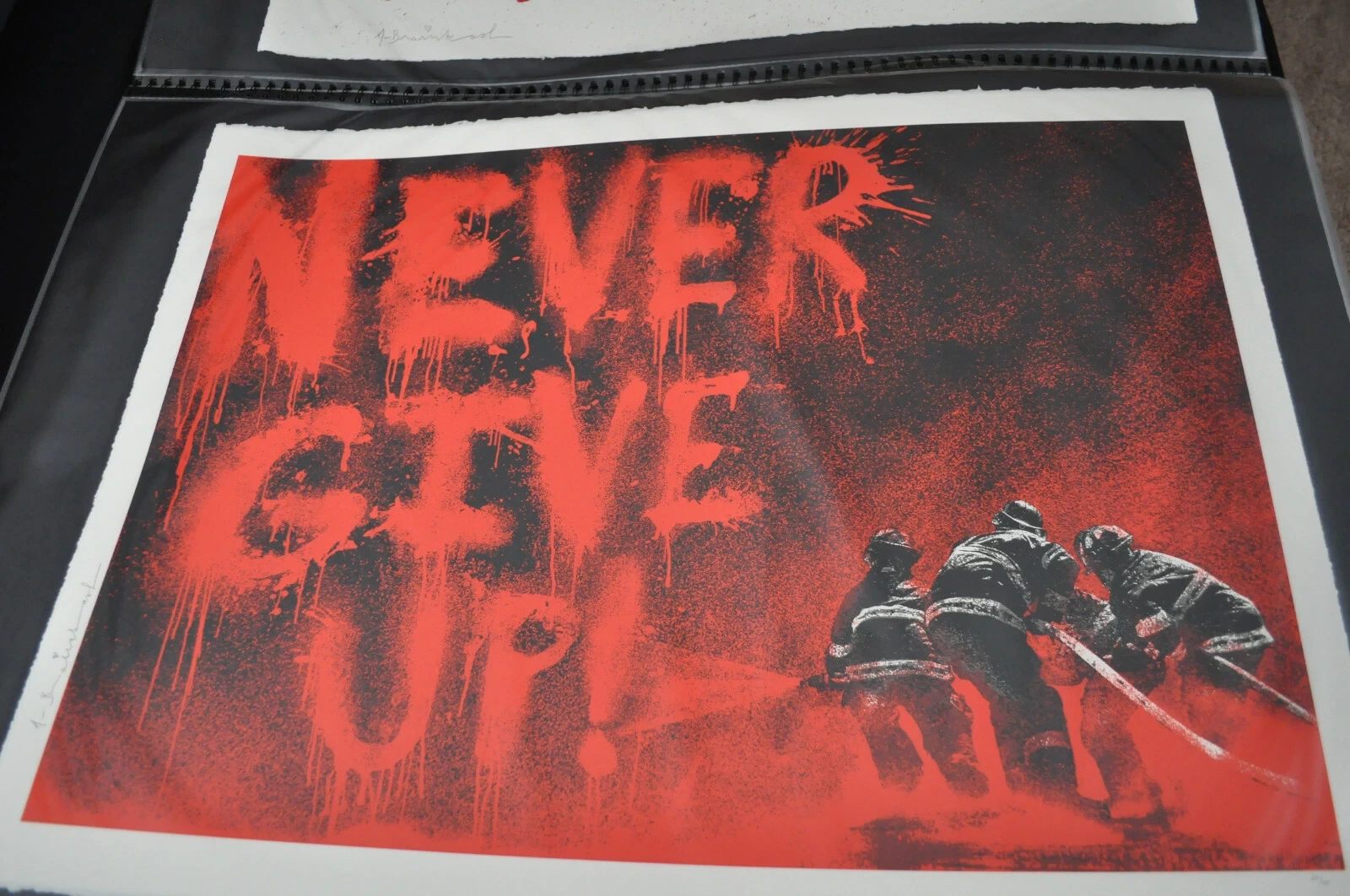
Detailed or energetic compositions can conceal small surface disruptions in reduced photographs. Look beyond the central action: ask for corner, margin and reverse images when useful. A small dent may be easier to see in angled light, while an overview establishes its relationship to the image.
For long or narrow sheets, check the entire perimeter and ask about prior rolled storage or framing. Confirm that measurements describe the sheet rather than a cropped visible opening. If a frame hides the margins, establish whether the seller has photographs from before framing and whether the full paper has been examined.
Choose a format that fits your collecting plan
A group of mini prints, a single larger work and a book package can serve different display and collecting purposes. Plan the space and the way you want to experience the images. A wall grouping needs consistent measurement; a print collection stored flat needs suitable housing and an index so sheets can be found without repeated handling.
Maintain a record containing title, format, technique where established, dimensions, signature, edition notation and included materials. Link it to the artist’s release reference and your purchase documents. TrendingArt’s current listings determine what is available, while this page provides a framework for understanding the differences between objects carrying Johnsen’s work.
Common questions
What is the first detail to check on a Johnsen listing?+
Identify the format and dimensions. A mini print, screenprint, Risograph sheet and book package can involve related imagery but different physical objects. The title alone may leave that distinction unresolved.
Does a print-pack title establish completeness?+
No. Ask for the original contents description and a photograph of every included sheet. Check condition individually rather than judging the entire group from the top print.
Sources & further reading
Primary references for the terminology and factual details discussed above.
Explore the actual listings.
Read the item description, photographs, condition notes and terms on eBay. Selection and availability change.
Browse Current Art Inventory ↗Explore Collectible & Contemporary Art ↗