Set your collecting brief before browsing
Choose the two or three features that matter most to you. That might be a particular artist, a printing process and a maximum framed size. It might instead be a theme you want to explore across several artists. A clear brief gives you a reason to reject an attractive listing that does not fit your collection.
Plan the total commitment, including framing, transport and any charges shown at checkout. Do not spend the entire amount on the unframed sheet and leave no room for suitable presentation. If the print is going into storage, include the cost and space for an appropriate enclosure.
Identify the exact release
Record the full title, artist, date where established, medium, publisher, paper size and edition notation. Use an artist’s archive, publisher’s release page or reliable collection record to compare those details. The same image can appear in different formats, and the word “print” covers more than one production process.
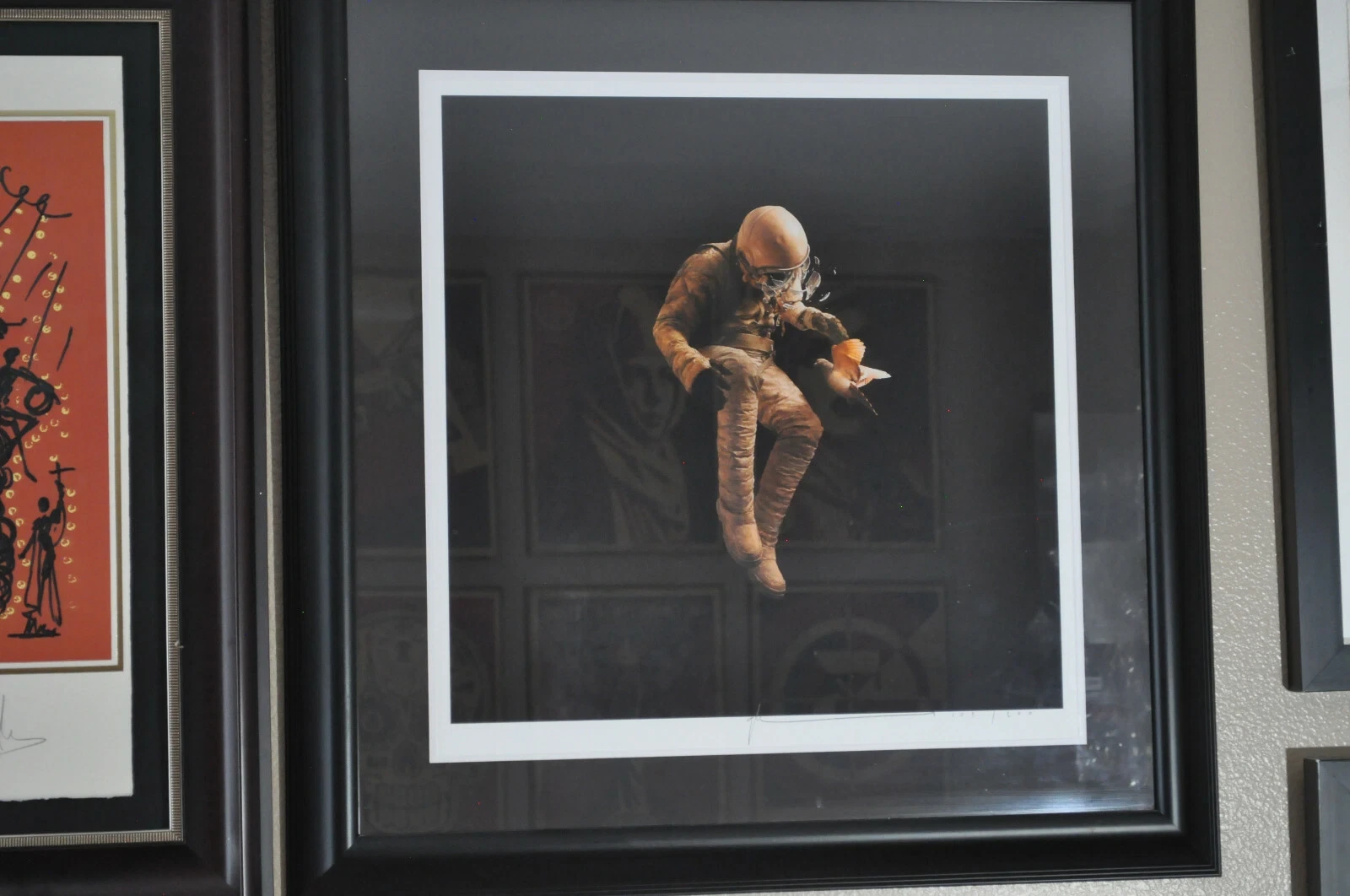
For example, the OBEY GIANT archive separates screenprints, letterpress and offset works. Jeremy Geddes’s studio distinguishes signed limited prints from unsigned, unlimited portfolio sets. Those are useful reminders to identify the object rather than stopping when you recognize the image. Neither example establishes what is available from a particular seller.
Request photographs that answer condition questions
A useful photograph set includes the whole sheet, the signature or marks, corners and any disclosed issue. For a framed print, ask what is hidden beneath the mat and whether the seller has examined the work out of the frame. Do not turn an unexamined area into an assumption of perfect condition.
Describe questions concretely: “Is this a crease in the paper or a reflection on the glazing?” is easier to answer than “Is it mint?” Ask about discoloration, abrasion, repairs, mounting and trimming when relevant. Decide which disclosed imperfections you can accept before the work arrives.
Read the signature, number and paperwork together
An edition inscription identifies an example within a stated group. A signature is a separate mark whose meaning depends on the release. Proof designations add another category to investigate. Photograph and transcribe them rather than paraphrasing the seller’s title.
An invoice or certificate is useful when it connects to the actual work through matching details. Ask who issued it and what it establishes. A certificate from an unidentified source does not become decisive merely because it uses formal language. For an older work without extensive paperwork, determine what other evidence supports its identification.
Compare like with like
Make a short comparison for any two candidates: release, format, dimensions, condition, documentation, framing and delivery. Only after those align does the asking-price difference become straightforward. A lower-priced smaller format is not necessarily a bargain against a larger limited print.
Consider a hypothetical choice between a clean standard-edition sheet and a proof with a visible crease. If your goal is display, the cleaner sheet may better serve that goal. If you specifically collect proofs, you may make a different choice. State the reason explicitly; do not let a label make the decision for you.
Resolve transaction details before paying
Read the individual listing’s return terms, shipping method and what is included. Confirm whether the frame, original packaging or additional portfolio sheets are part of the purchase. If special delivery arrangements are needed, establish them before checkout. Do not assume all items from the same marketplace have identical terms.
Keep important seller answers within the transaction’s written record. If a listing description needs correction, ask for that clarification in writing. This creates a usable reference if the delivered object differs from what was described, while avoiding reliance on memory or a telephone conversation.
Inspect once, document and place safely
Prepare a clean space before unpacking. Photograph the packaging and the work’s initial condition without rushing or making repairs. Compare the delivered object with the listing and report a discrepancy through the applicable transaction process promptly. Keep packaging until you know whether it is needed for a return or damage review.
Then move the work into its planned storage or framing arrangement. Record the acquisition date, seller, description and identifying photographs. Browse TrendingArt’s fine-art and artist pages for relevant collecting context, and use current eBay listings for actual availability and purchase terms.
Common questions
Does a limited edition guarantee that a print is desirable?+
No. A stated production limit does not tell you whether you like the image, whether the condition is acceptable or whether the work is correctly identified. Evaluate those questions separately.
Should I avoid an unframed print?+
No. An unframed sheet can be easier to inspect and lets you choose a suitable presentation. Plan safe storage and framing before purchase so the work is not left in temporary packaging indefinitely.
Sources & further reading
Primary references for the terminology and factual details discussed above.
Explore the actual listings.
Read the item description, photographs, condition notes and terms on eBay. Selection and availability change.
Browse Current Art Inventory ↗Explore Collectible & Contemporary Art ↗