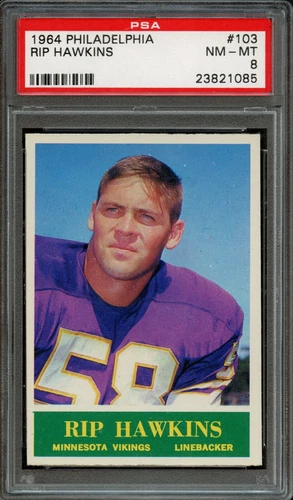
1964 Philadelphia: the first issue
The 198-card inaugural set uses standard-size cards and introduces the company’s NFL run. The checklist includes players and team-related material. A full Philadelphia set is not interchangeable with a full 1964 Topps set; the two manufacturers served different leagues.
1965 Philadelphia: the middle of the licensing split
The second Philadelphia issue continues the NFL focus while Topps makes its oversized AFL cards. NFL stars in standard-size 1965 Philadelphia holders should therefore not be described as part of the Topps tall-boy issue. Keep the manufacturer in every saved search and collection entry.
1966 Philadelphia: Bears rookie landmarks
Dick Butkus and Gale Sayers make this one of the best-known Philadelphia seasons. Their cards reward close attention to centering, corner wear and image quality. A shared rookie year does not make the condition characteristics or availability of the two cards identical.
1967 Philadelphia: the yellow finale
The final Philadelphia football set is recognized for its yellow design. Color rub and edge loss can be easy to see against the printed border. A four-year type display makes the company’s brief but distinct contribution to vintage football especially clear.
Completing the company run
Keep one checklist per year with team cards and checklist cards explicitly included. Check marked backs and team-card centering before paying a premium for a supposedly high-grade lot. When comparing sales, match Philadelphia, exact year and card number first; a generic player-name search will mix unrelated releases.
Sources & further reading
Primary references for the terminology and factual details discussed above.
Explore the actual listings.
Read the item description, photographs, condition notes and terms on eBay. Selection and availability change.
Browse Current Sports Cards Inventory ↗Explore Graded & Collectible Football Cards ↗