1986 Fleer: define the base set first
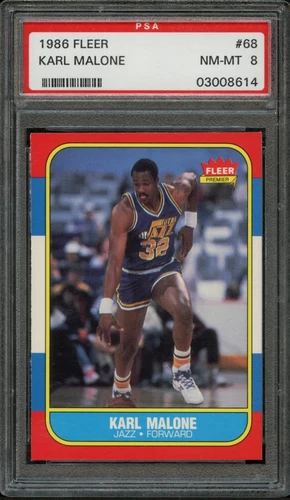
The 1986 Fleer base set contains 132 cards, including its checklist. Michael Jordan’s number 57 is the familiar reference point, but a collector can also build around another player or team. Before discussing completeness, establish whether the purchase is the numbered base issue or also includes the separate sticker set.
The red, white and blue frame makes border balance and small edge defects visually important. Look at every corner at useful magnification, then return to a normal viewing size to judge overall appeal. For a high-profile card, verify the certification record and compare it with the holder photograph. A matching number is one check; it should not substitute for confirming the actual card and holder.
Keep later Fleer releases in separate searches. A listing containing a famous player, the Fleer name and the word vintage does not identify this issue. Record the printed number and the year on the certification label before making a comparison.
1987 Fleer: second-year stars and a separate sticker run
1987 Fleer again has 132 base cards, comprising 131 players and a checklist, alongside eleven stickers. PSA highlights second-year Fleer cards of Michael Jordan, Charles Barkley and several other stars of the preceding issue. Jordan’s base card is number 59; the different number is a useful first check when browsing similar titles.
A player collection can make this year an attractive companion to 1986 without calling both cards rookies. Make the chronology explicit in the collection record. For a set purchase, verify whether the checklist is present and unmarked, and count the stickers independently if they are part of the offer.
Compare white-border balance across the top and bottom as well as the sides. In a slab photograph, use the card’s own printed edges as your reference rather than the holder’s outside dimensions. An angled camera can make an otherwise straight card appear skewed.
1988 Fleer: a different rookie group
The 132-card 1988 Fleer issue includes rookie cards of Scottie Pippen, Dennis Rodman, Reggie Miller and John Stockton. PSA separately catalogs an eleven-card sticker issue. Pippen’s base card is number 20 and Miller’s is number 57; Jordan is not the only useful organizing subject for this release.
If you are choosing a single representative, decide whether the goal is a rookie from this class, an established star or the design itself. Those are different reasons to collect, and they lead to different comparisons. A clean common can demonstrate the issue’s appearance without being a substitute for a specific player card.
Inspect the colored design areas for breaks and use a clear back photograph to check numbering. When buying several rookies together, evaluate each card individually. One attractive centerpiece should not distract from soft corners or surface wear on the others.
1990 Fleer: the main issue is not Update
PSA describes the 1990 Fleer base issue as 198 cards and identifies Rookie Sensations as its insert. Players in the main rookie group include Tim Hardaway, Shawn Kemp and Vlade Divac. David Robinson’s appearance is his first Fleer card, while PSA notes his earlier inclusion in 1989 Hoops; first appearance for a brand is not automatically a player’s first card.
Keep 1990 Fleer Update separate in both searches and storage. An Update card with a U-prefix belongs to its own checklist rather than filling a missing number in the main 198-card run. Likewise, a Rookie Sensations card should be compared with that insert, not with the player’s regular card.
For a binder project, ask for a numbered inventory before buying a mixed stack. Duplicates, inserts and updates can make a lot sound more complete than it is. A simple spreadsheet can show exactly which missing base numbers a purchase would resolve.
1991 Fleer: a larger project and distinct special cards
PSA’s 1991–92 Fleer registry uses a 400-card base checklist. Its certification records distinguish Michael Jordan’s regular number 29, another Jordan card numbered 220, and the separately named Pro-Visions issue. Those distinctions matter when a search returns several cards of one player from the same year.
Choose whether you want the base set, a Jordan run or an insert collection before purchasing lots. Do not count a Pro-Visions card toward a missing base number. For a large set, consistency can be more satisfying than a handful of immaculate examples surrounded by worn cards; write down a realistic condition standard and apply it to commons too.
Price comparisons should use the same card number, issue and grade. Avoid inferring scarcity from the mere presence of a grading holder. The practical question is whether this particular example, including its surface and centering, meets the goal you set for the collection.
Sources & further reading
Primary references for the terminology and factual details discussed above.
Explore the actual listings.
Read the item description, photographs, condition notes and terms on eBay. Selection and availability change.
Browse Current Sports Cards Inventory ↗Explore Graded & Collectible Basketball Cards ↗