Define which Base Set you mean
This guide concerns the original English release. Japanese cards, later language editions and later sets with related artwork need their own identification work. An image that looks familiar is not enough. Read the card number and printed details, and ask for uncropped photographs when a listing makes them difficult to see.
The English checklist runs from 1 to 102 and includes Pokémon, Trainer and Energy cards. The opening 16 numbered cards are holographic. Charizard is number 4, Blastoise number 2 and Venusaur number 15. Those familiar names can provide an entry point, but they are only part of the set. A collection built around favorite non-holographic cards is equally coherent if that is the stated goal.
Understand the printing distinctions
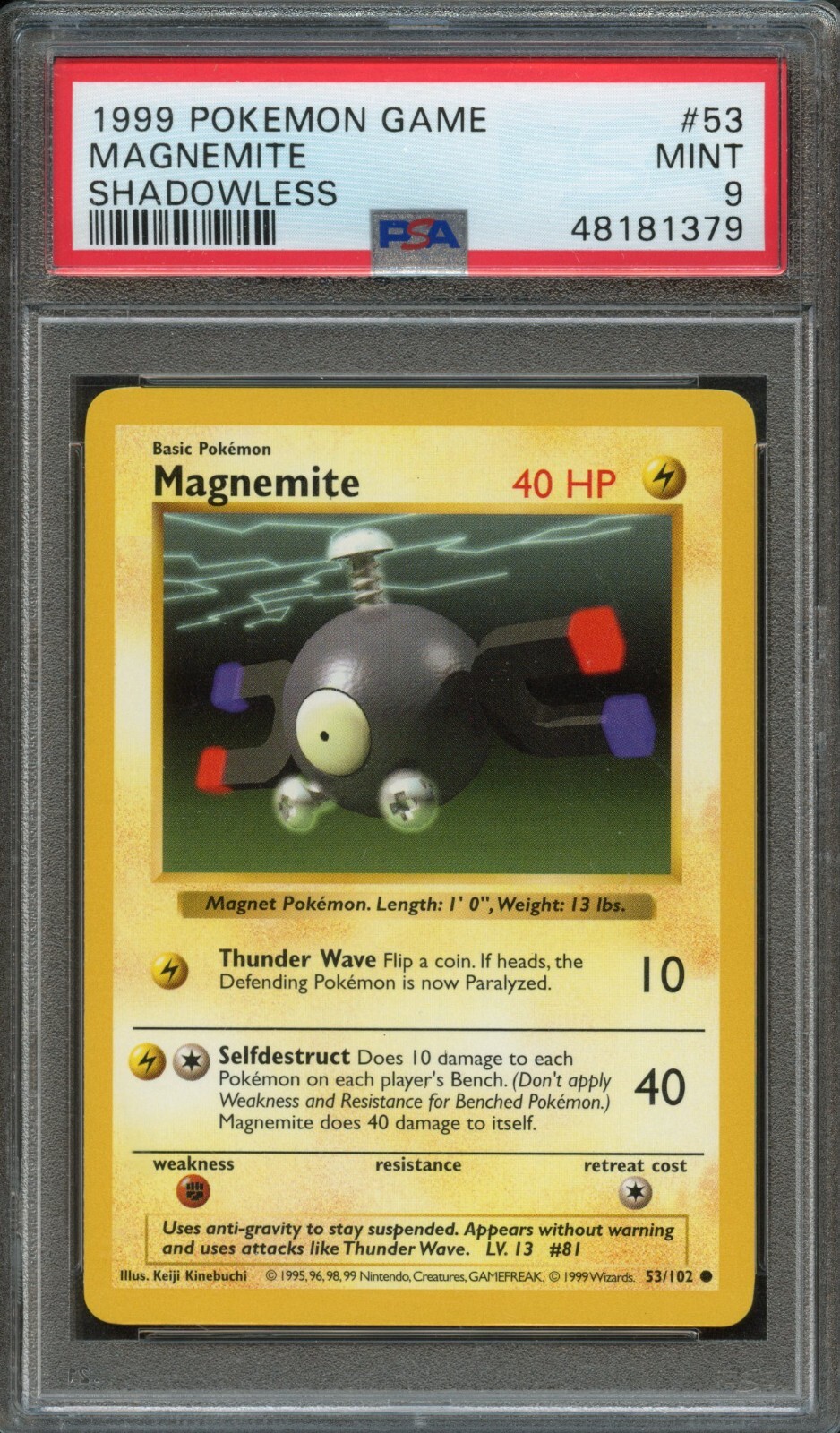
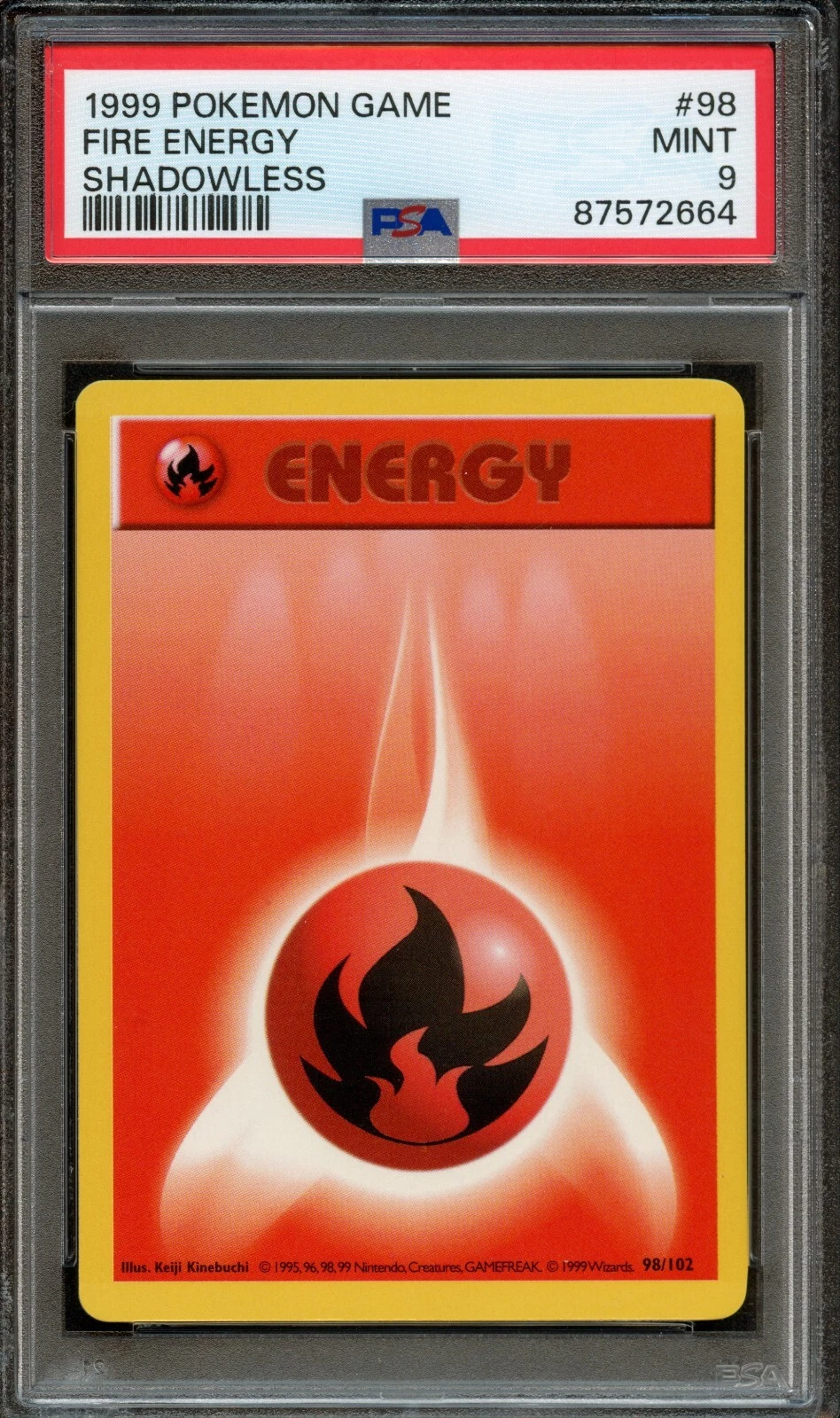
Collectors distinguish stamped 1st Edition, unstamped Shadowless and later Unlimited printings. On the ordinary Pokémon cards, the earliest English design lacks the dark drop shadow beside the artwork frame. Later versions add that shadow. The stamp and the artwork-frame treatment should be checked separately, especially when the listing uses several terms together.
Later English Base Set cards also include a 1999–2000 copyright variation. Decide whether your checklist treats that as a separate collecting objective. Otherwise, you can inadvertently mix printings while assuming all unstamped examples are identical. A basic numbered set and a collection of every recognized printing variety are different projects with different completion rules.
Machamp needs separate attention
The familiar English Base Set holo Machamp, number 8, was distributed through starter product and carries a 1st Edition stamp on both shadowless and shadowed versions. The stamp alone therefore does not identify the earliest version. PSA's Machamp checklist records separate Shadowless, regular 1st Edition and 1999–2000 entries, as well as other distinct releases.
Scope matters: specialist items such as Trainer Deck A Machamp should not be collapsed into a blanket statement about every card bearing the Base Set design. For ordinary collecting, first establish that you are comparing the standard holo, then inspect its frame, copyright details and grading label. If you are considering an unusual version, research that exact issue before treating it as a routine checklist slot.
Choose a manageable collecting format
A numbered set, a holographic subset and a character-focused group are all practical formats. You can also combine raw and graded examples, provided your records clearly identify which is which. Decide where you want consistency and where you are comfortable making exceptions. Otherwise, an initially modest project can become a sequence of expensive upgrades with no clear endpoint.
For a graded set, define the grading company, target range and any acceptable lower-grade placeholders. For a raw set, write a plain-language condition standard, such as allowing light edge wear but excluding creases. A standard does not have to be rigid; it needs to be explicit enough that two purchases can be judged on the same basis.
- Scope: language, printing and whether varieties are included.
- Format: complete numbered set, subset or selected favorites.
- Condition: preferred grade range or visible wear tolerance.
- Budget: total project limit plus storage and any grading expense.
- Records: owned, needed, temporary placeholder and upgrade candidate.
Inspect the copy you are buying
For a raw card, request full front and back images and a useful view of the holographic area where applicable. Separate obvious handling wear from uncertainty caused by photography. A seller describing a card as clean is not a substitute for photographs showing corners, edges and surfaces. If a defect remains unclear, ask a specific question about that area.
For a graded card, compare the pictured label with the card itself and verify its certification through the grading company. Check the edition designation and holder condition as carefully as the number grade. An attractive card in the wrong printing does not fill the intended checklist position. Resolve identity questions before deciding whether the price is attractive.
Compare prices within the right group
Use completed sales of the same card, language, printing and approximate condition. Avoid comparing a raw Unlimited example with a high-grade stamped copy simply because both say Charizard. A price guide can provide context, but a thinly traded variety may have few recent comparable transactions. Make the uncertainty visible instead of substituting an unrelated headline sale.
Keep asking prices separate from achieved prices, and record shipping and other transaction costs consistently. You do not need to predict the market to build a disciplined collection. The more useful question is whether the item fits your defined collection at a price you are comfortable paying. TrendingArt's Pokémon area provides a starting point for browsing, with purchases completed through current marketplace listings.
Common questions
Is Base Set 2 the same as Base Set?+
No. Treat Base Set 2 as a separate release, even where the artwork is familiar. Confirm the set identification before adding a card to an original Base Set checklist.
Does every Base Set Machamp stamp prove it is the earliest printing?+
No. The ordinary English holo exists with the stamp in both shadowless and shadowed forms. Identify the exact version rather than relying on the stamp alone.
Sources & further reading
Primary references for the terminology and factual details discussed above.
Explore the actual listings.
Read the item description, photographs, condition notes and terms on eBay. Selection and availability change.
Browse Current Pokémon Inventory ↗Explore Graded & Collectible Pokémon Cards ↗