Identify medium and support first
Ask whether the object is a painting, a drawing, a print or another stated medium. Then establish what supports the image: paper, canvas or another material. “Mixed media” should be expanded into a meaningful description when the seller has that information. It is not a substitute for explaining how the object was made.
Photographs of the front, reverse, edges and signature can help clarify the description. For paper works, distinguish sheet dimensions from image dimensions. For framed works, request the exterior frame size separately. Those measurements determine both what you are buying and how it can be displayed.
Use surface photographs to understand the work
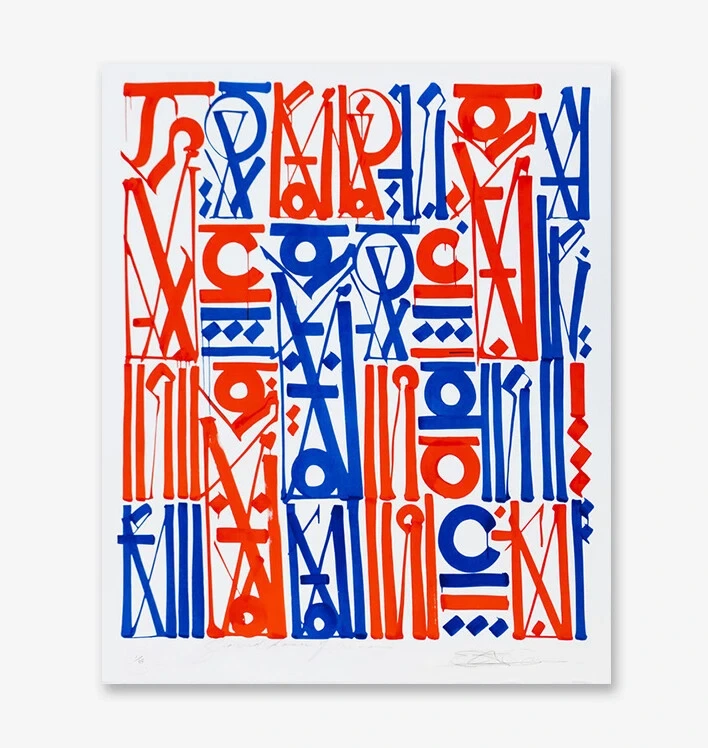
A script-based composition can look deceptively flat in a listing image. Ask for photographs that show the surface without creating severe glare. If the work is described as painted or textured, details should help you understand that claim. If it is a print, surface photographs can reveal handling marks that disappear in a small overview.
Do not infer a technique from visual resemblance alone. A photograph of a painting may reproduce its brushwork convincingly, and an edition can reproduce a complex image. The seller’s medium description, documentation and object photographs should tell a consistent story.
Review editions as specific releases
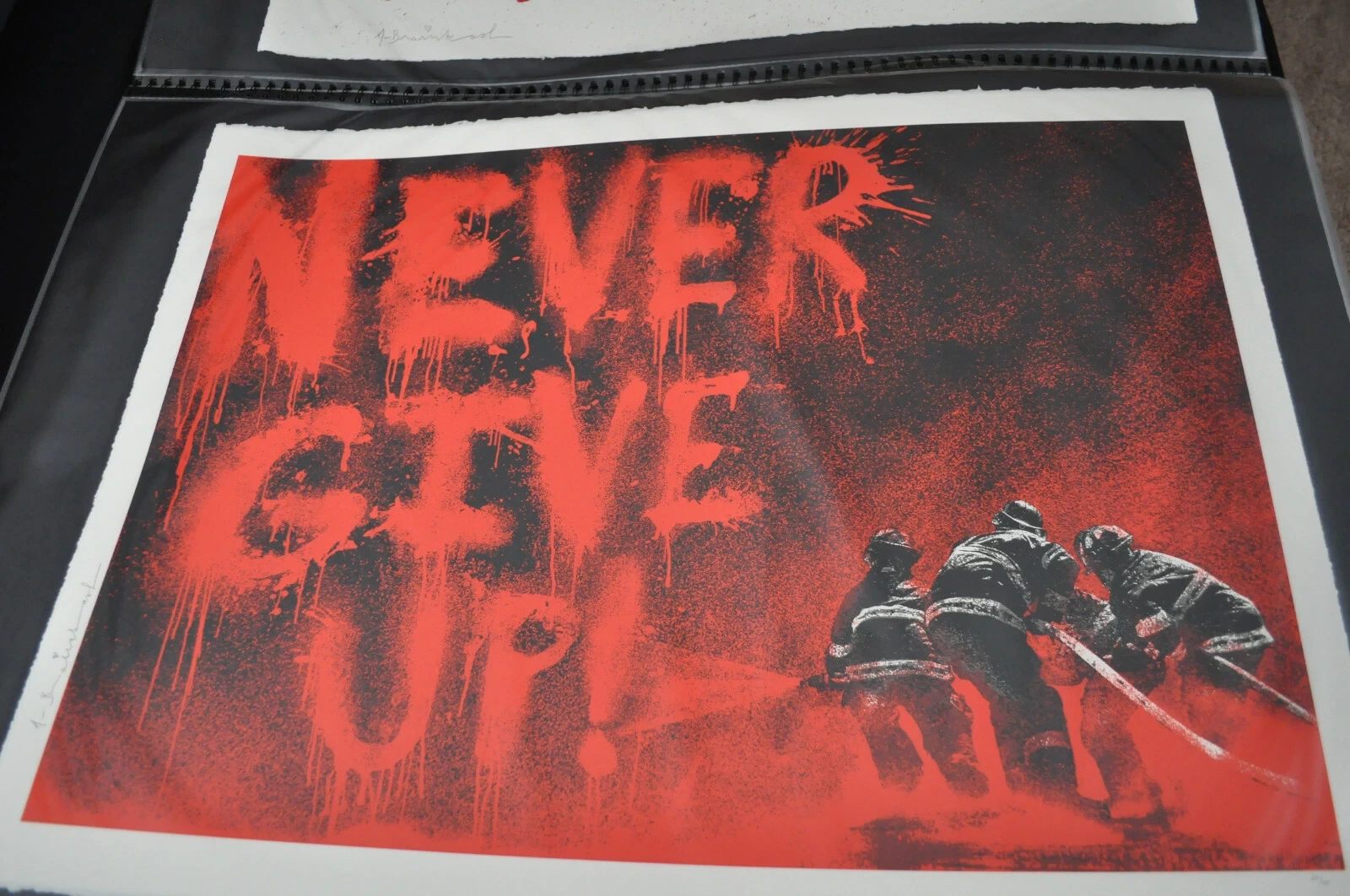
For an editioned work, record the title, publisher if known, production date, medium, dimensions and exact notation. Ask for a close-up of any number or proof designation. The artist’s name does not establish a standard edition size or a standard certificate format across every release.
If a listing describes a variant or a hand-worked example, ask which detail distinguishes it and where that information is documented. A color difference could be an intended variant, photography or fading; those possibilities should not be collapsed into an unsupported conclusion.
Evaluate provenance in practical terms
Provenance is the documented history of an object. Request invoices, gallery records or prior transaction information that can be connected to this particular work. A name in a description is less useful than a dated document containing an identifiable title, size or other matching details.
RETNA’s official FAQ asks that authentication inquiries include photographs, dimensions, medium, provenance and existing documents. It also states that submitting an inquiry does not guarantee authentication. If you need an independent review, establish the process and likely timing before committing to a purchase rather than assuming a certificate can be obtained afterward.
Separate artistic texture from condition changes
Request a clear description of abrasion, creases, losses, discoloration or repairs. Where the work contains deliberate irregularity, the seller should identify which imperfections are believed to be original and the basis for that belief. An attractive surface does not remove the need for a condition report.
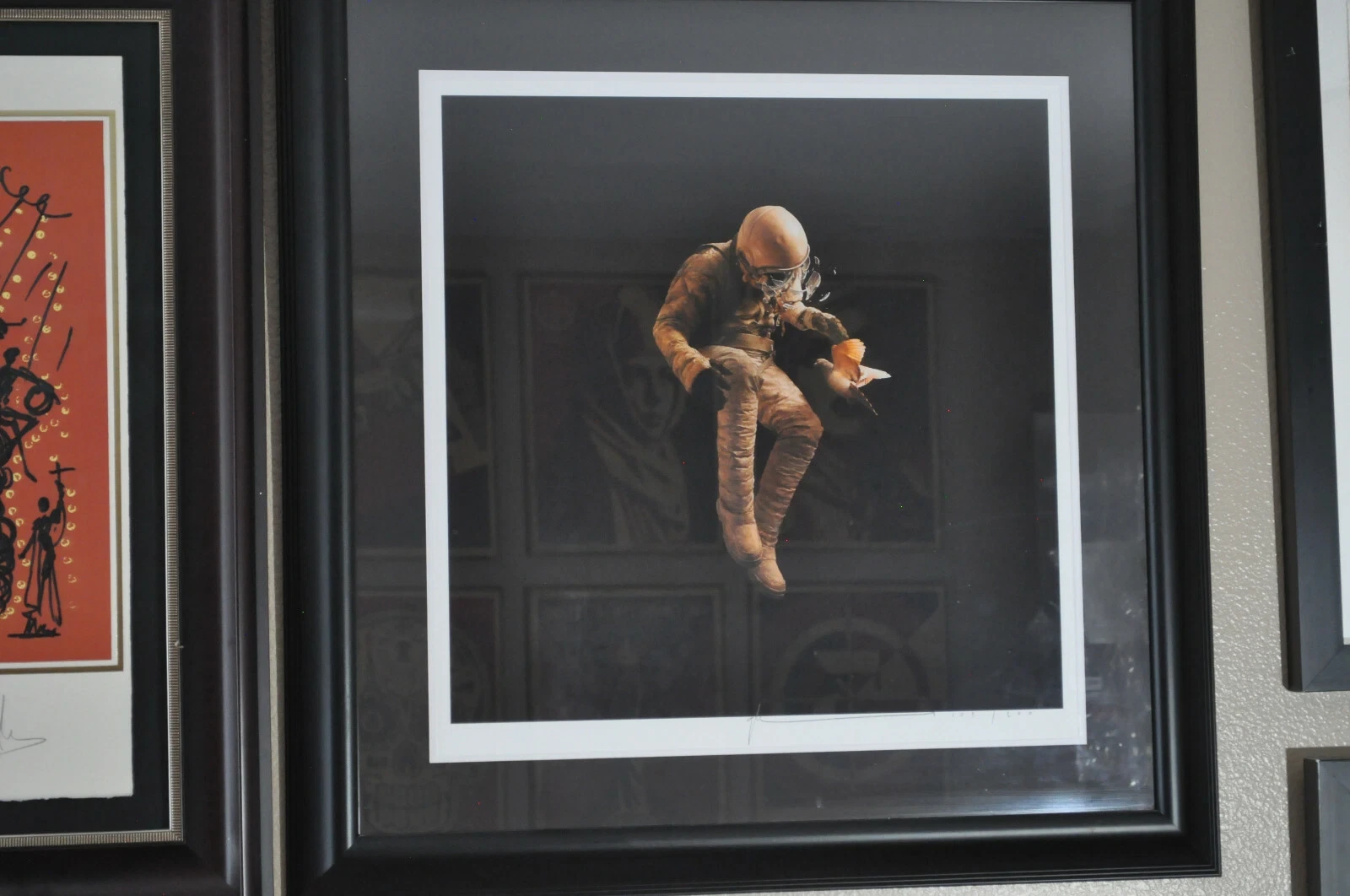
For a work behind glazing, reflections can mask details and margins may be concealed. Ask whether the seller has examined it outside the frame. If the answer is no, that is a real limitation to consider. Do not ask someone unfamiliar with safe handling to dismantle a delicate piece simply to complete a checklist.
Decide what you need from the purchase
Think about scale and viewing distance. A small work may invite close attention to marks and spacing, while a large work can dominate a room. Use the actual dimensions to map the intended location and account for framing or installation. A listing photograph cannot establish how an object will feel at full size.
A sound purchase decision combines visual preference with a clear object description, adequate condition information and documentation appropriate to the work. Browse TrendingArt’s current art listings for the available selection, and use the related guides when comparing editions or buying online. No artist landing page can authenticate an individual work by association.
Common questions
Can a script resemblance authenticate a RETNA work?+
No. Recognizing a visual style does not establish authorship. The physical object, medium, documentation and relevant review all matter. An image match is a research starting point, not a final conclusion.
What should accompany an authentication inquiry?+
The official studio asks for clear photographs, dimensions, medium, provenance and copies of existing documentation. Its review process does not guarantee an authentication outcome.
Sources & further reading
Primary references for the terminology and factual details discussed above.
Explore the actual listings.
Read the item description, photographs, condition notes and terms on eBay. Selection and availability change.
Browse Current Art Inventory ↗Explore Collectible & Contemporary Art ↗