Barber dimes and the NGC description
Charles Barber’s dime design was issued from 1892 through 1916. Liberty faces right on the obverse, and a wreath encloses ONE DIME on the reverse. The dime’s national inscription surrounds the portrait, unlike the stars around the related Barber quarter and half dollar.
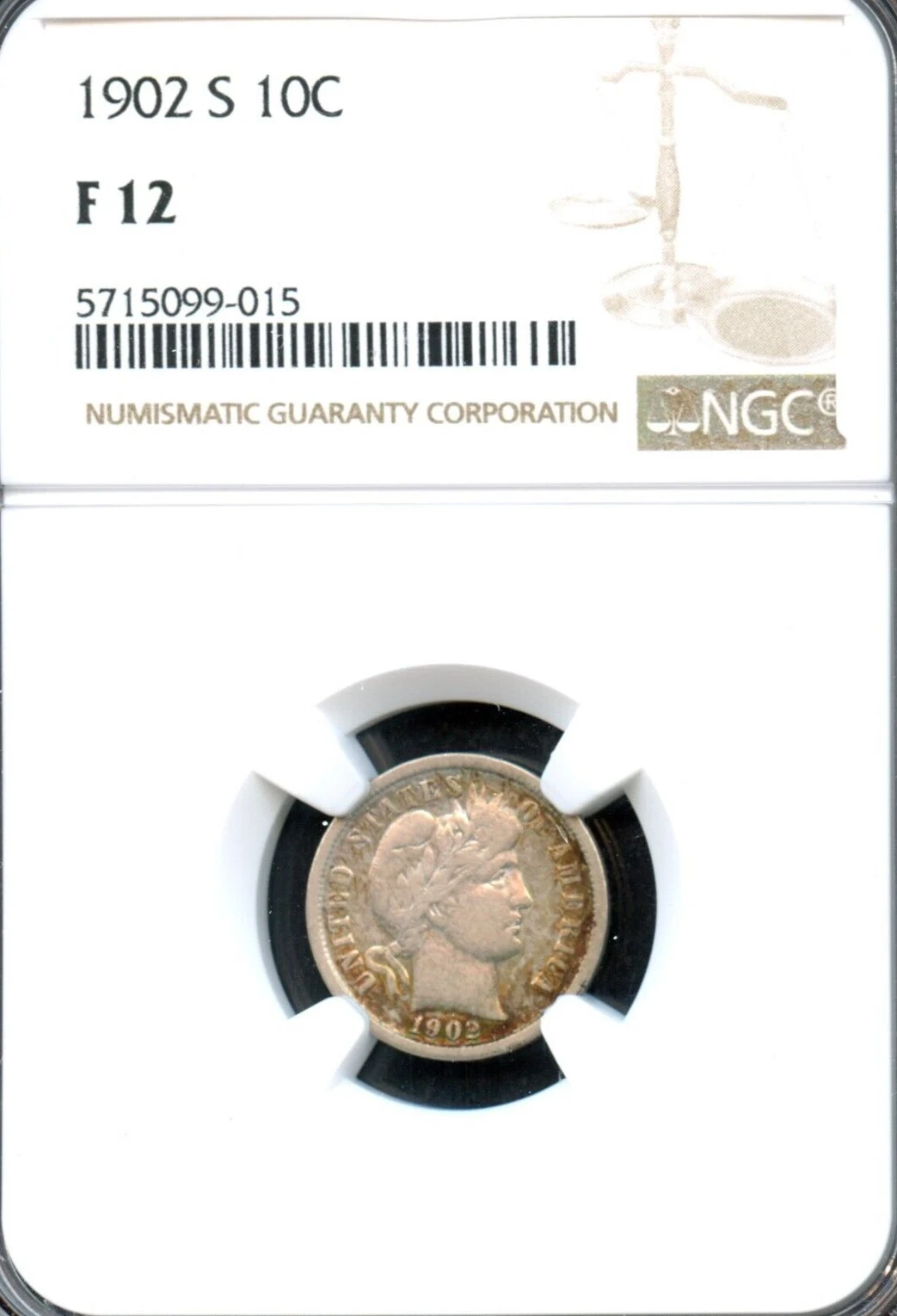
On the label, read date, mint, denomination and grade as separate fields. A service name or certification number does not replace those fields. If a listing groups the coin with Barber quarters, the reverse denomination settles which series you are actually evaluating.
Study a circulated coin as a complete surface
The small LIBERTY inscription in the headband is a familiar reference point, but avoid reducing the whole grade to a count of visible letters. Look at the portrait, wreath, rims and exposed fields. Lighting can make a shallow letter disappear while exaggerating a scratch beside it.
A useful inspection sheet has one line for remaining detail and another for surface condition. This separates the question “How much design remains?” from “What happened to the surface?” It also makes two coins in the same grade easier to compare without relying on a single feature.
Read a Details label literally
NGC Details grading describes a genuine coin with a surface problem that prevents a numeric grade. The adjectival range and the problem description belong together. F Details and F12 are therefore different descriptions, even if both photographs show broadly similar wear.
Ask for a clear image of the entire label and both faces. Do not accept a seller’s abbreviated title as the full grade if the slab contains additional wording. Save the problem description in your records so it remains attached to the coin when you reorganize the collection.
Choose a collecting route before chasing exceptions
A single Barber dime can represent the design in a US type collection. A date-and-mint set is a different project, requiring a checklist of actual issues. A variety study is narrower still and needs diagnostic photographs that explain the attribution.
The 1902-S illustrated here is a circulated NGC example, useful for practicing the relationship between readable identification and worn design. Use a reference photograph for the same issue when possible, and compare complete coins rather than assuming every sharper-looking feature signals a higher overall grade.
Sources & further reading
Primary references for the terminology and factual details discussed above.
Explore the actual listings.
Read the item description, photographs, condition notes and terms on eBay. Selection and availability change.
Browse Current Coins Inventory ↗Explore Collectible, Vintage & Graded Coins ↗