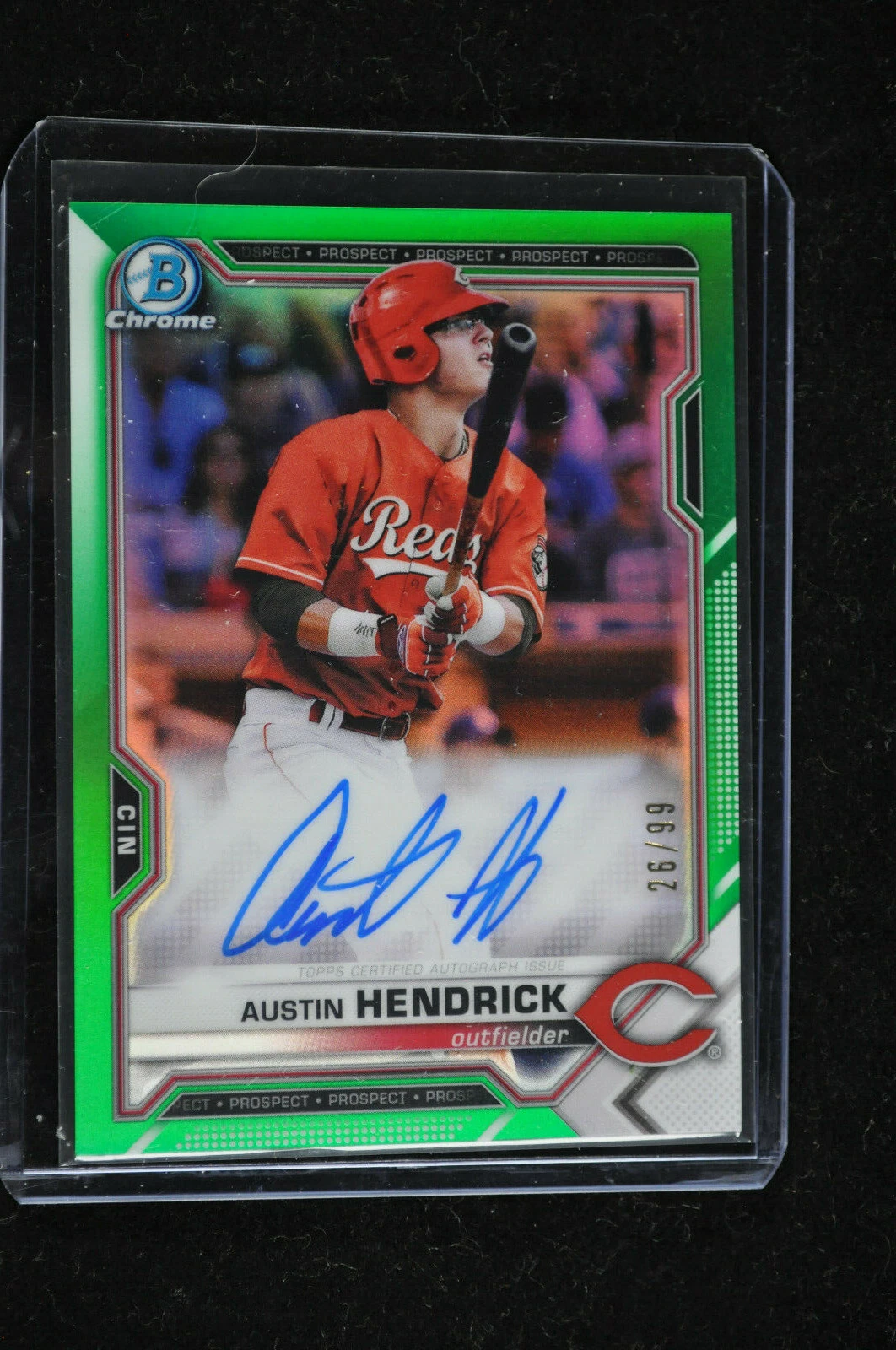
1994 Bowman’s Best
The debut combines R-prefixed established players, B-prefixed prospects and X-prefixed Mirror Image cards. The resulting 200-card checklist should be organized by prefix, not as a single numeric sequence. Mirror Image's paired subjects are their own component rather than duplicate player cards from the two main groups.
1995 Bowman’s Best
The 195-card checklist contains 90 established players, 90 prospects and 15 Mirror Image cards. This is smaller than 1994 despite its similar organization. Keep the paired-player Mirror Image group in a separate checklist block when evaluating a nearly complete set.
1996 Bowman’s Best
The 180-card issue distinguishes established players in gold from prospects in silver. Its numbering has two cards marked 32 and no ordinary 33. A checklist audit must account for that documented irregularity rather than classifying a set as incomplete solely from the missing number.
1997 Bowman’s Best
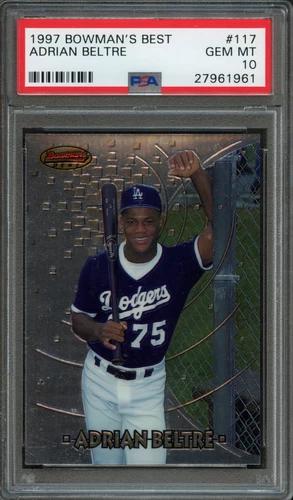
The 200-card set divides evenly between established players and prospects. Adrian Beltré, Roy Halladay, Miguel Tejada and Kerry Wood are notable rookie subjects. Its equal split provides a useful sorting structure, while the exact Refractor or autograph designation still needs to be recorded separately.
1998 Bowman’s Best
The main checklist again totals 200 cards. Check the year's insert and parallel checklists independently when an ornate or refractive card is offered as a base example. Similar player photography across versions is not enough to establish whether the card belongs in the ordinary numbered run.
1999 Bowman’s Best
The 200-card checklist differentiates established players, Best Performers, prospects and a short-printed rookie segment numbered 151–200. Those final fifty cards change the task of completing a base set. Identify the checklist segment before comparing a group of common cards with an apparently similar rookie lot.
2000 Bowman’s Best
The last fifty cards in the 200-card set are serial-numbered to 2,999. They are a numbered segment of the base checklist rather than simply an optional full-set parallel. A complete-set description should explicitly address whether those numbered cards are present.
2001 Bowman’s Best
The 200-card issue again ends with fifty cards numbered to 2,999, and its checklist includes Albert Pujols and Ichiro. Their exact card and parallel identities matter more than a broad “rookie” label. Keep a photograph of the back and serial number when documenting a graded example.
2002 Bowman’s Best
The 181-card checklist moves heavily into autograph and memorabilia content: cards 91–181 comprise signed or bat-card subjects. This makes “base set” a more involved target than an unsigned player checklist. State which autograph and memorabilia components are included when describing a collection.
2003 Bowman’s Best
The 132-card checklist includes 71 First Year autograph cards, while ten First Year relic cards were box-topper content. Those distribution differences matter when sorting a collection assembled from packs and boxes. Do not assume every card bearing the Best name occupies the same base-set role.
2004 Bowman’s Best
The 107-card issue combines fifty established players with 57 autographed First Year cards. Separate First Year Player Relic box toppers add another collecting group. A numbered card list and an autograph-status column make this small but structurally complex release easier to assess.
2005 Bowman’s Best
The 143-card checklist begins with thirty established players, followed by First Year subjects. Cards 101–143 are autographed. When reviewing completeness, distinguish the unsigned young-player segment from the signed end of the checklist rather than treating all First Year cards as equivalent.
2015 Bowman’s Best
The revived release includes Mirror Image, First Impressions and Hi-Def Heritage themes. It should be cataloged as the 2015 standalone product, separately from Bowman's Best inserts in other Bowman sets. The full card prefix and autograph designation help distinguish those similarly branded cards.
2016 Bowman’s Best
The main release separates 65 base subjects from 35 Top Prospects. Stat Lines, a 1996-style tribute and Prospect Forecast add other checklist groups. A collector building a player run should identify which of those groups each card belongs to before comparing parallel colors.
2017 Bowman’s Best
The 65-card base and 35-card prospect arrangement continues. Inserts include 1997 Best Cuts, Baseball America's Dean's List and Raking Rookies. A retro design does not change the issue year; retain 2017 as the product year when cataloging the 1997-style cards.
2018 Bowman’s Best
The checklist contains seventy base cards and 29 Top Prospects. Early Indications, Neophyte Sensations and 1998 Best Performers distinguish the insert selection. Use the actual prospect checklist rather than assuming a thirty-card run simply because the surrounding years often use that total.
2019 Bowman’s Best
Seventy base cards and thirty Top Prospects form the main collecting runs. The insert program revisits 1999 Franchise Favorites and includes Future Foundations die-cuts. Die-cut edges add an identification and condition detail that a straight-on slab photograph may not show clearly.
2020 Bowman’s Best
The seventy-card base and thirty-card prospect runs are accompanied by 2000 Franchise Favorites, Franchise 2020 die-cuts and Decade's Best. Keep the two similarly worded Franchise groups distinct. Their titles and card prefixes are more reliable identifiers than an abbreviated sales description.
2021 Bowman’s Best
This issue places prospects within a combined 100-card main checklist rather than using the preceding year's separate thirty-card prospect run. That change has generated differing rookie-card descriptions. Catalog the printed issue and number precisely, and disclose the convention being used instead of presenting a disputed label as settled.
2022 Bowman’s Best
The familiar seventy-card base and separate thirty-card prospect format returns. UFO, Prospective Royalty and Elements of Excellence distinguish the insert program. This return to separate prospect numbering is a useful comparison point when organizing cards beside the differently structured 2021 issue.
2023 Bowman’s Best
The seventy-base/thirty-prospect arrangement continues, with Astral Projections, Shellacked and Him among the insert themes. The 1992 Bowman by Randy Johnson cards combine a retro brand reference with a named photographic concept; preserve the full insert title when identifying an example.
2024 Bowman’s Best
Seventy base cards and thirty prospects sit beside Shots by the Kid, Ballers, Fabled Phenoms and 1955 Bowman Anime. These different visual treatments can make a mixed lot look like several products. Full insert titles and card numbers resolve that ambiguity more reliably than design alone.
2025 Bowman’s Best
Topps identifies this as 2025 Bowman's Best, even though the release arrived in 2026. The product expands its visual insert mix with Best-Tek, Pixel Portraits and Circuitry. Use the printed product identity when cataloging cards rather than replacing it with the calendar year in which a box was opened.
Sources & further reading
Primary references for the terminology and factual details discussed above.
- 1994 Bowman's Best Description Distribution Reviews Insertion Ratios Checklist — BaseballCardPedia checklist ↗
- 1995 Bowman's Best Description Distribution Reviews Insertion Ratios Checklist — BaseballCardPedia checklist ↗
- 1996 Bowman's Best Description Distribution Reviews Insertion Ratios Checklist — BaseballCardPedia checklist ↗
- 1997 Bowman's Best Description Distribution Reviews Insertion Ratios Checklist — BaseballCardPedia checklist ↗
- 1998 Bowman's Best Description Distribution Reviews Insertion Ratios Checklist — BaseballCardPedia checklist ↗
- 1999 Bowman's Best Description Distribution Insertion Ratios Checklist — BaseballCardPedia checklist ↗
- 2000 Bowman's Best Distribution Reviews Insertion Ratios Checklist — BaseballCardPedia checklist ↗
- 2001 Bowman's Best Description Distribution Reviews Insertion Ratios Checklist — BaseballCardPedia checklist ↗
- 2002 Bowman's Best Description Distribution Reviews Insertion Ratios Checklist — BaseballCardPedia checklist ↗
- 2003 Bowman's Best Description Distribution Reviews Insertion Ratios Checklist — BaseballCardPedia checklist ↗
- 2004 Bowman's Best Description Distribution Reviews Insertion Ratios Checklist — BaseballCardPedia checklist ↗
- 2005 Bowman's Best Checklist — BaseballCardPedia checklist ↗
- 2015 Bowman's Best Description Distribution Reviews Insertion Ratios Checklist — BaseballCardPedia checklist ↗
- 2016 Bowman's Best Description Distribution Reviews Insertion Ratios Checklist — BaseballCardPedia checklist ↗
- 2017 Bowman's Best Description Distribution Reviews Insertion Ratios Checklist — BaseballCardPedia checklist ↗
- 2018 Bowman's Best Description Distribution Reviews Insertion Ratios Checklist — BaseballCardPedia checklist ↗
- 2019 Bowman's Best Description Distribution Reviews Insertion Ratios Checklist — BaseballCardPedia checklist ↗
- 2020 Bowman's Best Description Distribution Reviews Insertion Ratios Checklist — BaseballCardPedia checklist ↗
- 2021 Bowman's Best Description Distribution Reviews Insertion Ratios Checklist — BaseballCardPedia checklist ↗
- 2022 Bowman's Best Description Distribution Reviews Insertion Ratios Checklist — BaseballCardPedia checklist ↗
- 2023 Bowman's Best Description Distribution Reviews Insertion Ratios Checklist — BaseballCardPedia checklist ↗
- 2024 Bowman's Best Descrpition Distribution Reviews Insertion Ratios Checklist — BaseballCardPedia checklist ↗
- Topps — 2025 Bowman’s Best official product ↗
- Beckett — 2025 Bowman’s Best checklist and release date ↗
Explore the actual listings.
Read the item description, photographs, condition notes and terms on eBay. Selection and availability change.
Browse Current Baseball Cards Inventory ↗Explore Graded & Vintage Baseball Cards ↗