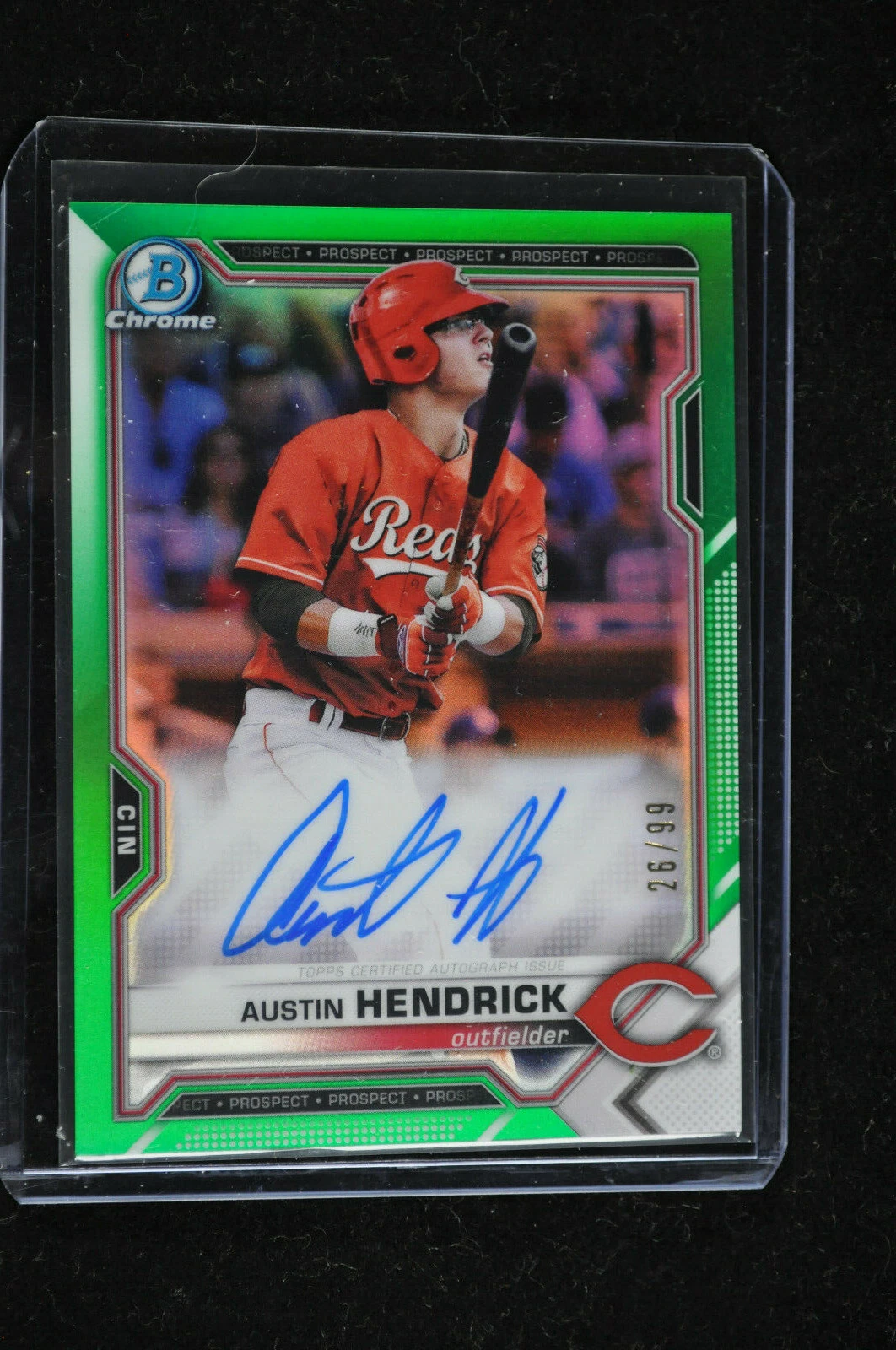
1981 Donruss
The debut contains 605 cards on thin stock and has numerous corrected errors. Tim Raines and Danny Ainge are rookie subjects. A variation collection needs a written checklist of the specific corrections being pursued; an ordinary base-set count does not describe every printing variation.
1982 Donruss
The 660-card checklist includes seven unnumbered checklists and introduces Dick Perez's Diamond Kings. Cal Ripken Jr. is a rookie subject. Keep the Babe Ruth puzzle pieces separate from the baseball-card count, and do not mistake assigned catalog numbers for numbers actually printed on checklists.
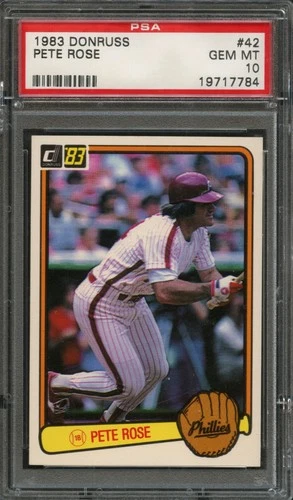
1983 Donruss
The 660-card issue includes Wade Boggs, Tony Gwynn and Ryne Sandberg rookies. Six Rated Rookie designations appear on backs, before the more conspicuous dedicated group used later. Inspect both sides when documenting this early form of the brand's familiar prospect designation.
1984 Donruss
Diamond Kings occupy 1–26 and Rated Rookies 27–46 within the 660-card issue. Don Mattingly is a key rookie subject. Living Legends bonus cards were distributed in packs rather than ordinary factory sets, so record whether a completion target includes those extra cards.
1985 Donruss
The 660-card set uses black borders and includes Roger Clemens, Dwight Gooden and Kirby Puckett. Seven checklists are unnumbered. Examine border and corner photographs closely, while keeping the separate Lou Gehrig puzzle out of the card total.
1986 Donruss
Blue-and-black striped borders identify the 660-card issue. Jose Canseco appears in Rated Rookies, and Fred McGriff is another rookie subject. The separate boxed The Rookies and Highlights products are distinct checklists despite their closely related designs.
1987 Donruss
The 660-card release uses black-and-gold borders and includes Barry Bonds, Bo Jackson and Greg Maddux. Factory-set and pack cards have differing back orientations. Record that variation accurately without assuming that orientation alone establishes a scarce or more valuable version.
1988 Donruss
The 660-card set features blue-and-black borders, with a documented factory-set border-pattern variation. Bonus MVP cards are a separate insert group. Checklists also differ by distribution context, so a variation-focused collection needs more detail than simply “1988 Donruss complete.”
1989 Donruss
The 660-card issue includes Ken Griffey Jr., Randy Johnson and Craig Biggio. Back asterisks and border-striping variations are documented across the set. Identify those traits specifically rather than labeling every small printing difference a rare error.
1990 Donruss
The red-bordered checklist expands to 716 cards. Juan Gonzalez's reverse-negative card and the separately documented Aqueous Test treatment require precise identification. Common text or printing variations should not be conflated with either of those specifically cataloged issues.
1991 Donruss
Donruss moves to two series totaling 770 cards, with blue and green borders distinguishing them. The Elite Series insert debuts as a separate numbered collecting project. An Elite card belongs to that insert checklist, not an ordinary color variation of the base run.
1992 Donruss
The 784-card issue uses two series and a glossy, white-bordered design. Diamond Kings becomes an insert set instead of the familiar base subset. A collection organized using the previous decade's numbering conventions therefore needs to be revised for this year.
1993 Donruss
Two equal series form a 792-card set. Series Two adds subjects connected with the Colorado and Florida expansion clubs. Rated Rookies are scattered through the checklist, so they should be identified by designation rather than presumed to occupy one continuous block.
1994 Donruss
The 660 cards use a borderless glossy design with foil names, split into two equal series. Special Edition is a partial parallel, while Diamond Kings and the 1984 Anniversary cards are inserts. Those distinct checklist roles should remain separate when sorting a mixed lot.
1995 Donruss
The 550-card issue uses series of 330 and 220 and a home-plate-shaped inset photograph. Press Proof and varied insert designs add separate targets. A card's acetate, die-cut or foil construction should be matched to its named insert rather than counted as another base design.
1996 Donruss
The 550-card checklist retains the previous year's series sizes. Serial-numbered insert groups include Power Alley, Freeze Frame and Round Trippers. Record their full names and serial stamps; a numbered insert is not automatically a numbered parallel of the corresponding base card.
1997 Donruss
The 450-card run includes an Update series that continues the main numbering. Rookies, Hit List and King of the Hill are among the later subsets. A full flagship set therefore includes those Update numbers rather than ending at the first-series boundary.
1998 Donruss
The 420-card checklist again incorporates a consecutively numbered Update series. Fan Club and the later FANtasy Team insert are different groups. Preserve that distinction when identifying a card connected with the product's original fan-voting promotion.
Sources & further reading
Primary references for the terminology and factual details discussed above.
- 1981 Donruss Description Reviews Checklist — BaseballCardPedia checklist ↗
- 1982 Donruss Description Distribution Reviews Checklist — BaseballCardPedia checklist ↗
- 1983 Donruss Description Distribution Reviews Checklist — BaseballCardPedia checklist ↗
- 1984 Donruss Description Distribution Reviews Checklist — BaseballCardPedia checklist ↗
- 1985 Donruss Description Distribution Reviews Checklist — BaseballCardPedia checklist ↗
- 1986 Donruss Description Distribution Reviews Insertion Ratios Checklist — BaseballCardPedia checklist ↗
- 1987 Donruss Description Distribution Reviews Checklist — BaseballCardPedia checklist ↗
- 1988 Donruss Description Distribution Reviews Checklist — BaseballCardPedia checklist ↗
- 1989 Donruss Description Distribution Reviews Insertion Ratios Checklist — BaseballCardPedia checklist ↗
- 1990 Donruss Description Distribution Reviews Insertion Ratios Checklist — BaseballCardPedia checklist ↗
- 1991 Donruss Description Distribution Reviews Insertion Ratios Checklist — BaseballCardPedia checklist ↗
- 1992 Donruss Description Distribution Reviews Insertion Ratios Checklist — BaseballCardPedia checklist ↗
- 1993 Donruss Description Distribution Insertion Ratios Checklist — BaseballCardPedia checklist ↗
- 1994 Donruss Description Distribution Insertion Ratios Checklist — BaseballCardPedia checklist ↗
- 1995 Donruss Description Distribution Insertion Ratios Checklist — BaseballCardPedia checklist ↗
- 1996 Donruss Description Distribution Insertion Ratios Checklist — BaseballCardPedia checklist ↗
- 1997 Donruss Description Distribution Insertion Ratios Checklist — BaseballCardPedia checklist ↗
- 1998 Donruss Description Distribution Insertion Ratios Checklist — BaseballCardPedia checklist ↗
Explore the actual listings.
Read the item description, photographs, condition notes and terms on eBay. Selection and availability change.
Browse Current Baseball Cards Inventory ↗Explore Graded & Vintage Baseball Cards ↗