Buffalo nickel types and NGC identification
James Earle Fraser’s design was issued from 1913 through 1938. In the first 1913 version, FIVE CENTS stands on a raised mound beneath the bison. The revised Type 2 places the denomination in a recessed area. A 1913 coin therefore needs its type specified.
Compare the date and mint on the label with the visible coin. NGC is the grading service, not a separate Buffalo nickel variety. Save the entire label so a later researcher can distinguish the actual attribution from a shortened listing title.
Read the date before filling the slot
A worn or indistinct date should remain uncertain until a clear image resolves it. Enlarging a blurred photograph cannot recover missing information. Ask for a close-up that includes surrounding design, because context helps you distinguish a digit from a mark or shadow.
For a set organized by date and mint, an unresolved digit is more consequential than it would be for a general design study. Decide which evidence your project needs before accepting the seller’s reading. A coin can be interesting without securely filling a particular checklist position.
Inspect the portrait and bison together
Look for the balance of detail across both faces. A weak area on the bison should not automatically be called circulation wear from one photograph, and a sharp obverse does not make the reverse irrelevant. Consistent lighting is useful when comparing several coins.
For a purported variety, request the actual diagnostic areas and compare them with a named reference. Avoid treating every missing-looking feature as a famous variety. A cropped, low-resolution image can create the same impression as genuine die modification.
What to preserve with an NGC example
Keep the certification number, full date-and-mint attribution, grade and any Details wording in separate fields. A numerical grade and a Details description are different records; do not reduce either to an informal “nice condition” note.
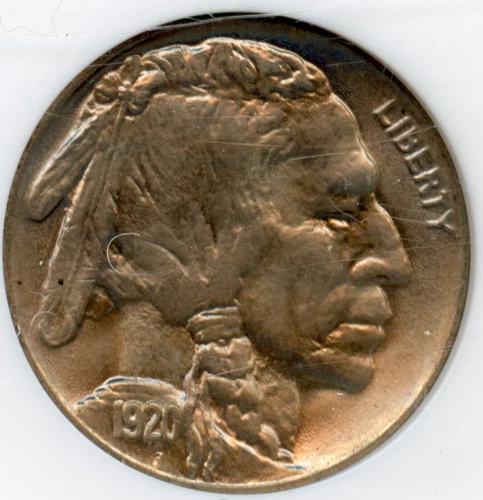
The illustrated 1920 coin is listed as NGC MS65, while the primary photograph emphasizes the obverse. That image is useful for studying the portrait, but the holder and reverse photographs remain necessary for a complete purchase review. Choose an example whose documentation supports your collecting purpose.
Sources & further reading
Primary references for the terminology and factual details discussed above.
Explore the actual listings.
Read the item description, photographs, condition notes and terms on eBay. Selection and availability change.
Browse Current Coins Inventory ↗Explore Collectible, Vintage & Graded Coins ↗