What a four-dollar Stella is
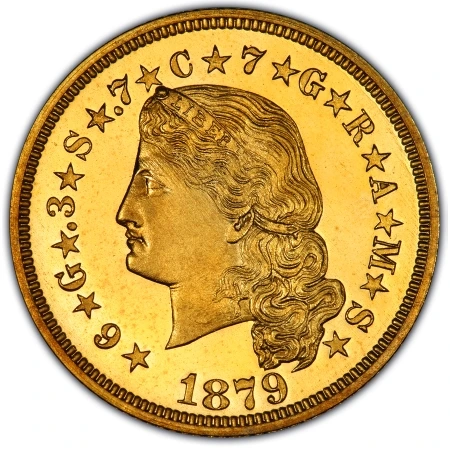
Stellas were produced in 1879 and 1880 in connection with a proposal for an internationally convenient gold coin. The reverse star gives the piece its name. The metric composition inscription on the obverse reflects that international ambition.
Two portraits define the main types: Charles Barber’s Flowing Hair and George Morgan’s Coiled Hair. Both dates occur in the design framework, so neither date nor the word Stella alone establishes the full type.
Read the whole pattern attribution
Ask for the reference number and the source in which it is defined, along with date, portrait and metal attribution. A pattern catalogue can distinguish objects that a short sales title groups together. Do not assume every Stella-related object has the same composition or status.
Keep the exact holder wording rather than paraphrasing it as “four-dollar coin.” A description should preserve the distinction between a historical pattern, a later reproduction and a modern commemorative image. The star design is recognizable, but recognition is not authentication.
Use portraits as comparative evidence
The illustrated example is a Flowing Hair design. Study the arrangement of the hair and the surrounding inscription, then compare a documented Coiled Hair example. This establishes a visual vocabulary before you attempt to interpret a small listing photograph.
Obverse and reverse images should belong to the same specimen. In a reference collection of photographs, label each image with its source and attribution. Otherwise a visually attractive composite can accidentally imply a pairing that the original source never documented.
Research before a specimen-level conclusion
For a particular Stella, preserve provenance and prior catalogue references as carefully as grade. A famous design deserves a more precise record, not a looser one. Ask which claims are visible on the object and which depend on documented history.
A study collection can begin with reference images and a written comparison of the two portraits. That is a legitimate way to learn the series without pretending an ordinary checklist can capture every pattern question. Treat unexplained differences in lettering, finish or weight as reasons for further research rather than opportunities to invent a new variety.
Sources & further reading
Primary references for the terminology and factual details discussed above.
Explore the actual listings.
Read the item description, photographs, condition notes and terms on eBay. Selection and availability change.
Browse Current Coins Inventory ↗Explore Collectible, Vintage & Graded Coins ↗