The Liberty nickel and its two reverses
The design began in 1883. Early coins of that year lack CENTS on the reverse; a revised version adds the word. Both are Liberty nickels, and both occur in the first year. Read the reverse inscription directly before choosing a checklist slot.
The famous 1913 Liberty nickels are exceptional pieces, with five known, rather than an ordinary continuation of the circulation series. A practical date collection should state how it handles that exceptional issue instead of suggesting it is a routine final album purchase.
A legible worn coin can teach the design
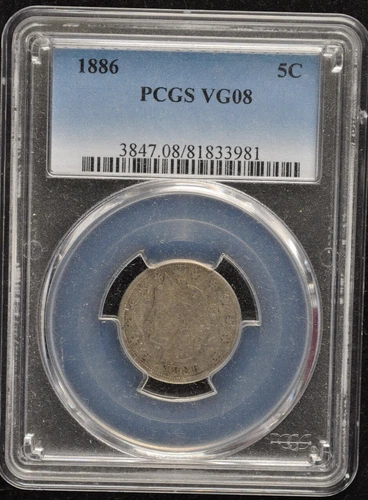
The illustrated 1886 VG8 example shows why circulated coins are useful study objects. Concentrate on the surviving portrait, date, wreath and rims. Compare where detail has disappeared on each side, rather than judging the coin from the brightest patch of metal.
If LIBERTY in the coronet is partly visible, record that observation without treating it as an automatic grade formula. An overall condition assessment also considers surfaces and the balance of wear. A magnified letter does not speak for the rest of the coin.
Separate an old story from an attribution
The No CENTS design is associated with contemporary gold-plating fraud. That history does not establish that every gold-colored example was altered during the nineteenth century. Color, plating and a seller’s “racketeer” description require their own evidence.
For a historical curiosity, ask what is actually documented: the original nickel date, the visible alteration and any provenance. Keep a plated or otherwise altered example in a clearly described educational group. Do not let an entertaining narrative erase an uncertain history.
Build the comparison around a purpose
A first pair can show the two 1883 reverse types. A date-and-mint project needs a more detailed checklist, while a grading study benefits from several worn examples photographed consistently. Choose one purpose so the next purchase advances a recognizable plan.
For every certified coin, preserve the full label image and the coin’s reverse. Record the issue separately from its grade and appearance. That small discipline prevents a missing mint field or shortened auction title from becoming a permanent identification error.
Sources & further reading
Primary references for the terminology and factual details discussed above.
Explore the actual listings.
Read the item description, photographs, condition notes and terms on eBay. Selection and availability change.
Browse Current Coins Inventory ↗Explore Collectible, Vintage & Graded Coins ↗