Mercury dimes and NGC Full Bands
The Mercury dime, issued from 1916 to 1945, depicts Liberty in a winged cap rather than the Roman god Mercury. Its reverse combines a fasces with an olive branch. The bands tying the rods together are the focus of the Full Bands designation.
NGC requires separation in the central pair of bands and in the upper and lower groups. A dark line through the middle of a photograph is insufficient by itself: it might be shadow, a mark or incomplete separation. Inspect a sharply focused reverse image and compare it with the service’s illustrated criteria.
Keep grade and strike character separate
The grade describes the coin’s overall condition; FB records a particular aspect of the strike. When making comparisons, group the same date and mint with the same designation rather than silently treating an undesignated coin as FB.
Build your viewing habit around two passes. First assess the whole coin’s surfaces and appearance. Then enlarge the fasces. Starting with the tiny band area can lead you to overlook a prominent obverse mark or an unattractive patch that will matter every time you view the coin.
A Proof label answers a different question
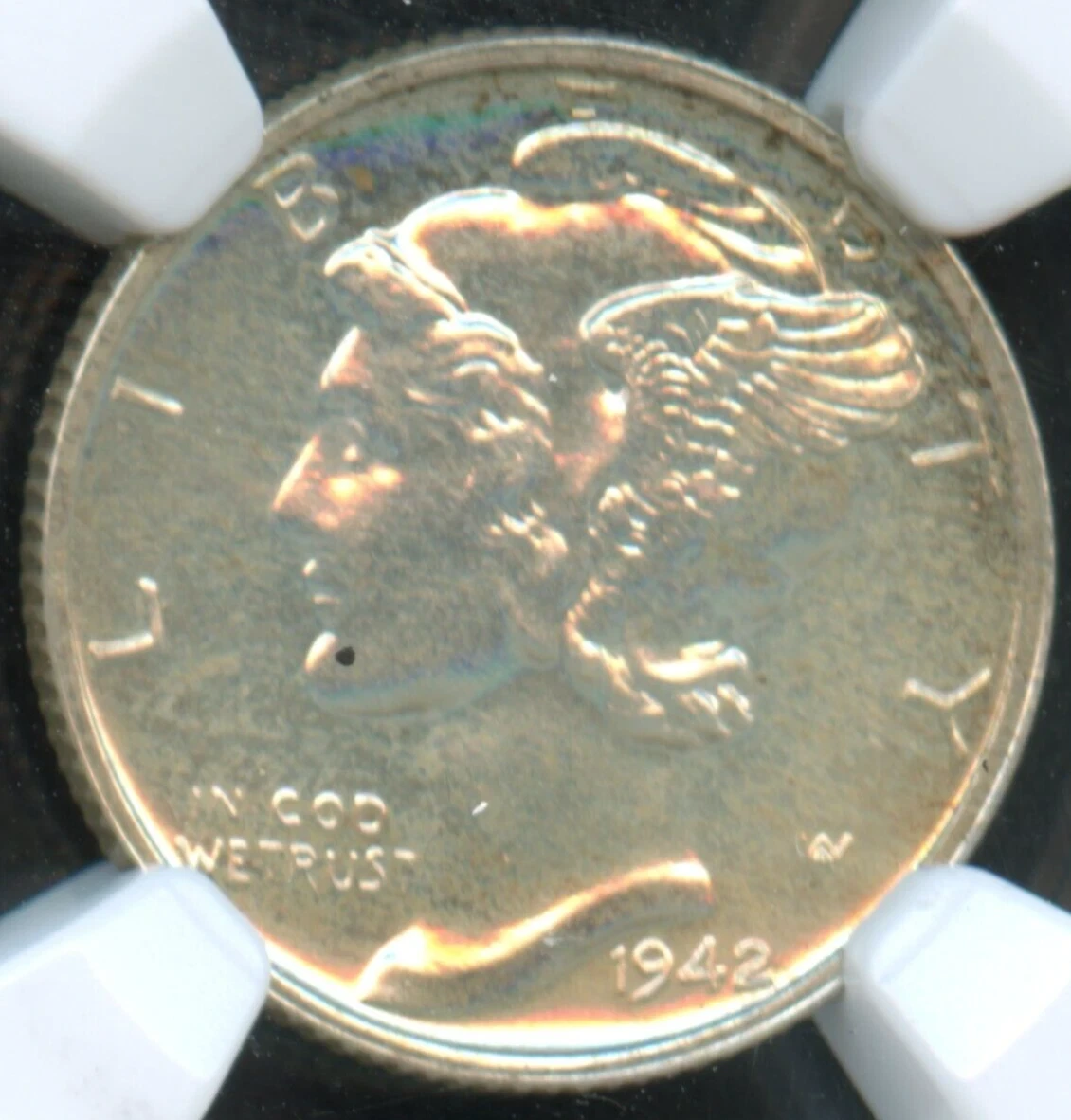
NGC does not use FB on Proof dimes. A PF label identifies a different production category, so a Proof lacking the letters FB is not missing an expected circulation-strike designation. The illustrated 1942 PF67 coin belongs in a Proof comparison group.
If you are building an FB circulation-strike collection, keep a Proof purchase in a separate section. It may be an interesting companion, but it does not fill the same checklist position. Likewise, a brilliant surface alone is not enough to identify a Proof from a photograph.
Document the evidence you actually have
Record the full label, not just the number: year, mint, PF or MS, numeric grade and any additional designation. Keep a reverse photograph with the entry even if the obverse is the display image. The reverse is where a future reader can evaluate the feature that motivated the selection.
For an attractive raw coin, write “bands appear separated in this photograph” if that is all you can establish. Leave a formal FB attribution to the relevant grading service. This preserves a useful observation without turning a promising image into an unsupported certification claim.
Sources & further reading
Primary references for the terminology and factual details discussed above.
Explore the actual listings.
Read the item description, photographs, condition notes and terms on eBay. Selection and availability change.
Browse Current Coins Inventory ↗Explore Collectible, Vintage & Graded Coins ↗