Shield nickel types at a glance
Issued from 1866 to 1883, the Shield nickel introduced the copper-nickel five-cent denomination while silver half dimes still existed. The alloy contains 75% copper and 25% nickel. On the reverse, a large numeral 5 is surrounded by stars.
The With Rays type appears in 1866 and 1867; the No Rays type begins during 1867. Look between the reverse stars rather than using the year alone. An 1867 entry in a checklist needs the subtype if your collection distinguishes both designs.
Why a weak area needs context
Shield nickels are known for inconsistent striking and die cracks. A raised line from a cracked die is different from a scratch cut into the coin after striking. Neither can be diagnosed reliably from a title that simply calls the coin an “error.”
Use angled photographs to study whether a line is raised or incuse, and compare its position with an attributed example. Do not assign a variety name because one feature looks unusual. A convincing attribution joins several matching diagnostics, not a single dramatic enlargement.
Proof identification is its own task
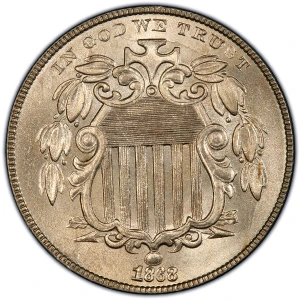
The 1877 and 1878 issues are Proof-only dates. Other dates can require careful separation of Proofs from reflective circulation strikes. The reference image here shows an 1883 No Rays coin; the obverse alone does not establish its method of manufacture.
A bright field is not sufficient evidence of Proof manufacture. If that distinction matters to your collection, seek a holder attribution or a specialist explanation that considers the entire coin. Keep the source of the attribution in your record rather than presenting your own impression as settled fact.
Design a manageable study set
A With Rays/No Rays pair gives the collection an immediate visual purpose. Choose photographs that show the entire reverse, since the feature defining the pair is away from the center. A portrait-only display would hide the reason the two coins were selected.
After that pair, a date study or a die-variety project offers different directions. Set an explicit rule before expanding: one per year, one per major type, or documented varieties from a named reference. This prevents miscellaneous purchases from becoming an accidental checklist with no clear finish.
Sources & further reading
Primary references for the terminology and factual details discussed above.
Explore the actual listings.
Read the item description, photographs, condition notes and terms on eBay. Selection and availability change.
Browse Current Coins Inventory ↗Explore Collectible, Vintage & Graded Coins ↗