The three-dollar series
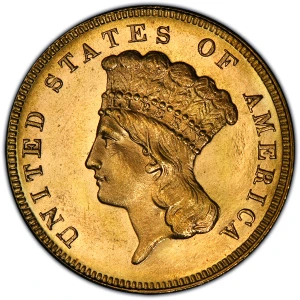
Three-dollar gold pieces were issued from 1854 through 1889. The reverse explicitly gives the denomination, making it the best starting point when an enlarged portrait resembles another gold series. Read 3 DOLLARS before moving on to the date.
PCGS distinguishes regular strikes and Proofs, and identifies 1875 and 1876 as Proof-only years. That distinction matters to a date checklist: a slot cannot be filled with a circulation issue that was never made.
Use the reverse as the identity photograph
For a denomination study, a clear reverse image may explain the coin better than a dramatic obverse. Save both, but let the written caption state $3. A file named only “Indian gold” makes later sorting unnecessarily difficult.
Check whether the listing and slab agree on date, mint and production category. A discrepancy should be resolved before grade comparisons. If the image does not show the identifying area, request a photograph that does rather than copying the title into your catalogue.
Separate a type project from a date project
One representative coin can complete a broad design slot, while a full date-and-mint project involves a substantially different checklist. Decide which project you are undertaking before treating every missing year as the next target.
For a type example, weigh readable design, pleasing surfaces and complete documentation according to your own priorities. For a specialist issue, attribution and provenance may become the central research tasks. Those are different selection methods and should be recorded honestly.
Keep historical context proportionate
The denomination is often connected with the three-cent postage rate and purchases of a hundred stamps. That makes an engaging comparison, but an individual coin should not be described as having purchased stamps without provenance establishing that use.
The illustrated 1884 piece is a representative photograph, not a claim of current stock. Keep general history separate from the life of the particular object. A strong collection entry contains both, clearly labeled, without letting a familiar story stand in for evidence.
Sources & further reading
Primary references for the terminology and factual details discussed above.
Explore the actual listings.
Read the item description, photographs, condition notes and terms on eBay. Selection and availability change.
Browse Current Coins Inventory ↗Explore Collectible, Vintage & Graded Coins ↗