A short series with two kinds of dates
Twenty-cent pieces are dated 1875–1878. Coins for circulation were struck in 1875 and 1876; the final two dates are Proof-only. A four-year date collection therefore involves more than four ordinary circulation issues.
Write the intended format into your checklist. If your project is a circulation type set, one representative can explain the denomination. If it is a full date project, the Proof-only years need their own context rather than being treated as unusually shiny missing business strikes.
Separate twenty cents from a quarter
PCGS describes the historical confusion created by the coin’s similarity in size and design to the quarter. Modern photographs can repeat that problem when they omit the reverse or enlarge every coin to the same dimensions.
Read the reverse denomination, check the date and compare the certified description. Keep a complete two-sided image with the record. A crop of Liberty’s portrait is useful for condition study but is an incomplete identification photograph.
Date and mint require individual evidence
The circulation checklist includes Philadelphia, Carson City and San Francisco issues, with only particular date-and-mint combinations actually produced. Use a specialist list rather than drawing a grid that assumes every mint struck both years.
An unusual or significant attribution should prompt a close examination of the relevant area and a matching certification record. Do not transfer the reputation of one date-and-mint combination to every coin in the series. A denomination name alone says little about an individual example.
Choose an informative representative
For a design study, prioritize a legible date, clear denomination and surfaces you can assess from the photographs. Keep observations about wear separate from any comments about striking quality. If an image cannot resolve a detail, record the uncertainty rather than converting it into a confident grade opinion.
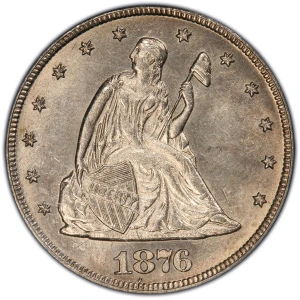
The featured 1876-CC reference photograph identifies a specific issue, not an average example of the series. A caption should preserve that specificity. The purpose of a reference image is to teach what to inspect; it does not establish the authenticity or condition of another coin offered under the same title.
Sources & further reading
Primary references for the terminology and factual details discussed above.
Explore the actual listings.
Read the item description, photographs, condition notes and terms on eBay. Selection and availability change.
Browse Current Coins Inventory ↗Explore Collectible, Vintage & Graded Coins ↗