Two-cent pieces: denomination and motto
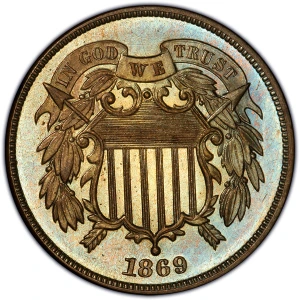
The two-cent series spans 1864–1873. Its shield design introduced IN GOD WE TRUST to United States coinage, and the first year includes Small Motto and Large Motto varieties. The motto is therefore both a historical feature and a practical attribution area.
Compare the lettering with a documented reference, keeping the whole obverse visible. Enlarging one photograph more than another can make every letter appear “large.” The variety concerns the design, not the size of your screen.
For a type collection, choose an example whose shield and denomination are easy to read. For a variety collection, add an explicit motto field and retain the diagnostic images. These goals need not require the same specimen.
Three-cent silver: a small star and three design types
Silver three-cent pieces run from 1851–1873. Their obverse star and reverse Roman numeral distinguish them immediately from the later nickel-alloy coins. The series has three principal design types, with changes to the star outlines and reverse details.
Use a reference that illustrates all three types at the same scale. Count the outlines deliberately and check the accompanying reverse; wear and toning can make a quick visual impression unreliable. A type number copied from a listing should be supported by the pictured object.
These small coins need close photographs, but do not crop away the rim to obtain them. Keep one complete image of each side and add diagnostic crops separately. That preserves evidence about centering and peripheral condition while making the miniature design easier to study.
Three-cent nickel: another alloy, another portrait
The copper-nickel three-cent series spans 1865–1889. Liberty’s portrait replaces the silver coin’s star, while the reverse retains a Roman numeral III in a different design. The two series overlap in time; one does not begin only after the other ends.
The word “nickel” here describes the alloy-based series name. It does not change the face value to five cents. Copy the denomination from the coin and certification record, especially when browsing listings that group several small denominations together.
Production history includes Proof-only dates. A complete date plan therefore needs an explicit rule about Proofs. Do not assume that every missing circulation slot can be filled by finding another ordinary Mint State issue.
Make the comparison useful
A three-coin display can explain shield, star and portrait designs in a small space. Caption denomination, alloy family and date under each example. The featured 1869 photograph shows a two-cent piece only; it is not a representative image of either three-cent design.
Keep grade and surface observations separate from your design notes. A worn but clearly identified coin can teach the denomination effectively, while a variety study may need stronger detail in one specific area. Choose examples that answer the question your collection is meant to explore.
Sources & further reading
Primary references for the terminology and factual details discussed above.
Explore the actual listings.
Read the item description, photographs, condition notes and terms on eBay. Selection and availability change.
Browse Current Coins Inventory ↗Explore Collectible, Vintage & Graded Coins ↗