1990–91 Upper Deck: 550 cards across two releases
The debut issue has a 400-card Low Series and 150 additional high numbers, producing a 550-card numbered set. High Series packs can also contain lower-numbered cards, so a pack's series name and the number on a particular card are not contradictory. High-number cards were also distributed as a factory set.
The standard front uses white margins and a slim team-colored frame, with a player name at the top and team identification below. Star Rookies, draft-pick cards and Young Guns have their own presentation. Keep those named groups within the numbered checklist rather than assuming every unusual-looking card is an insert. A base set is complete by its specified card list, not by the proportion of ordinary player portraits in the box.
1991–92 Upper Deck: 700 cards and the Hasek rookie
The second season reaches 700 cards: Low Series numbers 1–500 and the additional high-number run 501–700. Dominik Hasek's rookie is number 335, the card pictured with this guide. Peter Forsberg's number 64 is another important early appearance. The set also includes international and draft-related subjects, so the checklist extends beyond established NHL regulars.
Pavel Bure number 555 is a notable 1991–92 NHL-uniform card, but Bure already has his rookie in the previous Upper Deck season. Do not turn a change of uniform into a new first-card claim. For a full-set purchase, establish whether both numbered groups are present. A neatly boxed 500-card run remains the Low Series portion of the larger issue.
Young Guns began here, but not every rookie is a Young Gun
Young Guns debuted in 1990–91, with the high-series group including Pavel Bure and Sergei Fedorov. Other rookies in the release use different subset identities. The modern fame of the Young Guns name is not a reason to apply it indiscriminately to every early Upper Deck rookie.
Read the front's actual designation and check the card number. A rookie, a Star Rookie and a Young Guns card can be related collecting ideas without being interchangeable product descriptions. For a small historical display, select one clearly identified example from each presentation and explain what the cards actually show.
Language editions and holograms are separate checks
The 1990–91 release exists in English and French editions. A French-language card is an edition distinction, not a printing error. Check the written text on the reverse; the appearance of an international player on the front does not determine the language edition.
Documented hologram differences provide another collecting layer. The first issue has multiple reverse hologram styles, and the second season includes text-style and diamond-logo holograms. A different hologram is not, by itself, proof of either rarity or counterfeiting. Compare the exact card with a catalogued variation and retain a clear reverse photograph. Collectors pursuing a simple numbered set can deliberately choose not to chase every hologram version.
Separate inserts from the numbered base cards
Hockey Superstars hologram stickers accompany the first-season collecting picture. The following season includes separately catalogued groups such as Award Winner Holograms, Euro-Stars and Hockey Heroes featuring Brett Hull. A shiny insert can be visually prominent without occupying a missing number in the base run.
For a mixed collection, begin with two trays or lists: cards belonging to the principal numbered checklist and everything needing its own product identification. Then sort the latter by the printed insert title. This is more reliable than using gloss, thickness or visual excitement as a proxy for whether a card belongs in a set. Keep packaging cards and promotional material separately identified too.
Assess the card and holder separately
Glossy photographs can show reflections that look like scratches, while a scuffed slab can make a clean card appear damaged. Ask for an additional angle when a line crosses the player image or the white border disappears into glare. Check both sides and all corners before deciding that one graded example presents better than another.
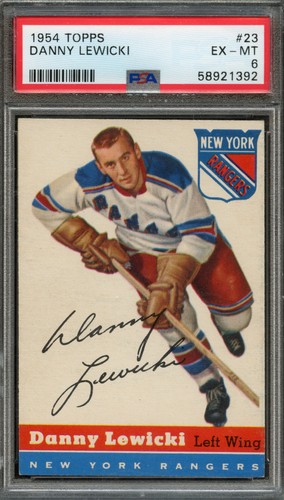
A grading label supplies a condition opinion and an issue description. Verify that its year, brand, number and player match the pictured card, then check the certification record when available. Keep the label photograph in your private purchase record even when a public display uses a crop of the card alone. That preserves the link between the object and the description without making the label the focus of the display.
Choose a finish line for the collection
A two-season type collection might pair one regular card from each design. A goaltender collection could use Hasek and other goalies while leaving draft-pick subjects outside its scope. A complete numbered project needs all 550 positions for 1990–91 or all 700 for 1991–92, with the chosen language edition stated. A variation project is larger again.
Write the chosen rule at the top of the inventory and mark inserts separately. When a near-set appears for sale, compare its missing numbers with your rule before buying another pile of duplicates. Save front-and-back photographs and use full season names in filenames; that small habit keeps the first two Upper Deck releases from merging into an indistinct box of early-1990s hockey.
Sources & further reading
Primary references for the terminology and factual details discussed above.
Explore the actual listings.
Read the item description, photographs, condition notes and terms on eBay. Selection and availability change.
Browse Current Sports Cards Inventory ↗Explore Graded & Collectible Sports Cards ↗