Begin with a specific collecting question
Choose a theme such as one ruler, a city, a recurring reverse subject or a small chronological sequence. Write down what evidence a coin would need to provide for that project. For a portrait study, the face may matter most to you; for an inscription study, readable lettering may be more important than an otherwise attractive portrait.
Keep the scope separate from the seller's narrative. A broad phrase such as Roman coin does not supply an emperor, mint, denomination or date range. Look for a specific attribution and a reference you can follow. Museum collections can help you compare documented designs, but visual resemblance alone does not authenticate an offered coin.
Allow for how ancient coins were made
The Metropolitan Museum describes ancient Greek coins struck by hand between engraved dies. That production context helps explain why exact centering and complete design transfer deserve attention when reviewing an individual coin. A missing portion of the inscription may reflect the way the design meets the flan rather than a modern cropping error in the photograph.
Ask for the coin's diameter and weight as well as both sides. A photograph enlarged to fill a screen can obscure the object's actual scale. Compare visible design, shape and measurements with a relevant reference, while recognizing that this is an identification exercise and does not replace specialist authentication.
Read ancient grading on its own terms
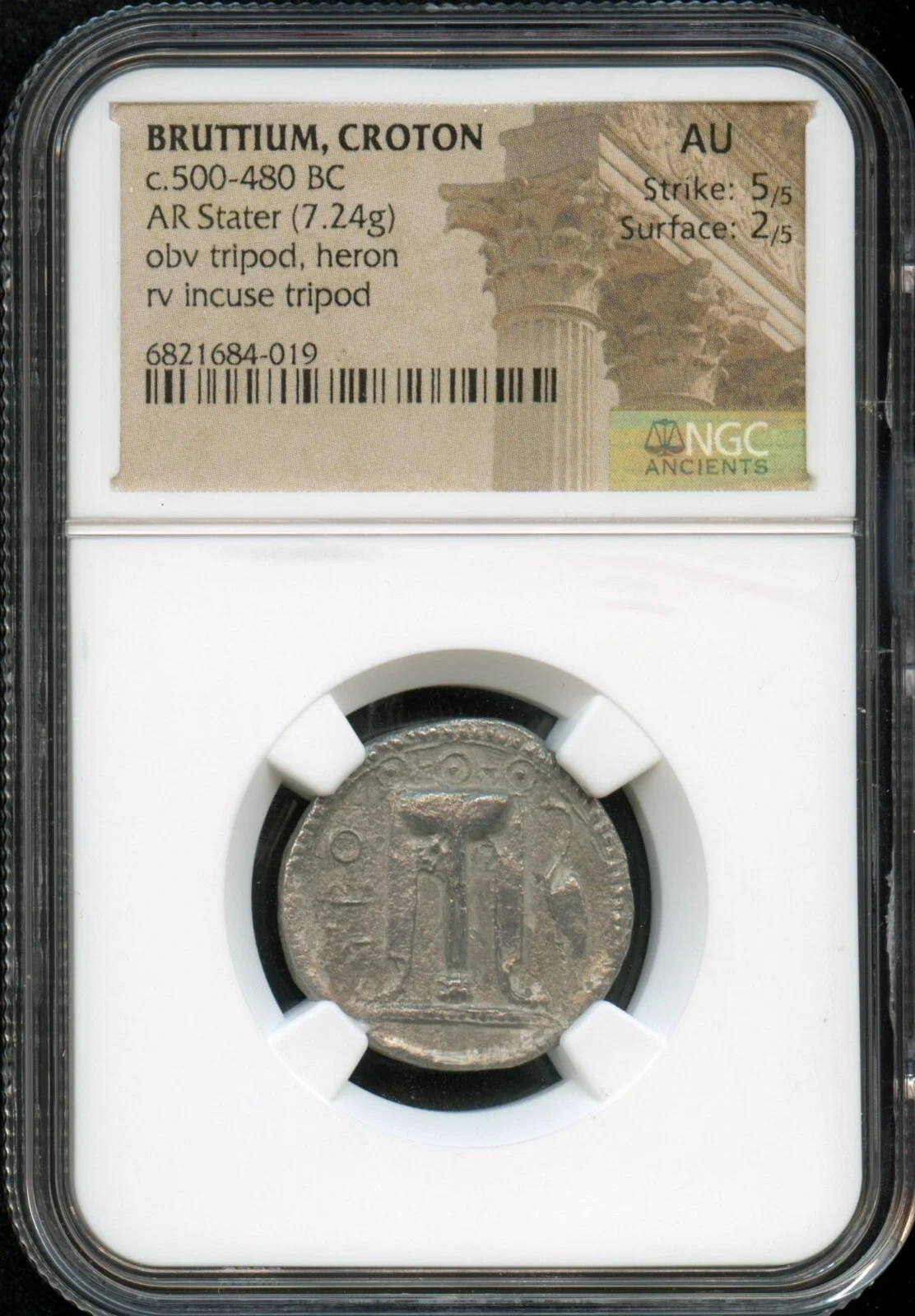
NGC Ancients evaluates wear along with strike, surface and style. These separate considerations explain why two coins with a similar wear assessment may look very different: one may show more of the design, while another may have a clearer surface. Read the full holder description rather than reducing the assessment to one familiar adjective.
The NGC Ancients guarantee differs from its general modern-coin framework: it guarantees grade under its terms, but does not guarantee ancient-coin authenticity, attribution or date. This is a meaningful limitation. Treat the holder as useful documented expertise and read the applicable terms; do not translate its presence into an unrestricted authenticity promise.
Ask about surfaces and prior ownership
Review the description for smoothing, tooling, corrosion, deposits, repairs or other disclosed surface issues. If a term is unfamiliar, ask what was observed and where it appears. Request photographs that show the relevant area. A dramatic color or strongly modeled portrait should not distract from unanswered questions about alteration or preservation.
Ask what ownership history, old collection tickets, invoices or auction references accompany the piece. Keep the actual documentation and distinguish it from an unverified anecdote. A stated provenance becomes more useful when the reference identifies the same specimen and can be checked. Missing history should remain a documented gap rather than being filled with a plausible story.
Keep a research record with each coin
Record the seller's attribution, source references, measurements, images, certification if present and any condition disclosures. Preserve uncertainty in the wording: a tentative attribution should remain tentative until better evidence supports it. Keeping successive research notes is more useful than repeatedly overwriting the original description with the latest guess.
Browse TrendingArt's linked eBay inventory for individual ancient-coin listings. Evaluate each offered piece on its own documented characteristics and terms. If the listing lacks information essential to your project, ask for it before deciding. The coin-grading and raw-versus-graded guides provide additional context, while ancient-specific grading references remain necessary for this category.
Common questions
Does an NGC Ancients holder guarantee authenticity?+
No. NGC Ancients states that it holders coins it considers genuine, but its guarantee does not cover authenticity, attribution or date. Read its ancient-specific terms.
What should accompany an ancient coin's description?+
Seek a specific attribution, clear images, measurements, condition disclosures and any available ownership documentation. Record which claims are established and which remain tentative.
Sources & further reading
Primary references for the terminology and factual details discussed above.
Explore the actual listings.
Read the item description, photographs, condition notes and terms on eBay. Selection and availability change.
Browse Current Coins Inventory ↗Explore Collectible, Vintage & Graded Coins ↗