1932 U.S. Caramel: baseball within a multisport set
U.S. Caramel’s Famous Athletes issue is cataloged as R328. Its red backgrounds and white-lettered names create a strong visual identity. PSA describes 32 subjects covering baseball along with boxing and golf, so a baseball-only collection is a subset of the full issue.
Fred Lindstrom number 16 is a special checklist obstacle, and registry conventions may therefore differ from an unrestricted printed-number target. Decide which checklist you mean before using the word complete. A short set is not automatically a simple set, and the Ruth and Gehrig cards should not be used as price proxies for every other subject.
1933 DeLong: a compact, distinctive issue
DeLong’s R333 issue contains 24 cards with player photographs set against stylized backgrounds. Lou Gehrig number 7 is a key subject. The compact checklist makes the set easy to describe, but it does not remove the importance of condition or the challenge of individual cards.
Keep DeLong separate from contemporary Goudey cards in a want list: the shared year does not make their portraits or checklists interchangeable. For a first example, compare the lower name panel, the full borders and the reverse with a verified reference. A player collection can use the contrast between the two manufacturers as its organizing idea.
1935 Diamond Stars within the 1934–36 production
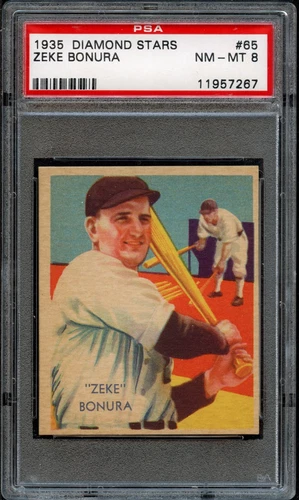
The cards commonly listed as 1935 Diamond Stars belong to National Chicle’s multi-year R327 production. PSA catalogs the overall issue as 1934–36 and explains that reverse statistics and printing differences help distinguish releases. A single year in an auction title should therefore be checked against the back.
The set combines colorful player artwork with a strong period graphic style. A basic numbered collection and a collection of year or back-color variations are different targets. Record the reverse information before treating two copies of the same numbered subject as duplicates.
Compare the collecting boundary, not only the card count
U.S. Caramel asks whether you want baseball or every sport. DeLong offers one compact baseball checklist. Diamond Stars requires a decision about the multi-year issue and recognized variants. Those boundaries explain why three collections with similar numbers of cards can represent very different levels of completion.
Choose a written definition for your project and keep it with the inventory. When a seller offers a partial set, ask for the actual list and condition notes rather than relying on a percentage. The missing cards matter at least as much as the quantity supplied.
Condition checks that preserve the design
Look at solid-color backgrounds for paper loss and surface disturbance, then inspect the portrait and every border. On the reverse, check whether writing, staining or mounting damage obscures the year evidence or promotional text. Ask for an additional image when a holder reflection crosses an important detail.
Eye appeal is a personal judgment, but it should rest on complete photographs. A sharply colored card can have a serious crease; a lower-grade example can retain an excellent face. Write down the tradeoff you are choosing instead of assuming that a label tells the entire visual story.
A three-card introduction
One baseball subject from each family provides a coherent introduction to 1930s design. Keep the front-and-back photographs together and note how each manufacturer used the reverse. That reference group can later guide a player, team or set-building project.
Avoid mixing modern reproductions into an original-card checklist. If a reproduction is kept for study, label it clearly in the inventory and storage. For original purchases, retain the source, exact attribution and authentication status so the collection remains understandable without the original auction page.
Sources & further reading
Primary references for the terminology and factual details discussed above.
Explore the actual listings.
Read the item description, photographs, condition notes and terms on eBay. Selection and availability change.
Browse Current Sports Cards Inventory ↗Explore Graded & Vintage Baseball Cards ↗