The issue and its nonconsecutive numbers
PSA’s standard catalog identifies 98 cards within a numbering sequence that reaches 168. Numbers were skipped, so an empty numerical slot does not by itself prove that a collection is incomplete. Start with the recognized checklist rather than drawing up a list of every integer from one to the last number.
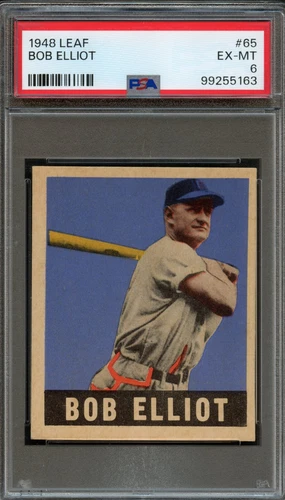
Preserve the issue name used by the card’s authentication record and explain alternate dating in your inventory if needed. A seller using 1948–49 may be referring to this familiar issue; the front, reverse and catalog attribution should resolve the identity. The year alone should never substitute for photographs.
Color, portraits and print appearance
The front combines a player likeness with a strong colored background and name panel. The roster includes Jackie Robinson, Babe Ruth and Satchel Paige, which helps explain why a relatively compact basic checklist can still be an ambitious project. The set also contains a substantial short-printed portion.
Color saturation, image registration and physical damage are separate observations. Compare the face and lettering for print alignment, then inspect corners, edges and the reverse for wear. A vivid background does not establish a high grade, and softer registration should not automatically be confused with rubbing or lost paper.
Variations need a visible identifying detail
Recognized variations include the name spelling on Gene Hermanski’s card and a sleeve-color distinction on Cliff Aberson. Such descriptions need a clear photograph of the relevant area. Keep the actual variant wording with the inventory entry so two examples can be compared without reopening old listings.
Avoid assigning a new variety to every color shift visible on a screen. Lighting, image processing and ordinary printing differences can change appearance. If a premium rests on a named variant, establish the catalog match and the card’s condition independently.
Planning a type, player or set collection
A single authenticated example can introduce the printing style. A player collection can compare Leaf’s interpretation with another manufacturer’s image. For a full set, divide the want list into the regular run, the more challenging subjects and any optional variations, keeping all three visible in the budget.
When evaluating a partial set, ask for an itemized list and individual photographs of the important cards. A group percentage cannot tell you whether the missing cards are the central obstacles. Set a condition target that you can apply consistently while allowing clearly documented exceptions for difficult cards.
What to retain after purchase
Save the complete front and back, the seller’s attribution and the certification information when present. Check that a certification lookup matches the year, player and any named variant, then compare the actual holder and card with that record. An accurate lookup is useful evidence, but it does not replace inspection of the item being sold.
Choose storage appropriate to the original card’s dimensions and condition. Keep reproductions distinctly labeled if they are used as study aids or placeholders. A clear record of what is original, what is missing and why a particular example was selected makes this colorful issue much easier to collect responsibly.
Sources & further reading
Primary references for the terminology and factual details discussed above.
Explore the actual listings.
Read the item description, photographs, condition notes and terms on eBay. Selection and availability change.
Browse Current Sports Cards Inventory ↗Explore Graded & Vintage Baseball Cards ↗