The basic set and its landmarks
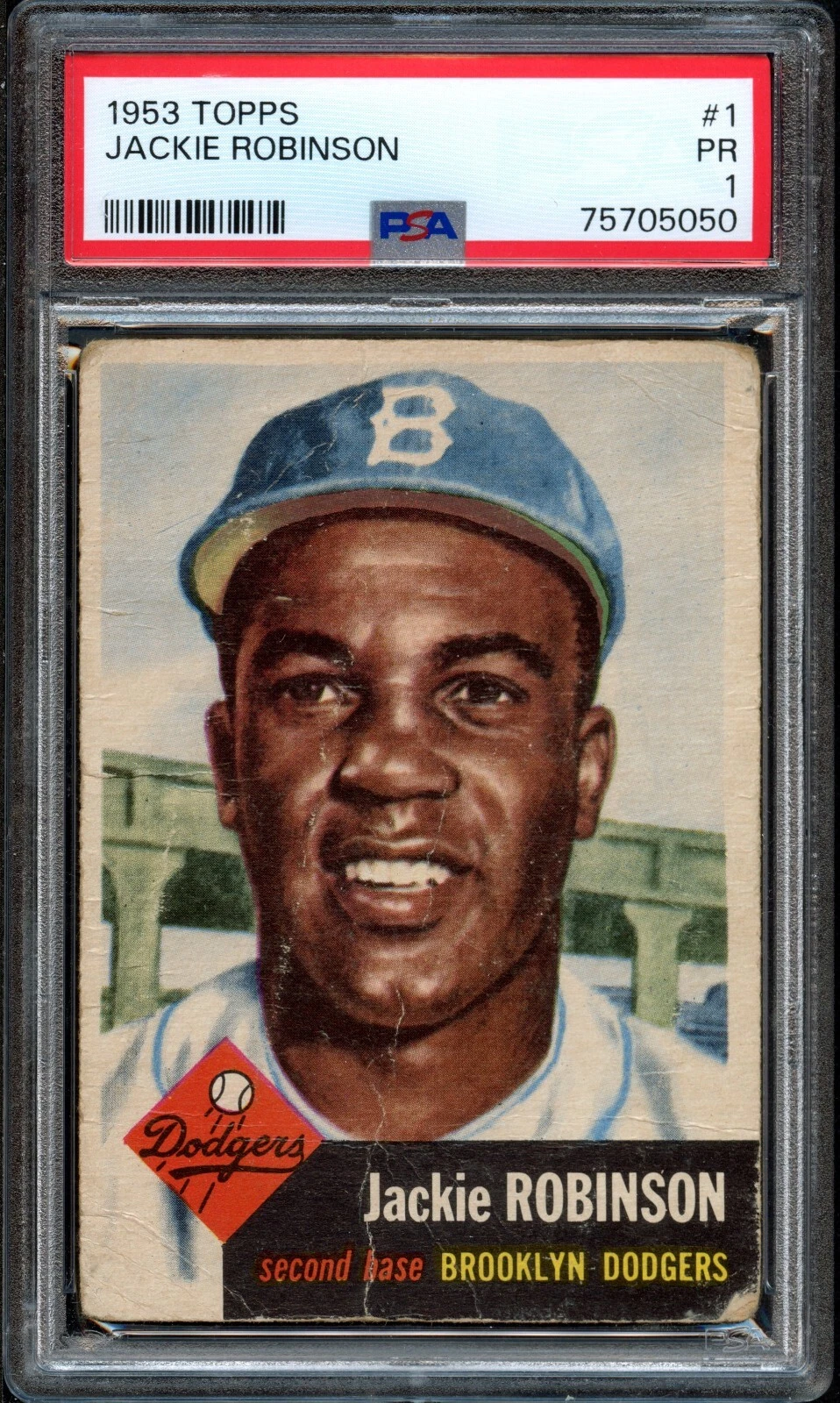
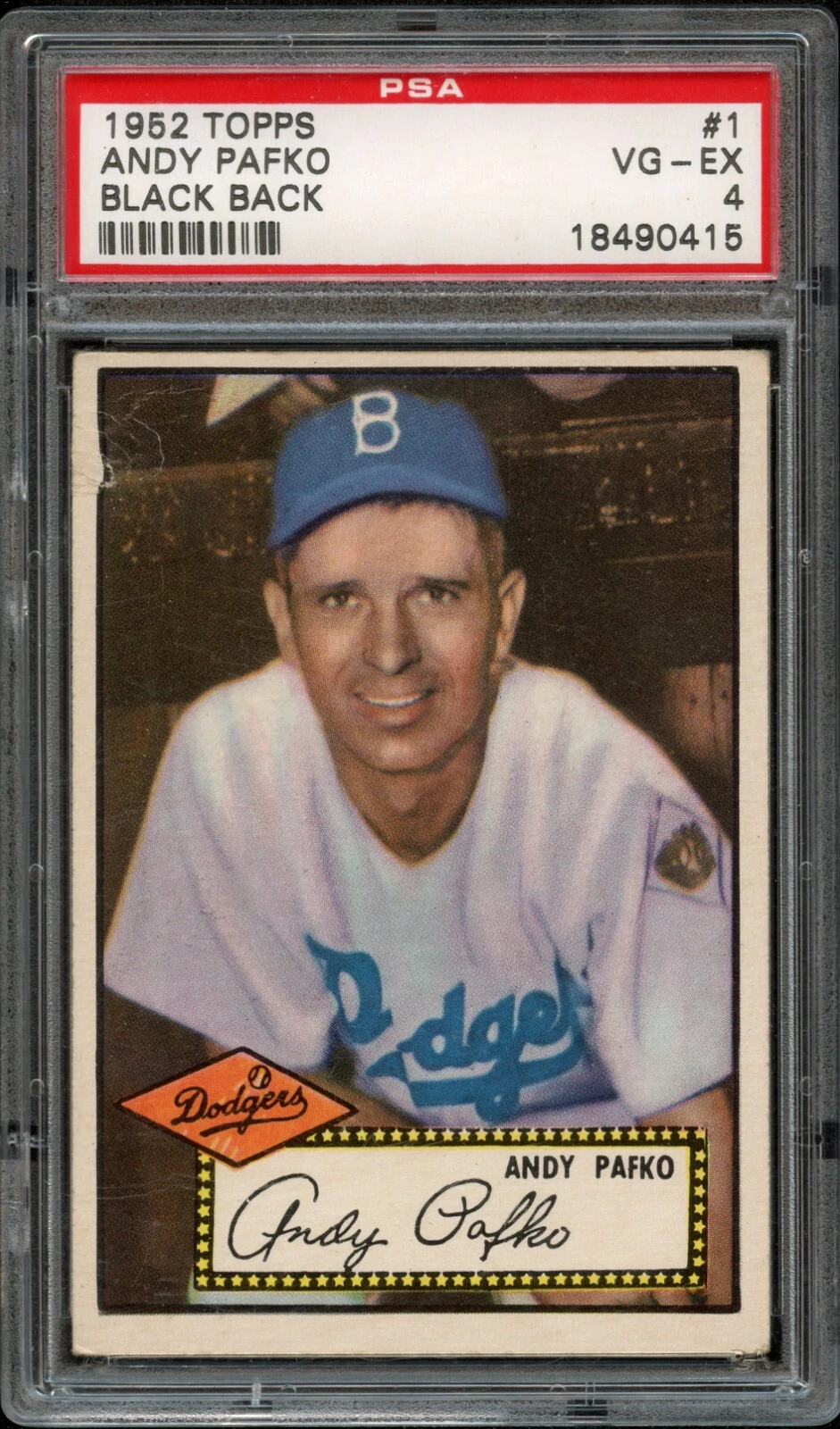
PSA catalogs 407 cards measuring approximately 2⅝ by 3¾ inches, distributed in six series. The high-number run begins with Mickey Mantle at number 311 and ends with Eddie Mathews at 407. Jackie Robinson is number 312. The first 80 cards have red-back and black-back versions. These are issue details, not estimates of how many examples survive.
Use those facts to establish a checklist before shopping. A basic numbered set and a collection that also includes back variations are different goals. If a seller describes a group as a complete or near-complete set, request the actual checklist and a clear definition of which variations are included.
A first Topps card is not automatically a rookie card
The Mantle card is his first Topps appearance; calling it his rookie card overlooks the earlier Bowman issue. The same distinction matters when a seller uses phrases such as first card, first Topps or rookie. Treat those as claims to verify, not interchangeable sales language.
A player collector can reasonably want both an earlier rookie issue and the first Topps card. They document different parts of the collecting record. When comparing a listing or preparing your own inventory, copy the year, manufacturer and number so those distinctions remain visible. A shorthand note such as Mantle rookie is too imprecise to support a later purchase or sale.
Choose a manageable collecting project
A full 1952 set demands different planning from a team collection or a small group of favorite players. Before buying inexpensive cards in quantity, look at the entries you would eventually need to finish your chosen checklist. Reserve attention and budget for those cards instead of measuring progress only by the number purchased.
A narrower project might be a selection of portraits, one team, first-series cards, or one representative example of each series. These approaches retain the set’s design and historical interest while giving the project a defined boundary. Write that boundary down, especially if you are tempted to add every attractive card that appears in a search.
For a mixed raw-and-graded set, decide how you will record condition consistently. A spreadsheet can distinguish owned, wanted and upgrade candidates without pretending every raw card has an exact professional grade. Include a short reason for any planned upgrade, such as centering or a crease through the portrait.
Treat high numbers as a separate comparison group
PSA identifies the last series as more difficult than the earlier portions. That does not establish a fixed multiplier for every card. Player identity, condition, variation and the quality of the individual example still matter. A low-number common is not a reliable price comparison for a different player in the high-number run.
When reviewing a lot, count unique high-number cards rather than accepting a general claim that it contains rare cards. Check whether the same card appears several times, whether the backs match the fronts, and whether any pieces are later reprints. Photographs of stacked cards are insufficient for confirming the composition of a substantial set purchase.
Inspect large cards carefully
The larger format creates a practical storage issue. Use holders designed for the actual dimensions and do not force a card into a standard modern pocket. Before buying a raw example, request full front and reverse photographs with all four edges visible. Cropped pictures make both identification and condition assessment harder.
Examine the portrait, colored fields, white borders, corners and back separately. A crease can pass through a quiet background and disappear in a small image. Paper loss on the reverse can be substantial even when the front displays well. Decide which compromises you accept, and make sure they are reflected in the description rather than inferred from a flattering photograph.
A numerically graded card still needs individual inspection. Two examples with the same grade may have different centering or wear patterns. If a holder is labeled Authentic or Authentic Altered, read that designation explicitly; it is not a numeric-grade substitute.
Keep reproductions and originals distinct
The 1952 design is widely recognizable, which makes front-only identification risky. Read the complete issue description, reverse information and grading label where present. A seller’s clear identification as a later reprint should carry through into your records. Do not pay an original-card price based on a familiar image alone.
If a listing leaves the production year ambiguous, ask whether the physical card was issued in 1952 and request supporting photographs. For a valuable purchase, authentication should be addressed before the transaction. A collector guide cannot authenticate a specific card from a title or thumbnail.
Use a purchase record that will remain useful
Save the seller’s description, clear images, card number, variation and certification number where applicable. Record the date and the total transaction cost separately from any future value estimate. This creates a factual record instead of a memory of what the card was supposed to be.
Explore TrendingArt’s vintage baseball category and current eBay inventory for individual examples. Availability changes; the live listing should supply the exact card, condition and terms. Use this guide to formulate questions before you buy, especially when a card’s series, back or authenticity is central to its appeal.
Common questions
Is the 1952 Topps Mantle his rookie card?+
It is his first Topps card. His earlier Bowman issue is the recognized rookie card, so the two descriptions should not be used interchangeably.
Do I need both back colors for a complete set?+
That depends on your definition. A basic numbered set and a variation-inclusive project are different checklists. State which one you are building.
Sources & further reading
Primary references for the terminology and factual details discussed above.
Explore the actual listings.
Read the item description, photographs, condition notes and terms on eBay. Selection and availability change.
Browse Current Sports Cards Inventory ↗Explore Graded & Vintage Baseball Cards ↗