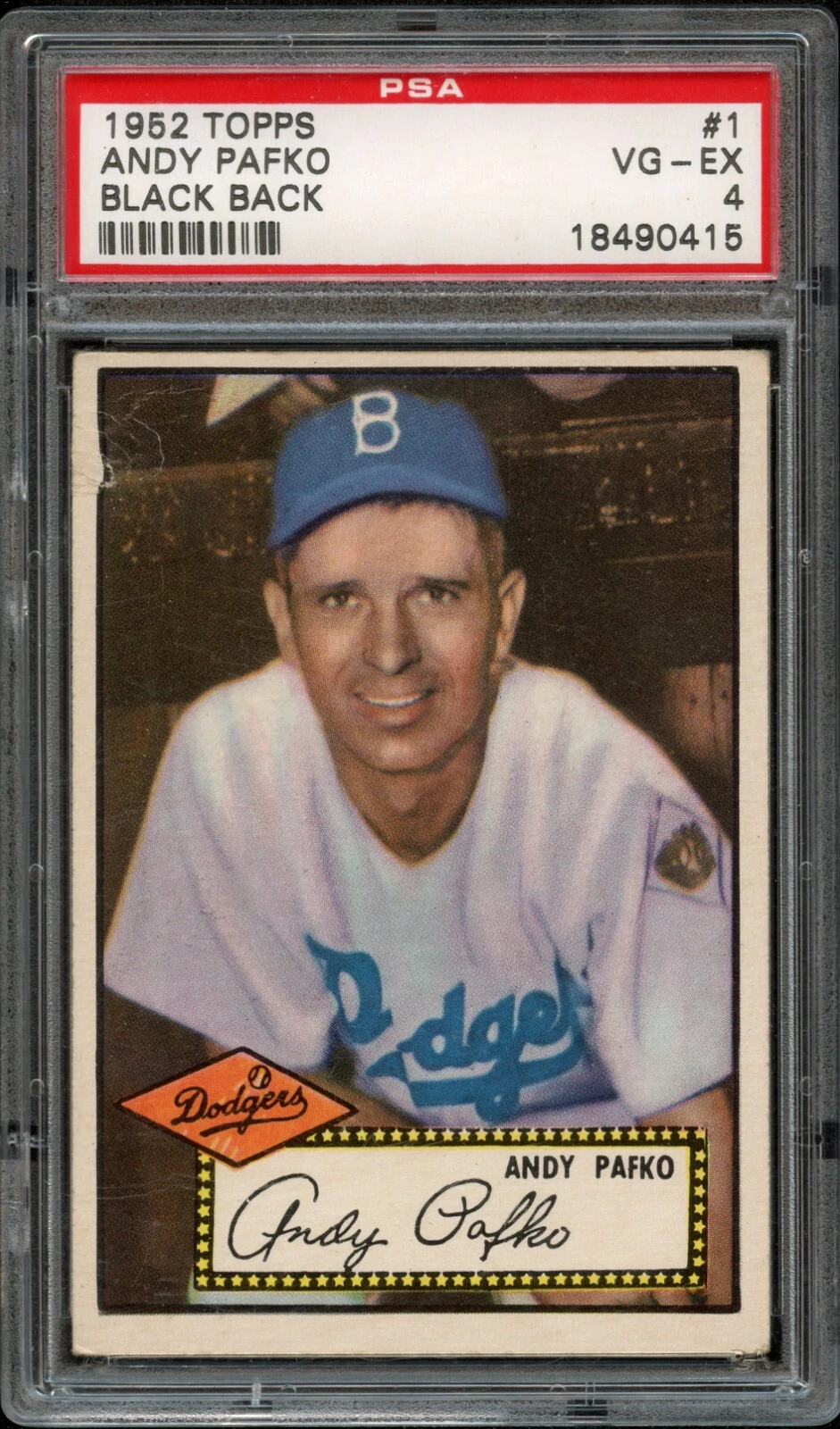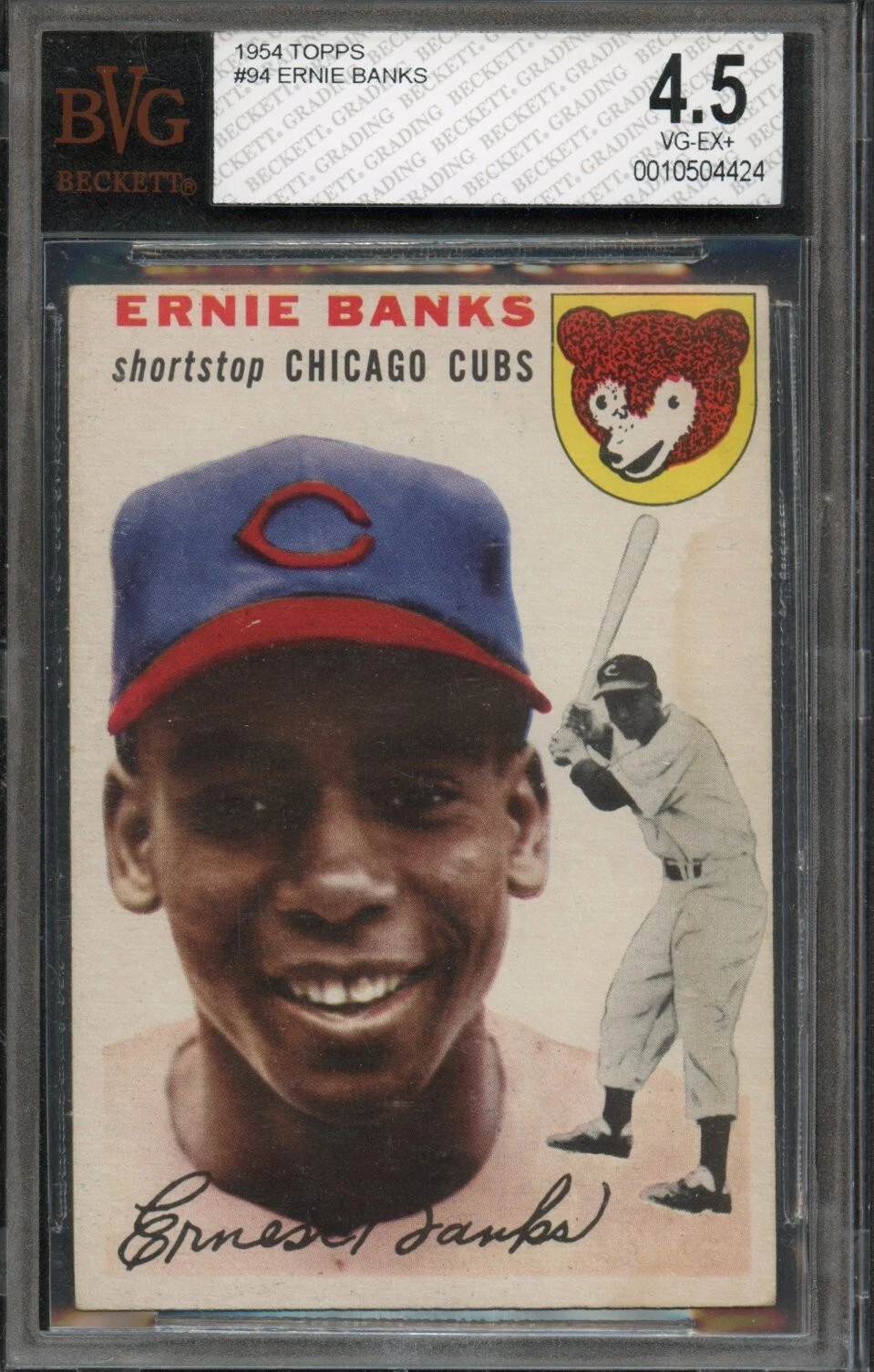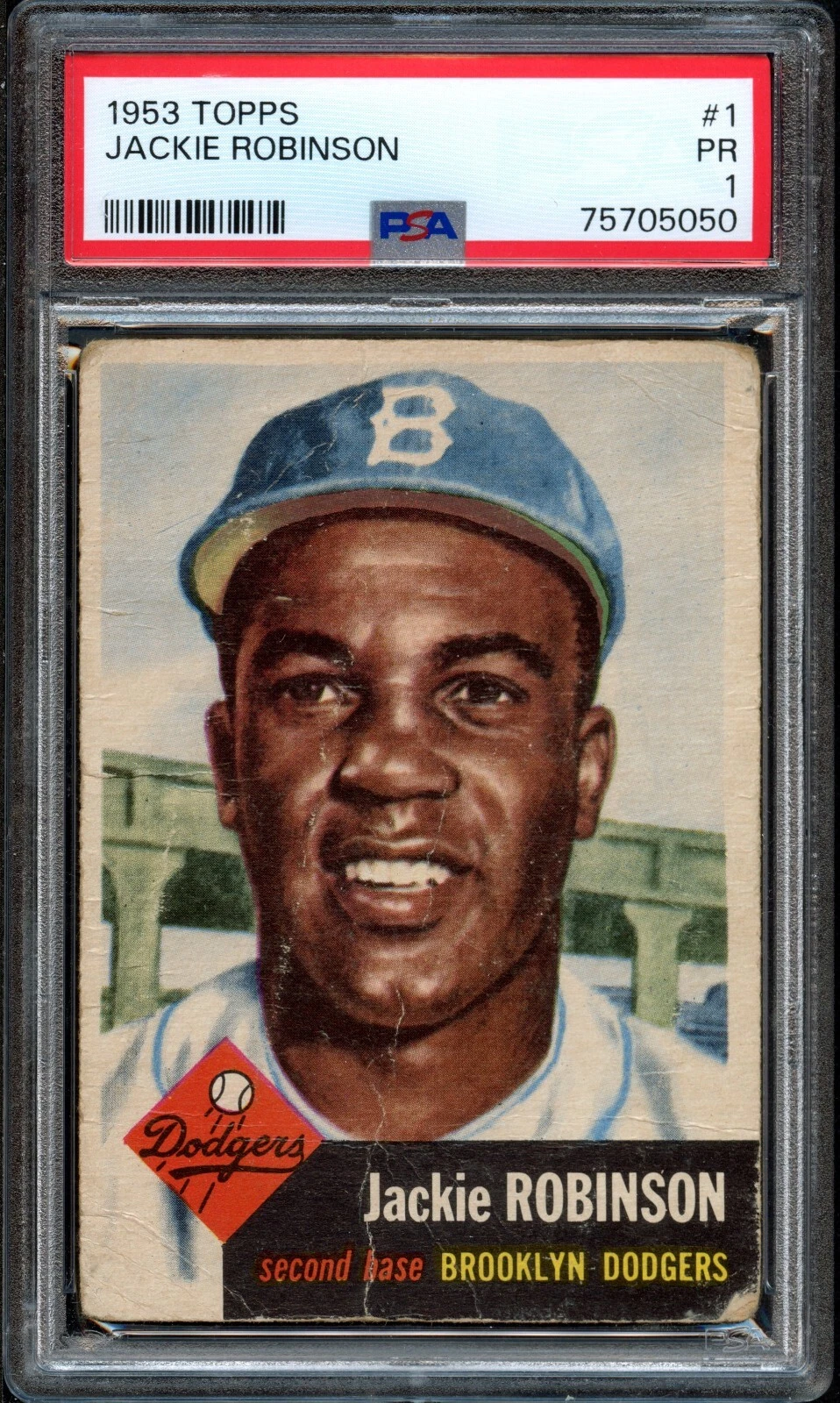
Recognize the set without oversimplifying it
PSA lists 274 issued cards in a numbering sequence ending at 280. Numbers 253, 261, 267, 268, 271 and 275 were not issued. The cards measure approximately 2⅝ by 3¾ inches. Red and black name panels distinguish American League and National League subjects. Jackie Robinson appears at number 1, Mickey Mantle at 82 and Willie Mays at 244.
The missing numbers are a practical checklist issue. A collector should not spend time hunting for cards that do not exist in the original set. Mark those numbers as not issued in your records rather than leaving them as empty spaces that look like unfinished purchases.
Let the portraits guide a smaller collection
A 1953 project does not have to be a full set. Choose portraits that hold your attention, a favorite team or a group of players from a particular baseball story. Lay out the intended display before purchasing so the number of cards and storage arrangement match the scope.
Because the artwork is central to the set’s appeal, you may find that clean image areas matter more to you than exceptionally sharp corners. That is a collecting preference, not a reason to ignore condition. Record what you are willing to accept: moderate corner wear, for example, may be easier to live with than a crease across a face or a stain interrupting the background.
A consistent display need not have identical grades. It can have consistent visual qualities instead. Comparing several available examples gives you a better basis for that decision than choosing the highest grade within reach without looking closely at the card itself.
Plan for the high-series portion
The late run from 221 through 280 contains the set’s unissued numbers and includes Mays. PSA describes this portion as more challenging to collect. A completed percentage alone can therefore give a misleading picture of what remains. Owning most of the lower numbers does not tell you how difficult the last portion of your project will be.
Create separate want lists for the different parts of the checklist and distinguish a missing card from one you own but hope to upgrade. Before buying a large starter lot, compare its exact contents with your list. Duplicates, reprints and lower-condition fillers should be identified openly rather than hidden inside one total count.
Inspect the name panels and portrait separately
The colored name panels deserve deliberate attention because wear at a dark edge can be visually prominent. Zoom in on the panel, lower corners and the junction between the panel and portrait. Then inspect the rest of the edge rather than assuming one sharp corner represents the entire card.
Look for surface abrasions, creases and paper loss in the painted image. Uneven lighting can hide a wrinkle or make a flat area appear shinier than it is. Ask for another angle if the image does not reveal the surface. On a graded example, distinguish a scratch in the plastic from damage within the card.
The reverse is equally useful. It confirms identity and exposes writing, stains or paper damage that may not affect the portrait’s first impression. A visually attractive front and a heavily damaged reverse are a legitimate collecting choice only when the buyer understands the complete object.
Original issue, facsimile signature and later reprint
A printed facsimile signature is part of a card’s design; it is not evidence of a hand-signed autograph. If a listing claims an actual signature, the description and any authentication should address that separate addition. Do not infer a personal autograph from cursive printing in a design.
Likewise, later reproductions or licensed reissues can reproduce the portrait. Confirm the actual production year through the listing, reverse and grading label where present. A clearly identified reproduction can serve a display purpose, but it belongs in a different comparison group from an original card.
For a mixed collection, label reproductions explicitly in your records. This protects future decisions when cards are removed from binders, inherited or offered for sale. The visual similarity that makes a reproduction useful for display also makes incomplete recordkeeping risky.
Evaluate a purchase in the context of your project
Compare the same card number, issue and grading service when possible. Then compare visible condition and any label designations. A higher grade is not automatically the better fit if your goal is a well-centered portrait display and the lower-grade card looks more balanced. Conversely, a set registry project may give the numeric grade a specific role.
Allow for the cost and space of storage. These cards are larger than modern standard cards, and a fully slabbed set occupies far more room than a raw binder collection. Choosing the format early can prevent repeated changes in storage and an expensive cycle of buying and replacing holders.
Browse with a specific want list
TrendingArt’s vintage baseball pages connect this guide with related early Topps issues. Use the live eBay listings for actual card photographs, availability and transaction details. Search by year and card number when you know the missing entry, and ask for a reverse image when a listing does not show one.
Keep purchase notes brief but exact: original or later issue, card number, condition concerns, grading details and the reason you selected that example. Those notes help you maintain a coherent collection instead of repeating the same comparison work with every future purchase.
Common questions
Why are there 274 cards if the numbering reaches 280?+
Six numbers were not issued: 253, 261, 267, 268, 271 and 275. A basic original set does not require them.
Are the printed signatures actual autographs?+
A printed facsimile is a design element. A hand-signed card is a separate collecting object and should have a clear description and relevant authentication.
Sources & further reading
Primary references for the terminology and factual details discussed above.
Explore the actual listings.
Read the item description, photographs, condition notes and terms on eBay. Selection and availability change.
Browse Current Sports Cards Inventory ↗Explore Graded & Vintage Baseball Cards ↗