The basic set and its collecting range
PSA catalogs 587 cards in the 1961 issue, generally using a vertical player-card format at approximately 2½ by 3½ inches. Recognized rookie cards include Ron Santo, Billy Williams and Juan Marichal. The issue also contains statistical leaders, checklists and Baseball Thrills cards.
Do not calculate completeness from the highest printed number alone. The checklist has numbering irregularities, so use an established card-by-card reference. A seller’s statement that a lot contains a certain number of different cards is useful, but it does not identify which required entries are missing.
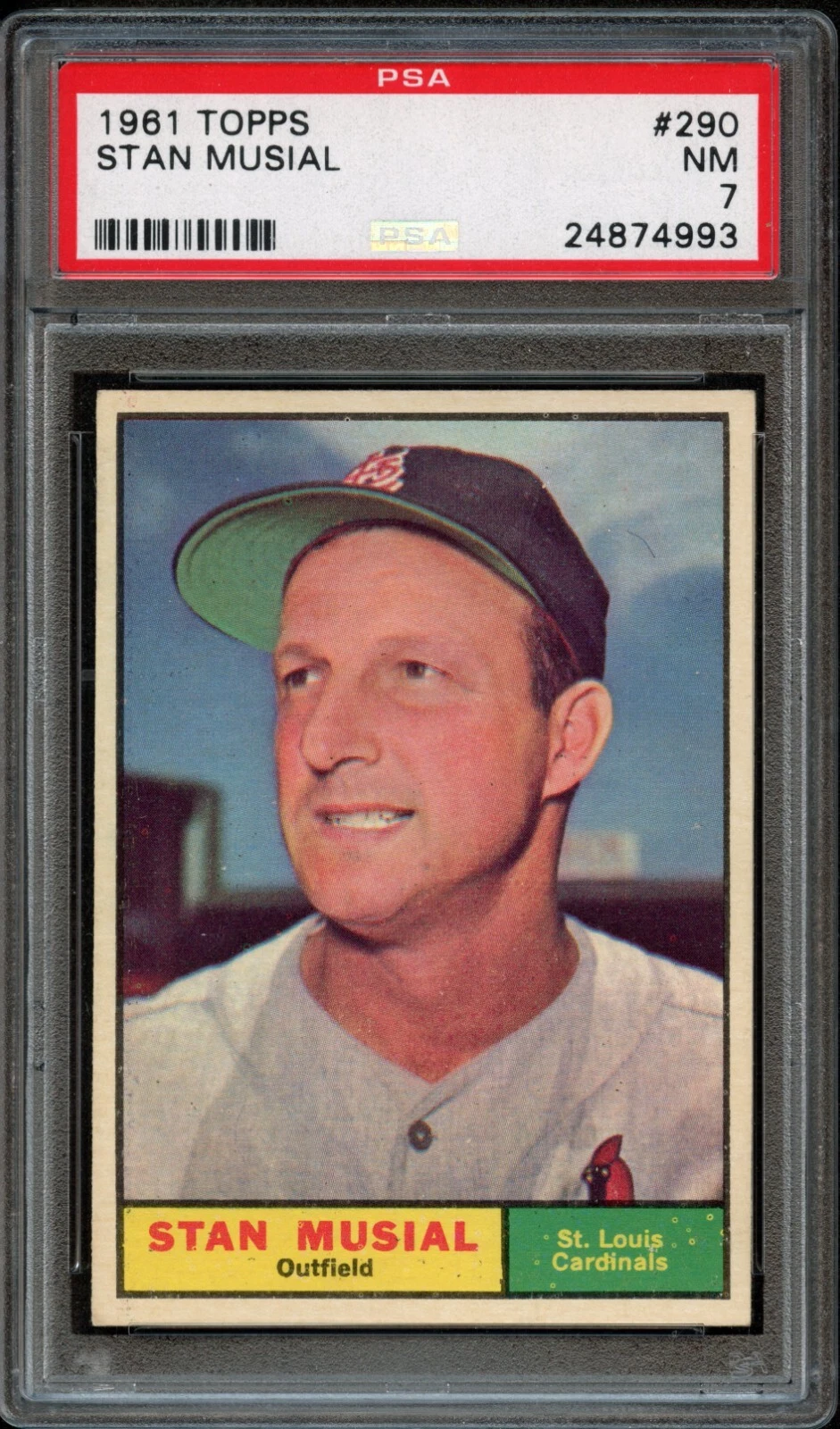
Use the photograph to set your condition priorities
A large photographic area puts attention on clarity, surface condition and how the player sits within the frame. Compare image focus and printing as well as corner sharpness. A technically stronger card can still be less appealing to you if its portrait looks dull or poorly balanced.
The relatively open design also makes centering easy to notice. Inspect the white border and the relationship between the photograph and lower name area. Look at top-to-bottom and side-to-side placement separately. Do not assume that a card that looks balanced in a tilted holder photograph is equally balanced in a straight-on view.
Ask for a neutral scan or photograph if perspective distortion is substantial. A listing image is a representation of the card, not the card itself. Better photographs can resolve a buying question without requiring speculation about what a professional grade might be.
Separate a player collection from the complete checklist
A player may appear on a regular card and in one or more specialty contexts. A complete player run within the year is therefore a different checklist from a collection containing only individual player cards. Define which appearances count before deciding that your project is finished.
Specialty cards can also make manageable collections of their own. A statistical-leader or historical-highlight group offers a different view of baseball from a lineup of isolated portraits. If that is your interest, list the exact subset instead of buying a broad assortment simply because it carries the same year.
For a team collection, decide whether you include multi-player cards involving someone from the team, team cards and managers. Those boundary decisions are not technicalities: they determine what you search for, what you spend and how you organize the finished collection.
Checklists need close reverse and surface inspection
Checklist cards were intended to be used, so inspect both sides for marks. A checked box or pencil entry may be easy to miss in a thumbnail. Ask whether the card is unmarked when that is an important requirement, and make sure the photographs support the answer.
Do not assume every mark will be obvious in ordinary lighting. Impressions can remain after an attempted erasure, and a general grade description may not explain every visible condition feature. If a graded card carries an additional designation, read it rather than treating the main number as the entire description.
For a set purchase, request specific images of the checklists instead of only the star cards. Supporting cards are part of completeness and can become frustrating replacements if their condition is discovered only after the collection arrives.
Make the numbering quirks a records problem, not a shopping problem
Choose one recognized checklist and record each entry by its catalog identity and subject. Where a printed number is duplicated or otherwise irregular, keep enough text to distinguish the cards. A spreadsheet field containing only a number can be too crude for an older issue.
When you find disagreement between a seller’s list and a checklist, resolve the particular entry before deciding a set is incomplete. Reference descriptions and original printing are not always the same thing. A clearly documented convention is preferable to a silent correction that later confuses you or another collector.
This matters when consolidating several partial sets. Match by card identity rather than sorting by number and assuming each position represents exactly one required object. Count useful unique entries after the reconciliation, not before.
Compare condition without relying on a generic set grade
A group described as excellent or near mint can contain a broad range of actual cards. Ask which examples are creased, marked, stained or missing paper, and obtain separate images of the cards that matter most to the transaction. An average description can hide meaningful exceptions.
For individual graded cards, inspect the reverse and holder as well as the front. A clean-looking slab does not mean the card is free of damage, and a scratched slab can obscure an otherwise attractive card. Keep those two objects separate in your assessment.
If you are building gradually, decide whether your standard is a numerical grade range or a set of visual requirements. Both can work. Switching unpredictably between them tends to create unnecessary upgrades and an inconsistent display.
Use the issue as a bridge between collecting eras
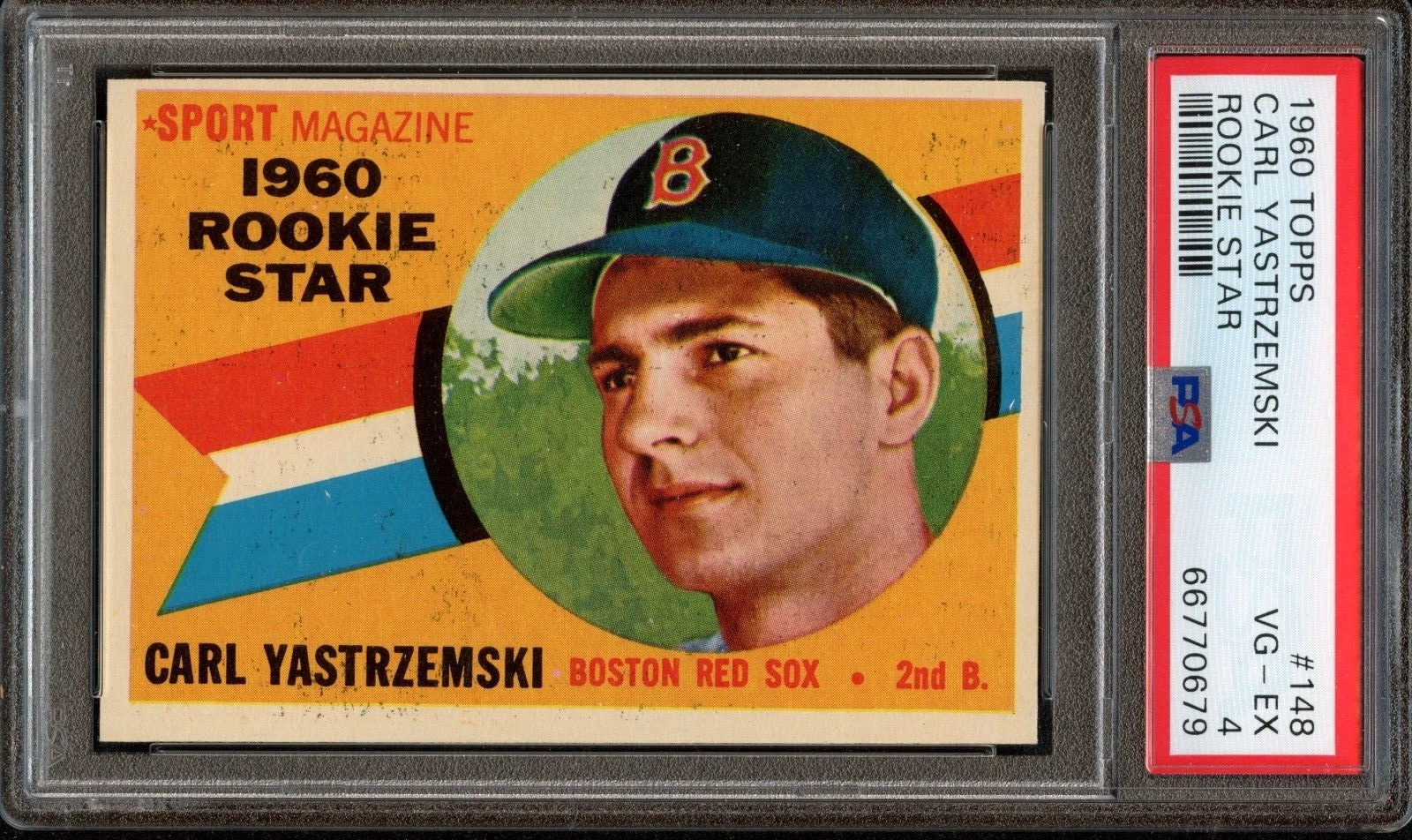
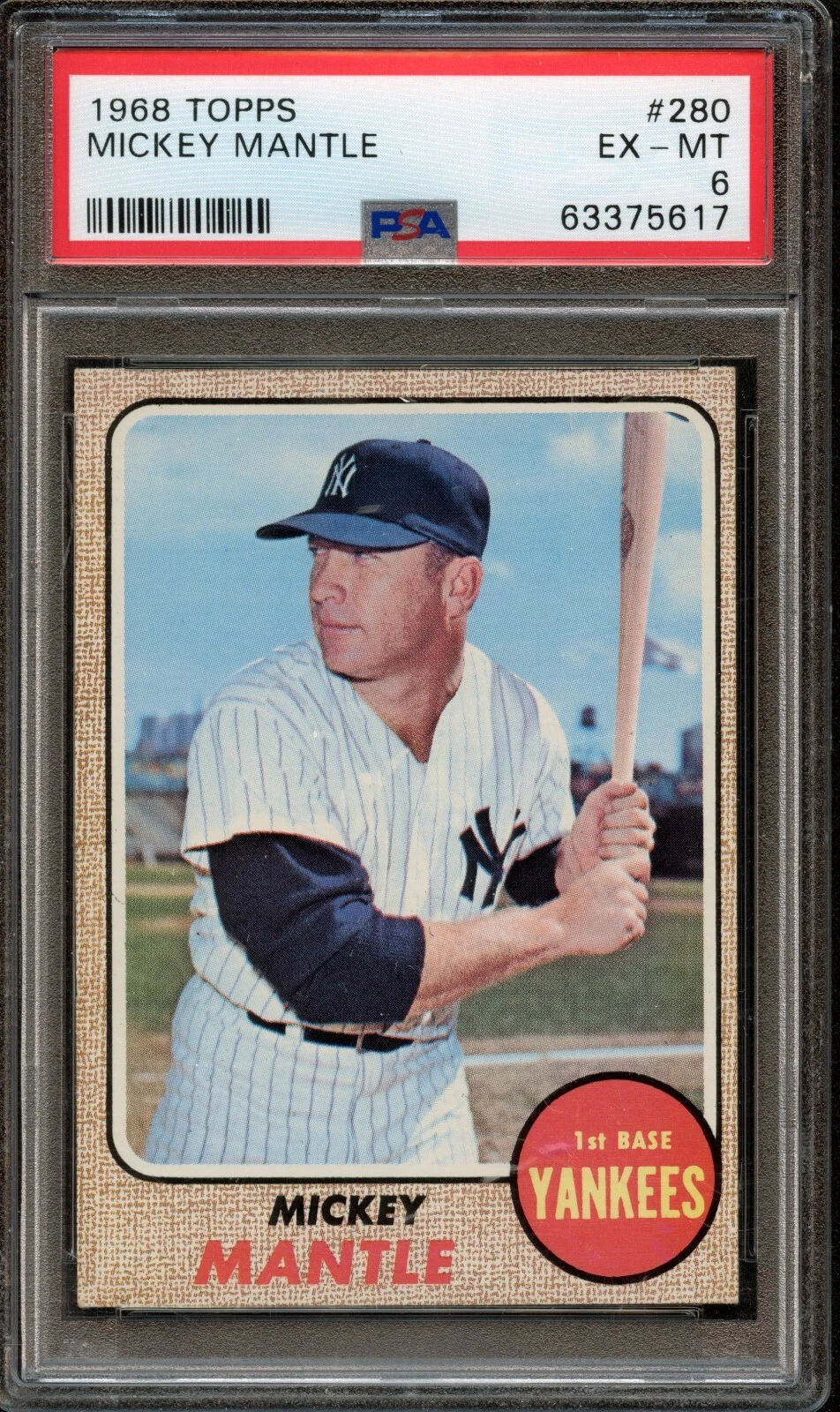
Compare a 1961 player card with the horizontal 1960 design or the more textured 1968 border. A small cross-year collection can show changing visual choices without requiring a complete set from each season. Record the actual production year so later design tributes do not get mixed with the originals.
TrendingArt’s Topps baseball category connects these guides with current eBay listings. Use exact year, subject and card-number searches where possible, then verify the photographs and terms in the live listing. This guide does not imply that every checklist entry or grade is available at any given time.
Common questions
Can I determine set completeness from the highest card number?+
No. The 1961 checklist contains numbering irregularities. Use a recognized card-by-card checklist and identify entries by subject as well as number.
Why inspect checklist cards separately?+
They can have writing or other marks that a general set description and front-only image fail to show. Their condition is part of the collection you are buying.
Sources & further reading
Primary references for the terminology and factual details discussed above.
Explore the actual listings.
Read the item description, photographs, condition notes and terms on eBay. Selection and availability change.
Browse Current Sports Cards Inventory ↗Explore Graded & Vintage Baseball Cards ↗