Know the set and the principal rookie entries
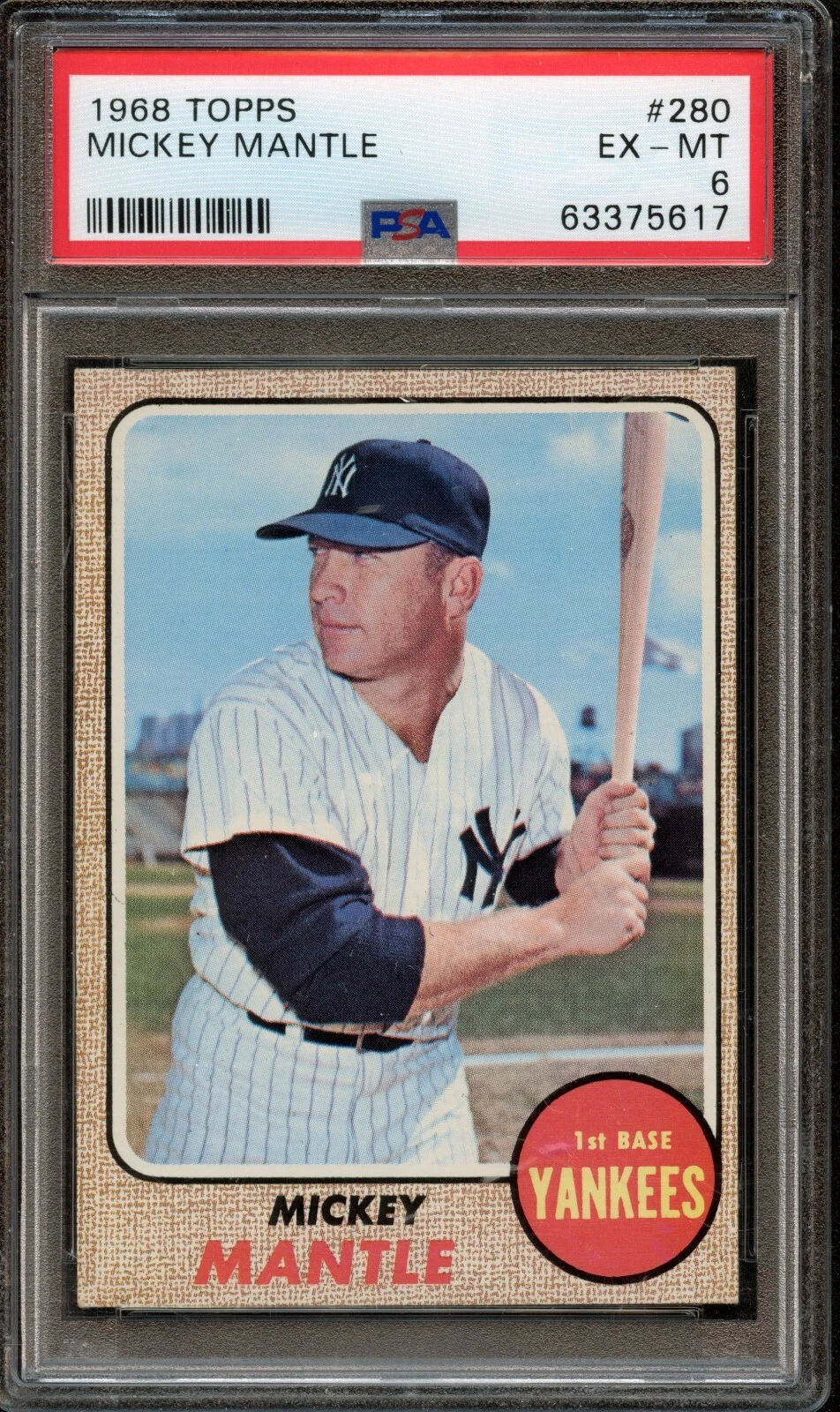
PSA catalogs 598 standard-size cards in the 1968 Topps issue. Nolan Ryan appears on the rookie card numbered 177 and Johnny Bench on 247. The set also includes league leaders, World Series material and All-Star cards. The main player-card layout places a color photograph within a textured-looking border.
The player name alone is not an adequate identifier. A multi-player rookie card is still one physical card, even when a listing title emphasizes its most famous subject. Record the full issue and number so a later comparison does not confuse it with a separate player card, related issue or reproduction.
Inspect patterned borders without letting them hide wear
A busy border can make small defects less conspicuous in a reduced image. Examine each corner and the full perimeter at a useful resolution. Look for edge wear, chips, uneven cuts and interruptions in the printed pattern rather than assuming the texture explains every irregularity.
Centering can be evaluated by the placement of the inner photograph and the surrounding design. Compare top and bottom as well as both sides. A card can have a balanced-looking portrait while the overall cut is less even, particularly when the photograph itself contains an off-center subject.
Do not confuse the apparent texture in the printing with the physical surface of the paper. The design’s pattern is visual information; a crease, scrape or raised area is a condition feature. Angled photographs can help separate them when an ordinary scan is ambiguous.
Multi-player rookies need exact comparisons
When looking for the Ryan or Bench rookie, use the year and card number as well as the player’s name. Confirm the entire front and reverse. A short title can omit the other subjects or a relevant issue distinction, and search results can combine several types of cards.
The condition of every part of the physical card matters, even if only one player motivates the purchase. A crease through a different portrait is still a crease in the card. Evaluate the whole object rather than treating the desired player’s panel as an independent collectible.
For a display collection, decide whether you want the multi-player composition itself or whether you prefer later individual portraits of the same player. Rookie status is one collecting attribute. It does not obligate you to choose an image you enjoy less than another card in the player’s career.
Keep separate 1968 products separate
The main Topps set should not be confused with the 1968 Topps Game issue, which PSA catalogs separately. Related products can share players, a year and a manufacturer while having different sizes, designs and checklists. “1968 Topps” in a listing title may therefore need further qualification.
The same principle applies to a card described as a foreign-market issue or another manufacturer’s related release. Read the reverse and holder description, then use the appropriate checklist. Do not assume a familiar front design proves that two cards belong to the same product.
If a seller describes an example using several brands or product names, ask which exact issue the card is. Clear identification should precede price comparison. A confusing title is a reason to investigate, not evidence that the card is an unusual rarity.
Choose whether subsets belong in your collecting plan
A complete numbered set includes more than ordinary player portraits. League leaders, World Series and All-Star cards create different visual rhythms within the same year. A basic player collection or team project may use a narrower rule, but that rule should be written down.
For a team collection, determine how to handle a multi-player card with players from different teams. For a player collection, decide whether statistical or combo appearances are included. These practical definitions stop the project from expanding unpredictably whenever a search reveals another familiar face.
Checklists also require condition attention. Ask whether they are marked and inspect both sides. A neat-looking front does not establish an unmarked reverse or a clean surface. The same care should apply to common supporting cards as to more prominent rookie entries.
Compare individual cards instead of broad rarity claims
A seller’s phrase such as rare vintage does not replace an exact issue reference and condition description. Search for matching examples with the same number, grading service, grade and relevant version. Treat raw and graded cards as different comparison groups until you understand the uncertainty in each raw example.
Population data can provide context for graded examples, but it is not a count of every surviving card. It also should not be used to imply that the next submission will receive the same grade distribution as prior submissions. The physical card remains the subject of the purchase.
If a card is an important purchase for your collection, retain the listing photographs and any clarification from the seller. Your record should show what was offered and why you concluded it matched your intended issue.
Browse with the exact issue in hand
TrendingArt’s vintage baseball collection and current eBay inventory provide the next step after research. Look for full front and reverse images, clear grading details and a complete description. A card’s presence in a guide is educational and does not imply current availability.
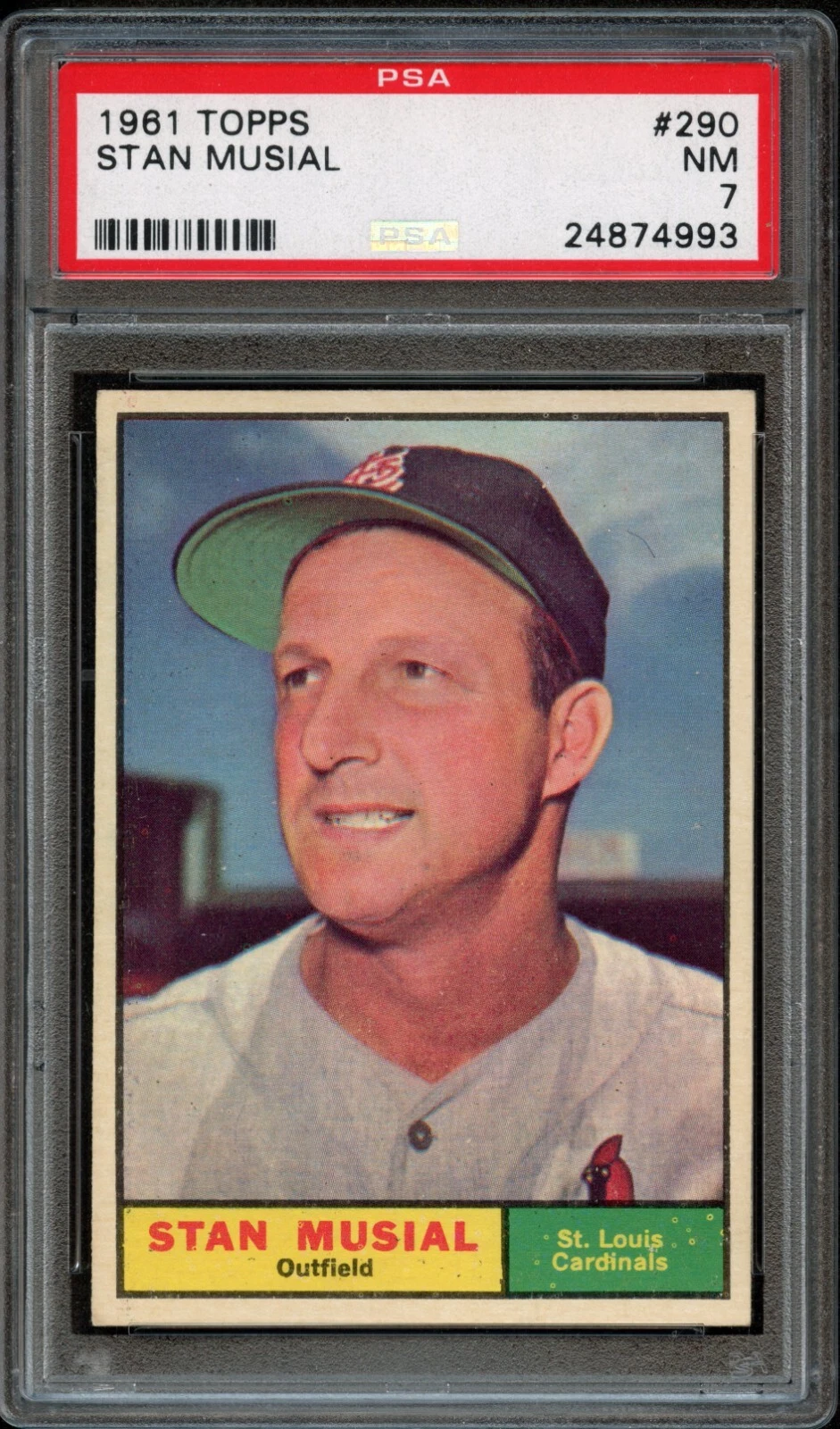
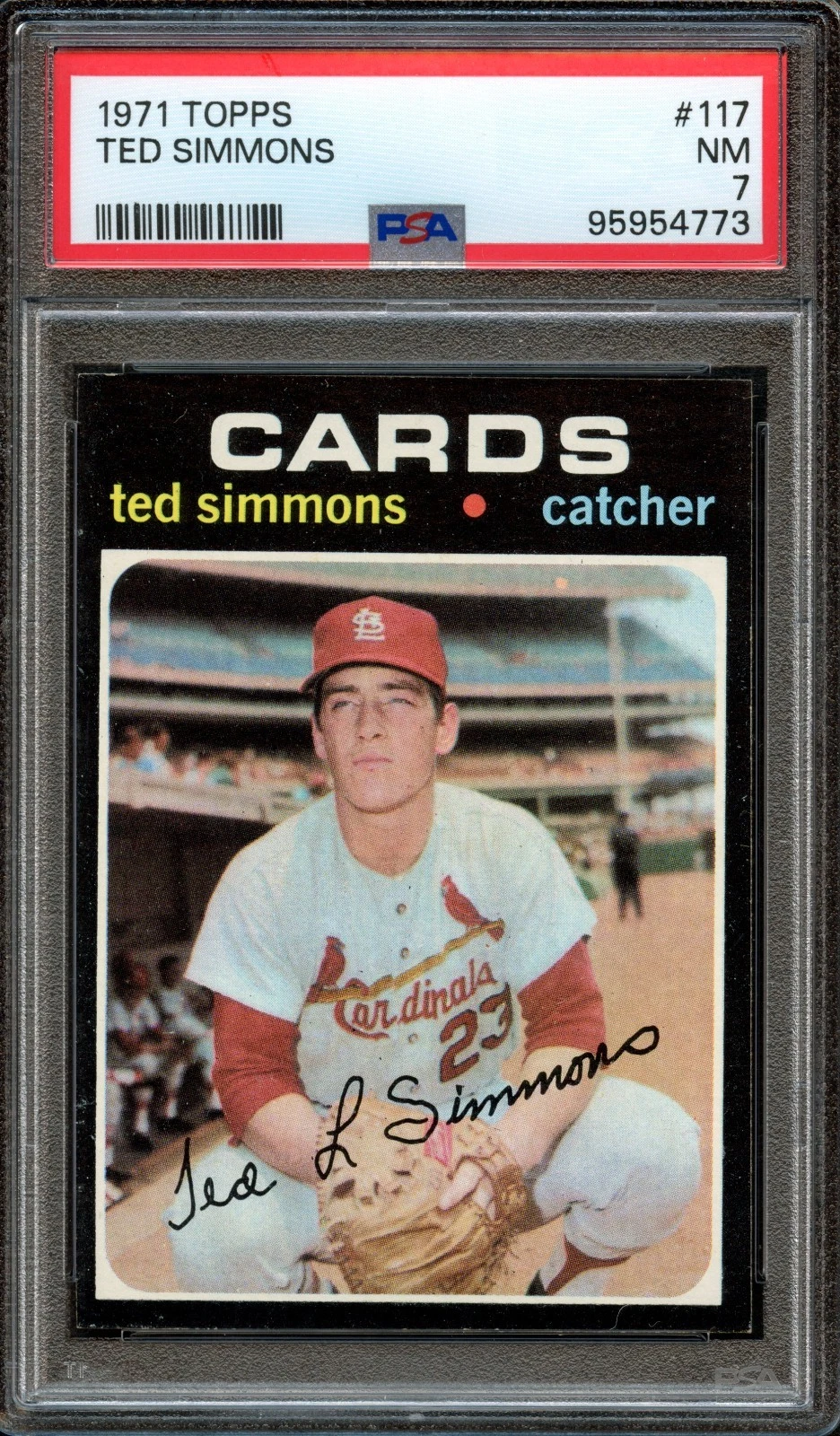
For related collecting ideas, compare the more restrained 1961 design and the dark borders of 1971. These neighboring-era guides can help you choose a consistent display or a small collection illustrating how Topps changed its visual approach over time.
Common questions
Is 1968 Topps Game part of the same checklist?+
No. It is a separately cataloged issue. Confirm which product a listing offers before comparing it with the main 1968 Topps set.
Should I inspect the entire multi-player rookie card?+
Yes. Condition applies to the whole card, including the other portraits, edges and reverse, even if one player is your reason for buying.
Sources & further reading
Primary references for the terminology and factual details discussed above.
Explore the actual listings.
Read the item description, photographs, condition notes and terms on eBay. Selection and availability change.
Browse Current Sports Cards Inventory ↗Explore Graded & Vintage Baseball Cards ↗