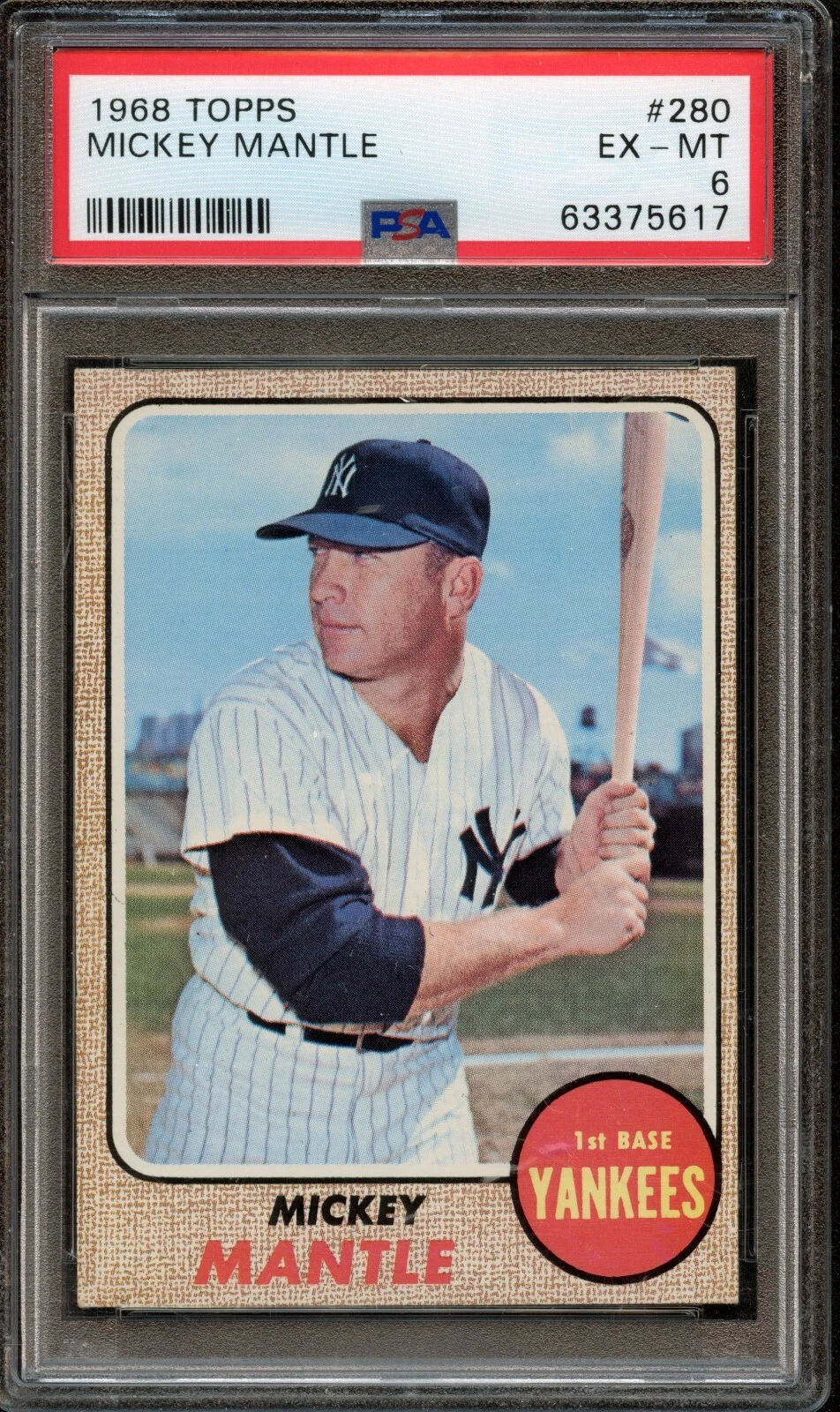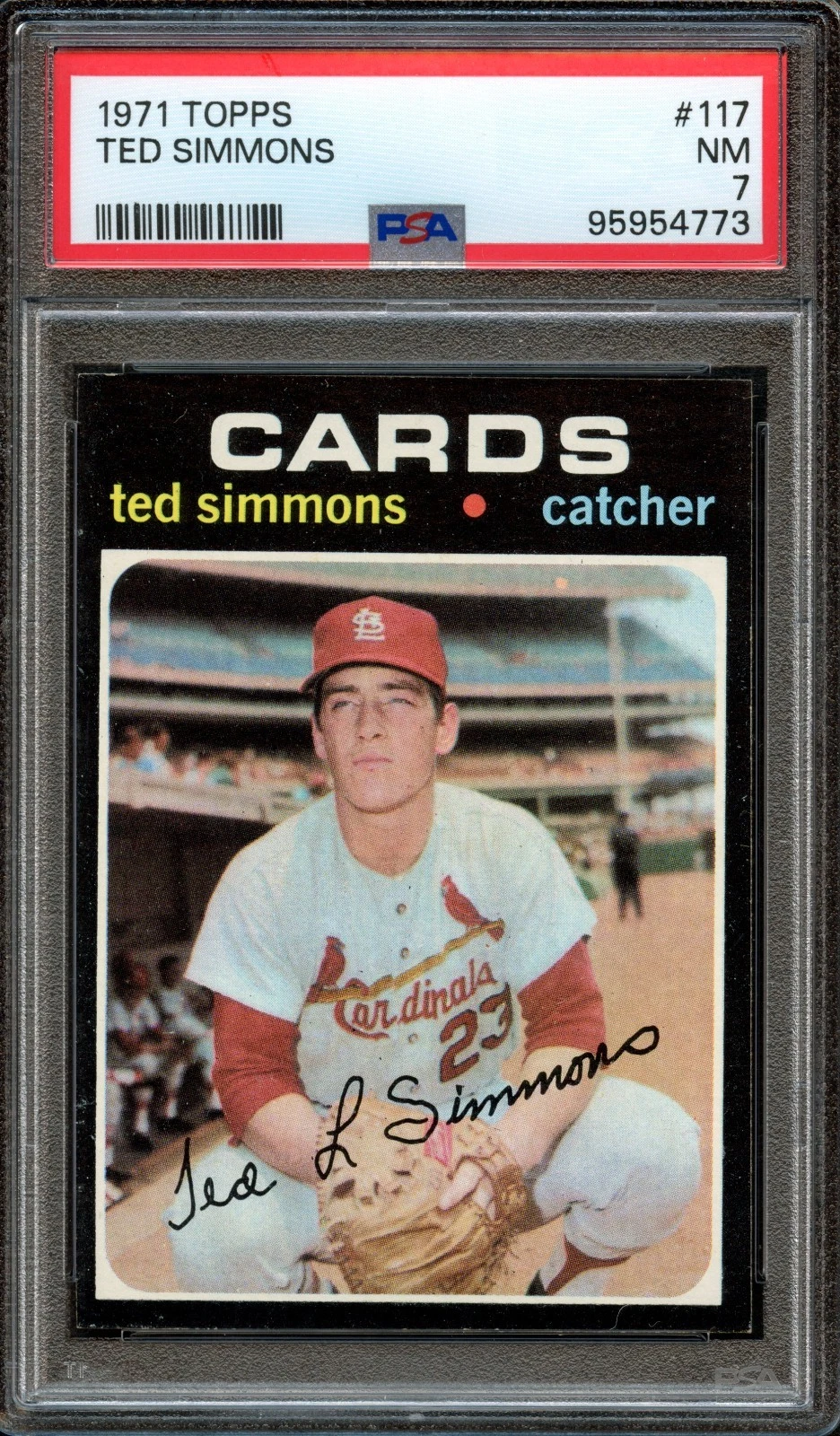
The set’s basic structure
PSA catalogs 752 cards measuring approximately 2½ by 3½ inches. A black outer border surrounds a thin white frame and player photograph. The issue includes statistical leaders and postseason material as well as ordinary player cards. PSA identifies numbers 644 through 752 as the more difficult high-number portion.
This is a substantial checklist, so decide whether you want the full set, a team, favorite players or a sample of the photography. A large number of purchases can still leave a project far from completion if the missing entries are concentrated in the portion you have researched least.
Black borders make the condition tradeoff visible
Inspect the long edges and corners for chips and wear that expose lighter paper. Determine whether the wear is scattered, concentrated at the corners or associated with a bend. Different patterns can create different visual impressions even when two cards receive the same overall grade.
A small white spot against black can be prominent in a display. That does not automatically make the card unsuitable. It means you should decide how much edge wear you are comfortable seeing. A lower-grade collection can look coherent if the examples share a reasonable visual standard.
Ask for photographs with enough surrounding space to show the actual perimeter. Black backgrounds and tight crops can blend the card edge into the image. A neutral, contrasting background is often more informative when the border’s integrity is central to your decision.
Do not confuse strong color with original condition
A uniformly dark edge may be attractive, but appearance alone cannot establish that the color is original. PSA’s grading standards identify recoloring as an alteration concern. If an edge looks suspicious, seek an appropriate assessment instead of trying to authenticate it from one photograph.
Never add color to a chip or attempt to make an edge look cleaner. That changes the collectible. A sleeve or holder protects an existing card; ink, trimming or surface treatment modifies it. The distinction matters even when the alteration appears minor to the owner.
For a graded example, read the complete label. Authentic Altered is a different designation from a numeric condition grade. If a listing downplays or omits that distinction while showing it on the holder, use the full label as part of your evaluation and ask for clarification.
Look beyond the border
The strong black frame can dominate attention while surface issues inside the photograph go unnoticed. Inspect the image for wrinkles, abrasions, staining and print problems. View the back as well, checking for writing, paper loss and discoloration. Border condition is important here, but it is not the entire card.
On a slabbed example, distinguish scratches in the plastic from marks in the card. If a line crosses both the image and holder area, it may be a holder scratch, but a photograph alone may not settle the question. Request another angle rather than treating a possible explanation as a fact.
A card with visible edge wear and a clean photograph may suit your display better than one with darker edges but a distracting crease. Build your own priority order. Professional grading provides a common language, while the individual appearance determines what you will actually enjoy seeing.
Build a feasible high-number plan
Before purchasing a large starter group, compare its unique contents with the checklist. Identify which high numbers and key cards remain, and whether the supplied condition is consistent with your goal. A large card count is not the same as a useful starting point.
Avoid automatic premiums based on the phrase high number. Compare the exact card and its condition. A card’s position in the checklist is one part of the context, while player interest, issue details and physical presentation still matter.
Track placeholders separately from finished purchases. If a heavily worn card temporarily fills a space, record why it needs replacement. That prevents the same weak card from repeatedly appearing in your calculations as both completed progress and an unresolved purchase.
Raw or graded: choose the uncertainty you can manage
A raw purchase requires you to assess the card more directly from photographs and the seller’s description. A graded purchase provides an external condition assessment and an identifying holder. Neither format makes poor images acceptable or removes the need to read the entire listing.
Do not assume every sharp raw example is an overlooked high-grade opportunity. The condition feature that limits a grade may be on the reverse, difficult to photograph or related to an alteration concern. If a purchase only works for you after a very favorable grading result, recognize that dependency before spending.
For a personal collection, a mixed approach can be practical: graded examples where authentication or condition clarity matters most to you, and carefully selected raw cards elsewhere. Make that choice based on the collection’s purpose rather than an assumption that every card must be submitted.
Protect the card and preserve its records
Use suitable raw-card protection or a fitted outer sleeve for a graded holder. Keep cards supported and avoid repeated friction during sorting. Store front and reverse photographs, certification details and the original description with your inventory. Good records help distinguish similar examples and document condition without relying on memory.
Explore TrendingArt’s vintage baseball category and current eBay listings for individual 1971 cards when available. Use the live listing for the actual offering and transaction terms. The related grading guides explain how to evaluate a grade, while this set guide identifies why black borders deserve special attention.
Common questions
Why do 1971 Topps cards show wear so clearly?+
Light paper exposed by chips or corner wear contrasts strongly with the black printed border. Inspect all edges and the photograph, not just the most visible chip.
Can I touch up a white spot with black ink?+
No. Adding color alters the card. Preserve the existing object and consult an appropriate grading or authentication service if you have questions about its condition.
Sources & further reading
Primary references for the terminology and factual details discussed above.
Explore the actual listings.
Read the item description, photographs, condition notes and terms on eBay. Selection and availability change.
Browse Current Sports Cards Inventory ↗Explore Graded & Vintage Baseball Cards ↗