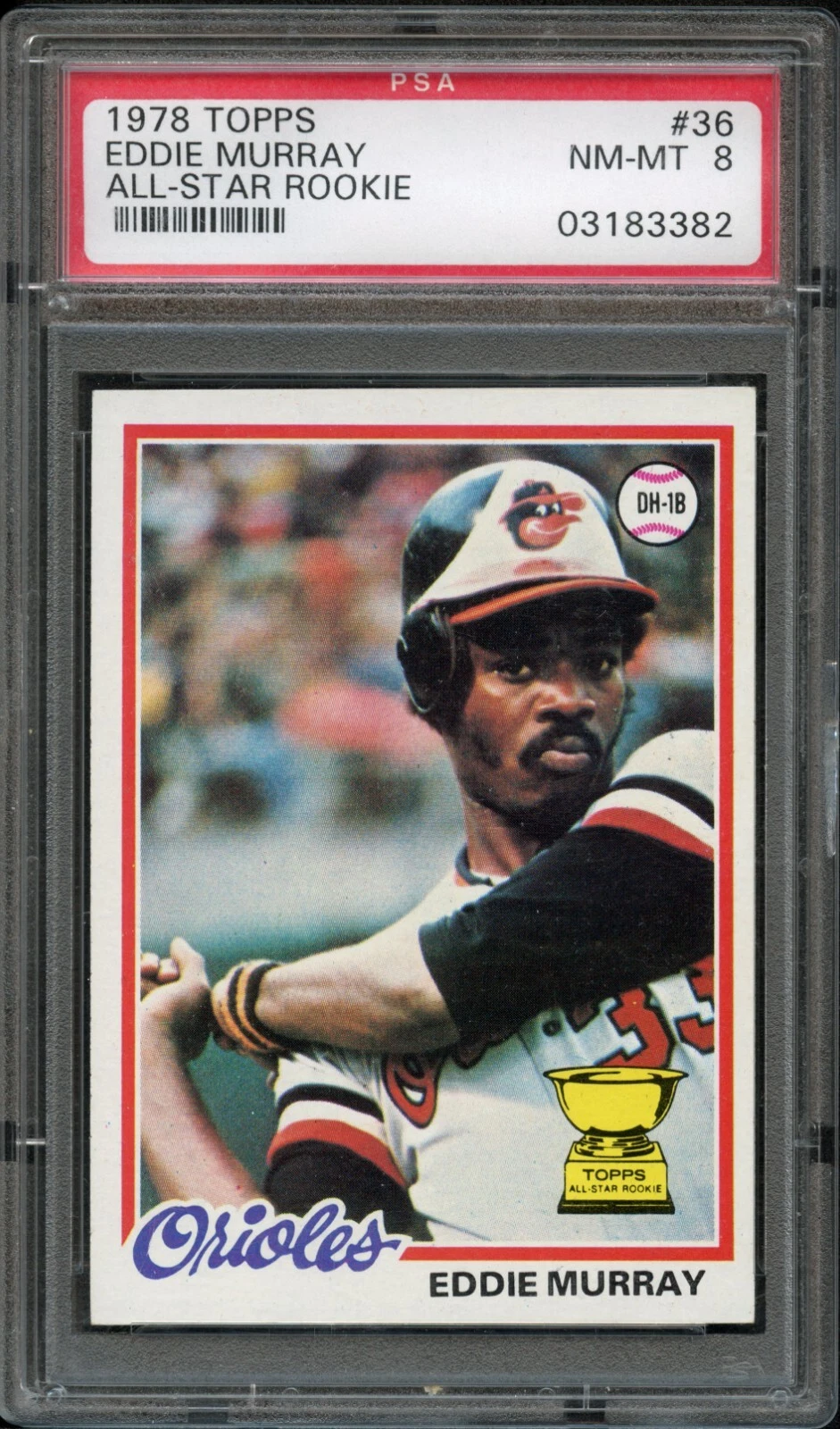
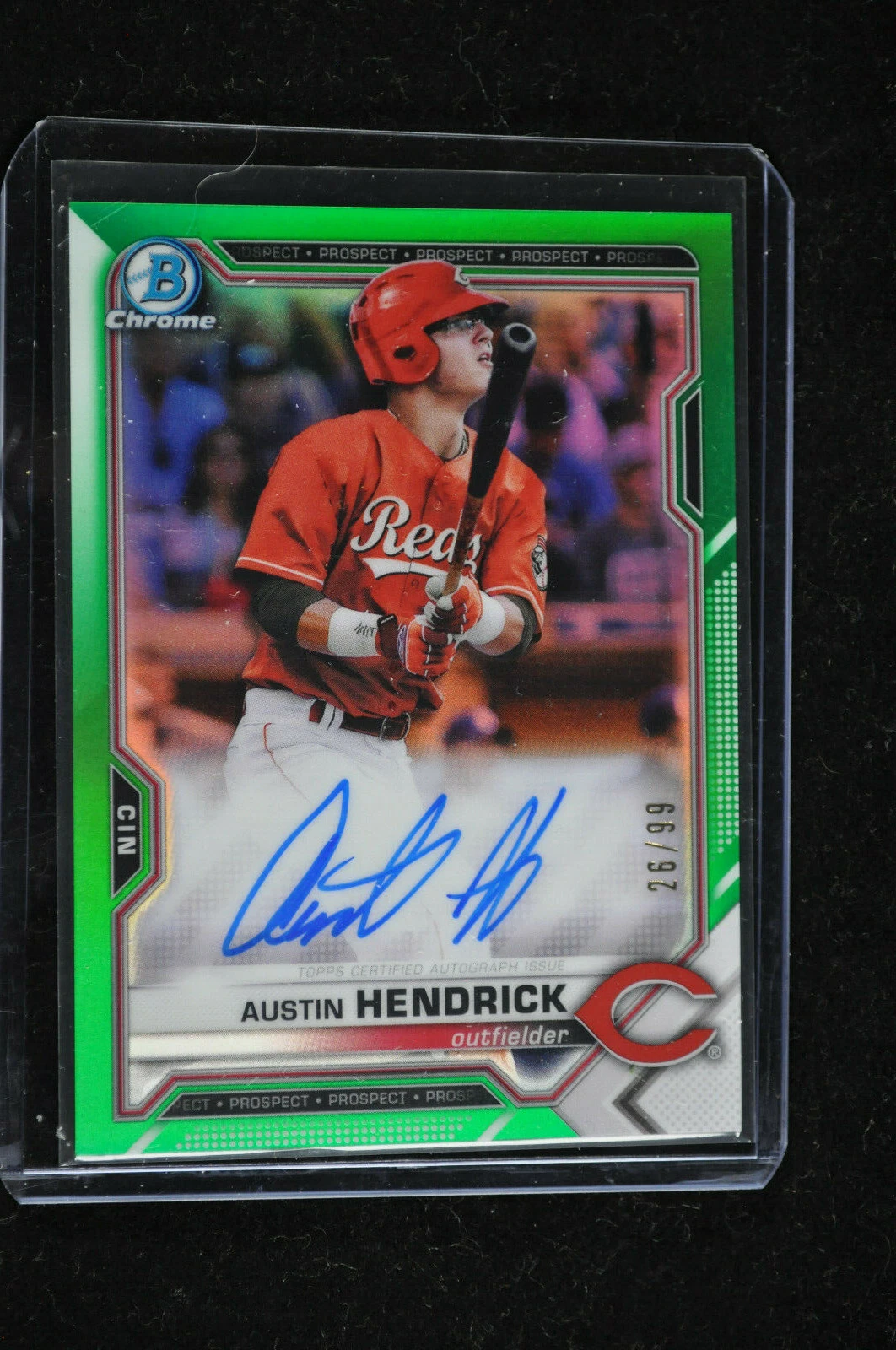
1951 Bowman: the enlarged painted format
The 1951 set contains 324 cards in a wider format than the preceding small Bowmans. Painted images and a compact name panel leave much of the front available for the scene. The late portion includes the celebrated Mickey Mantle and Willie Mays rookie cards, giving set builders substantial objectives beyond the ordinary run.
When considering a near set, inspect the missing-card list before its completion percentage. A collection missing those key high numbers is materially different from one missing only a few ordinary subjects. For an individual card, compare the name panel and painted background as well as the portrait, because creases and surface damage can disappear in compressed photographs.
1952 Bowman: artwork with printed signatures
The 1952 issue has 252 cards and retains the illustrated approach while using a facsimile autograph as a conspicuous front element. The printed signature belongs to the design. The high-number group runs from 218 through 252, a useful boundary to keep in a set-building inventory.
A handwriting-like mark is therefore not automatically an added autograph. If a card is advertised as signed, distinguish the original printed element from the claimed ink signature and check the relevant authentication. For ordinary examples, inspect the signature area as part of the printed surface rather than treating it as a separate collectible feature.
1953 Bowman Color: photographs without front captions
The 160-card Color set makes the photograph the main event on a larger card. Its quiet border and lack of prominent front text create room for portraits, action and multiple-player compositions. Pee Wee Reese’s action card and the Bauer–Berra–Mantle scene illustrate how varied the visual experience can be.
Check the back for identity and number; a front-only photograph may not provide either. When comparing examples, evaluate focus, color and registration as well as the physical grade. A dramatic image can be a collection’s centerpiece without requiring a complete run of every card in the set.
1953 Bowman Black & White: a separate checklist
The 64-card Black & White release uses the same generous format but different players from the Color issue. It is a distinct set, not a grayscale parallel of each Color card. A listing simply called 1953 Bowman should specify which issue is being sold.
Keep Color and Black & White in separate inventory fields and search terms. A complete 64-card group does not complete the 160-card Color list, and a favorite player may appear in one without appearing in the other. Inspect dark photographic areas for scuffing and the reverse for writing or paper loss that a clean front can conceal.
Storage and completion choices
Use storage that fits the actual card or certified holder comfortably. These dimensions should not be assumed to match the familiar later Topps format. Avoid forcing a raw card into a snug pocket, and preserve the full card in documentation photographs even if a display emphasizes the image.
A four-example type run—1951, 1952, 1953 Color and 1953 Black & White—captures the whole transition. For larger projects, choose whether you value a uniform grade, consistent visual appeal or a particular player or team. Record that priority so upgrades serve a clear goal instead of becoming an endless chase for a higher label.
Sources & further reading
Primary references for the terminology and factual details discussed above.
Explore the actual listings.
Read the item description, photographs, condition notes and terms on eBay. Selection and availability change.
Browse Current Sports Cards Inventory ↗Explore Graded & Vintage Baseball Cards ↗