T204: Ramly portraits and ornate framing
The 1909 Ramly issue uses black-and-white portraits with elaborate gold-colored framing. PSA identifies the player’s name, position and team in the lower portion of the design. That ornamental treatment is a useful first distinction from both T205 and T206.
Examine the frame as carefully as the portrait. Pale wear, missing surface and edge disturbances can interrupt a design that looks clean in a small thumbnail. Keep the specific frame attribution if the label or reference recognizes one; do not assume all Ramly examples are visually identical.
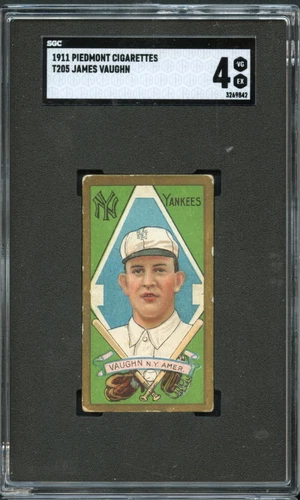
T205: Gold Border
The 1911 Gold Border family is identified as T205. Gold framing is central to its appearance, while captions, reverse text and recognized variations create further distinctions within the issue. Its catalog number does not mean it should simply be placed before every T206 card by release date.
For buying, inspect the gold perimeter under clear light and separate border wear from a crease through the image. Record back advertising and any named variation. A basic-set checklist and an expanded variation checklist should not be mixed when measuring completion.
T206: White Border
T206 spans 1909–11 and includes major- and minor-league subjects, multiple poses and changed team captions. The white-bordered fronts were paired with tobacco advertisements on the back. Familiar brands include Piedmont and Sweet Caporal, but an exact back attribution requires reading the complete reverse.
A collection may focus on portraits, one team, minor leaguers or a single advertising brand. Define the goal before treating famous obstacles such as Honus Wagner as compulsory purchases. Some collectors intentionally pursue an attainable subset rather than an unrestricted master project.
Front-and-back combinations are the actual objects
A photograph of a player’s face is only part of the identification. Save the complete front caption, pose description and reverse advertisement. If a listing states a factory or series designation, compare it with the visible text rather than copying the title without inspection.
Do not infer a scarce back from a seller’s general claim that the player is difficult. Nor should a common-looking front make an unusual reverse automatically genuine. The relevant question is whether the photographed combination matches established references and the certification record.
Condition, alteration and eye appeal
Inspect four edges, the entire reverse and any area where the surface changes color or texture. Ask for additional lighting when glare obscures the card. A dark shadow at the holder edge is not enough evidence to call trimming, and a clean-looking corner is not proof of originality.
Choose the flaws you can live with. A portrait collector may favor a clear face over sharp corners; an advertising specialist may prioritize an intact reverse. Keep that preference separate from the official grade so comparisons remain honest.
A strong first reference group
One verified example from each family gives a collector a useful study in portrait treatment, borders and back advertising. Add a second T206 only when it demonstrates a meaningful difference, such as another pose or brand. This approach develops recognition before committing to a large checklist.
For each purchase, retain the source photographs and a concise attribution. If a seller later changes or removes the listing, your record should still explain why the card was identified as that set and variant. No guide price can substitute for that evidence.
Sources & further reading
Primary references for the terminology and factual details discussed above.
Explore the actual listings.
Read the item description, photographs, condition notes and terms on eBay. Selection and availability change.
Browse Current Sports Cards Inventory ↗Explore Graded & Vintage Baseball Cards ↗