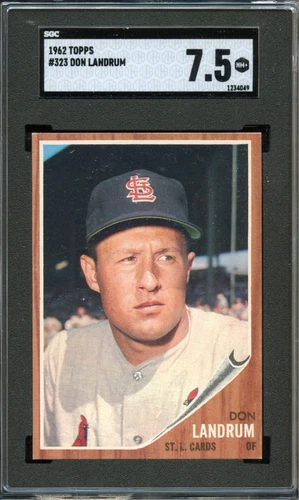
1962 Topps: woodgrain and green-tint printing
The 598-card 1962 set places photographs against a woodgrain background with a curled-corner effect revealing identification. The second series includes green-tinted printing and photo differences. These are specific production and image distinctions, not a reason to call every photograph with a cool color balance a recognized variant.
Check the relevant card against a documented reference and retain the front image supporting the attribution. The brown perimeter exposes pale wear, so inspect every edge in addition to the portrait. A dark seller background can make that comparison harder; a contrasting image is more informative.
1963 Topps: a large photograph and a small portrait
The 576-card 1963 issue combines a large color photograph with a small monochrome portrait in a circle at the bottom. A colored lower band reaches the corners, where wear can become conspicuous. The checklist includes multi-player scenes and rookie groups, including Pete Rose’s four-player rookie card.
When a listing identifies only one player on a group card, record the actual card number and all relevant subjects. Inspect the two lower corners separately from the white upper border. Also distinguish ordinary checklist entries from checklist-printing variations if a master-set approach is part of your goal.
1964 Topps: the team name takes the top line
The 587-card 1964 set places a bold team name above the player image and identification in a lower panel. The roster includes rookies such as Phil Niekro, Tommy John and Richie Allen, alongside second-year cards of Pete Rose and Willie Stargell. It is a distinct design, not a reduced-color version of 1963.
For a team collection, decide whether multi-player rookie cards and league-leader cards count alongside ordinary player cards. A checklist organized only by surnames can miss those appearances. On a single card, verify the team lettering and reverse number before accepting a shortened listing title.
High numbers and missing-card lists
Each of these sets was built from multiple series, but their difficult portions are not interchangeable. Use the appropriate year’s checklist and series information when examining a near set. A pile containing hundreds of low-numbered cards may still leave the most demanding section untouched.
Ask for a numbered missing list and condition notes on the key included cards. Mark recognized variants separately from missing basic numbers. That simple distinction helps compare two partial sets without allowing a large quantity of duplicates or optional variants to inflate completion.
A practical three-year comparison
Select a favorite player who appears in each year and compare the full fronts side by side. The exercise makes the border treatments and caption placement memorable. Keep uncropped archival scans, because a tight portrait crop removes exactly the design features that identify these issues.
When deciding between two copies, write down the visual tradeoff: stronger color, a centered image, an intact lower band or a cleaner reverse. Use the holder grade as one piece of information and confirm the certification when applicable. Comparisons should match the exact issue and variant before price enters the decision.
Sources & further reading
Primary references for the terminology and factual details discussed above.
Explore the actual listings.
Read the item description, photographs, condition notes and terms on eBay. Selection and availability change.
Browse Current Sports Cards Inventory ↗Explore Graded & Vintage Baseball Cards ↗