1965 Topps: the pennant design
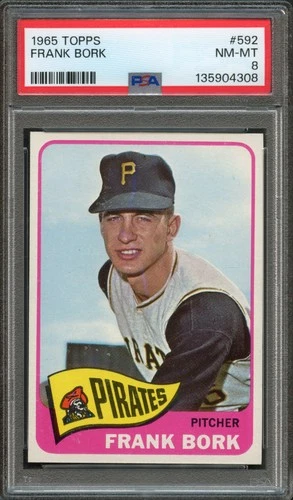
The 598-card 1965 set uses a large color photograph with a team pennant in the lower corner. Steve Carlton’s rookie appearance is among the notable checklist entries. The design provides a natural theme for a team collection because the team graphic remains prominent without overwhelming the image.
Inspect the full white border and the narrow printed frame for centering, then check the pennant and portrait for surface defects. Keep ordinary player cards separate from multi-player and special-design cards when defining a display. The high-number portion needs its own inventory attention even when the low-number run is nearly complete.
1966 Topps: the diagonal team banner
The 1966 issue also has 598 cards, but its team identification sits in a diagonal upper banner. A lower panel holds the player’s name and position. The equal checklist size should not lead collectors to reuse the previous year’s inventory: numbering, subjects and tougher cards are different.
Recognized differences include trade notices and checklist typography. A listing that claims one of these distinctions needs a photograph of the actual text, often on the reverse. Record the variant explicitly instead of labeling the card merely as an error, which can obscure whether the claim is a corrected notice, a checklist difference or a printing flaw.
1967 Topps: open photographs and printed signatures
The 609-card 1967 set puts a large photo inside a white border with player information above and team lettering below. Printed signatures are a familiar element of the ordinary fronts. The rookie cards of Tom Seaver and Rod Carew are among the major collecting targets, and both appear on multi-player rookie designs.
Document the complete rookie-card identity rather than only the future star’s name. The later-numbered portion contains other meaningful obstacles for a full set. For ordinary player cards, distinguish the printed signature from any added autograph and inspect the open photographic area for scratches, creases and registration quality.
Planning for late-series cards
A set-building spreadsheet should track every basic number and identify the series or checklist group where useful. This makes it clear whether a strong completion percentage is concentrated in easier material. Write out the missing stars and rookies rather than leaving their importance hidden inside a count.
A player or team collection needs a different definition: decide how league leaders, team photos and shared rookie cards will be treated. Those choices affect completeness more than the number of ordinary player portraits. Keep optional variations in a separate column so they do not continually change the finish line.
Condition comparisons across white-bordered designs
White borders can make centering easy to judge, but they also reveal toning and dirt. Compare all four corners and both sides. A clean face and a higher numerical grade do not guarantee the same eye appeal, especially if one card has an unusually uneven border or distracting print defect.
Save an uncropped image and certification details for each purchase. When a variation premium is involved, preserve the close-up that proves the attribution. A three-year run becomes far more useful as a reference collection when the record explains what each card is and why that particular example was chosen.
Sources & further reading
Primary references for the terminology and factual details discussed above.
Explore the actual listings.
Read the item description, photographs, condition notes and terms on eBay. Selection and availability change.
Browse Current Sports Cards Inventory ↗Explore Graded & Vintage Baseball Cards ↗