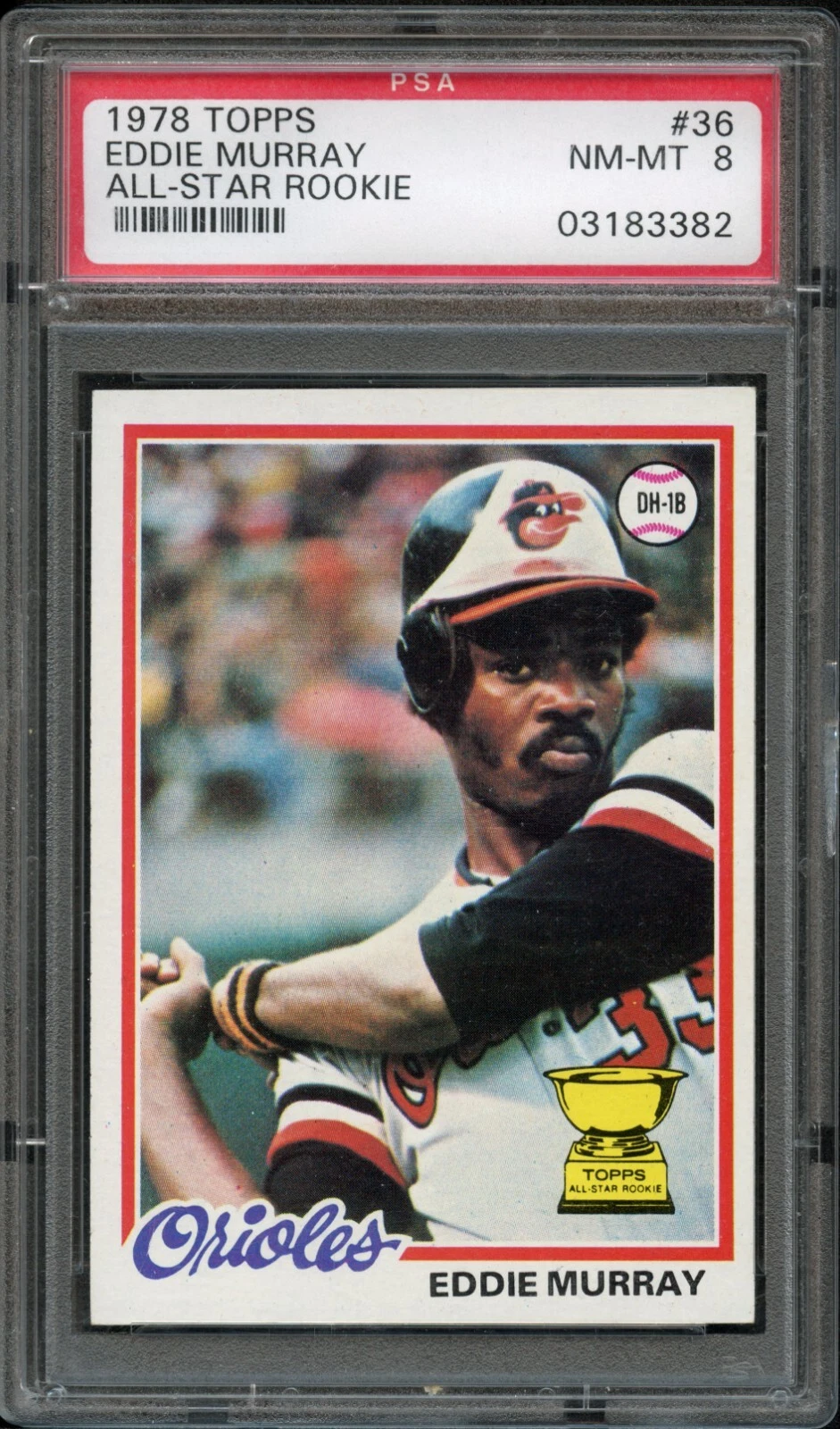
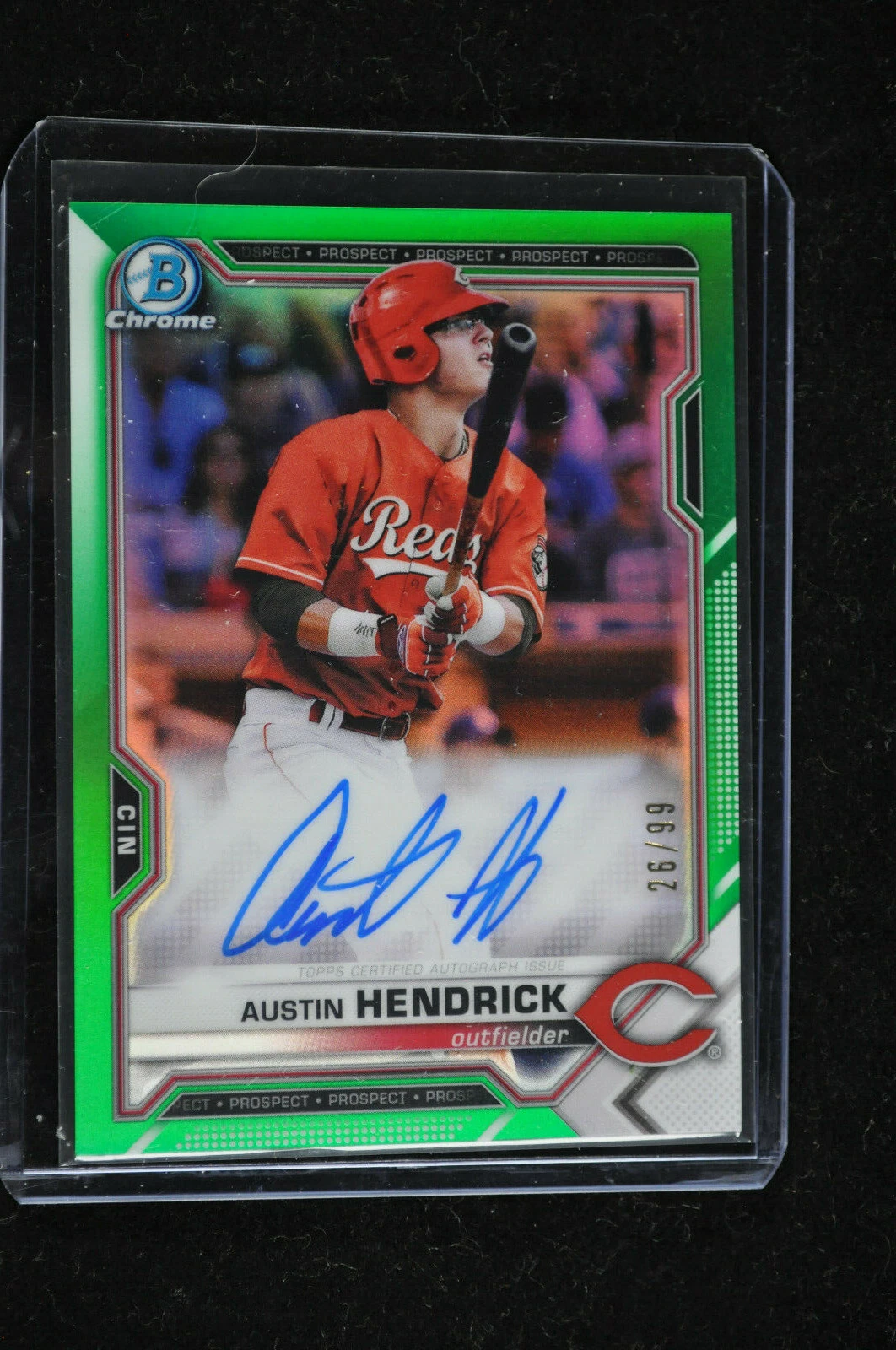
1975 Topps: two-color borders and major rookies
The standard 1975 set uses two-tone full-bleed borders and printed signatures. George Brett and Robin Yount have individual rookie cards; Gary Carter, Jim Rice and others appear in the multi-player rookie portion. Retrospective cards also bring earlier stars and designs into the checklist.
Inspect the colored corners and every edge closely, because pale wear interrupts the design. Separate an ordinary player card from a commemorative appearance when building a player list. A retired star pictured on a 1975 retrospective is still a 1975 card, not an original example of the earlier design reproduced within it.
1975 Mini: the same subjects in a different format
Topps also issued a smaller 660-card Mini set. It is a separately collected format, not a description for an unusually short standard card. The similar front designs make photographs without a size reference easy to misread.
Record Standard or Mini in the inventory and confirm the holder attribution or physical dimensions before comparing examples. Do not infer a Mini designation solely because a raw card seems smaller in a seller’s photograph. Use correctly fitted storage, and do not mix the two formats in a completion count unless that combination is an explicitly chosen type project.
1976 Topps: photographs and position silhouettes
The 1976 issue puts a large color photograph above two caption panels, with a small action figure identifying position at the lower left. Father and Son, league-leader and other themed cards vary the checklist. Hank Aaron’s final active-player Topps card and Dennis Eckersley’s rookie are among the notable subjects.
For a themed collection, distinguish a father-and-son card from either player’s ordinary appearance. The white perimeter makes centering and toning visible, while the broad photo deserves a check for scratches and print quality. A small dark mark should be assessed from a clear image rather than guessed to be either printing or wear.
1977 Topps: signatures and the position pennant
The 1977 design uses a player photograph and printed autograph, with name and team along the top and a small position pennant at the upper right. Big League Brothers and Turn Back the Clock cards offer additional collecting themes. Bruce Sutter’s rookie and Brooks Robinson’s final active-player card are notable checklist entries.
The printed autograph is part of the card, so identify any added signature separately. When cataloging a retrospective card, use the year printed for the actual issue rather than the year of the event it commemorates. That distinction keeps player collections and price comparisons accurate.
Three equal-size checklists with different goals
A 660-card count is only the beginning of the definition. Decide whether your 1975 project is Standard or Mini and whether commemoratives, leaders and shared rookies are required in a team or player collection. Use one basic checklist per annual issue and track format or optional variants separately.
Evaluate partial sets by the cards included, their condition and the missing names. For a type collection, choose examples that make each design’s distinguishing features visible. Preserve uncropped images and certification details, then compare cards with the same issue, format and attribution before considering a price difference.
Sources & further reading
Primary references for the terminology and factual details discussed above.
Explore the actual listings.
Read the item description, photographs, condition notes and terms on eBay. Selection and availability change.
Browse Current Sports Cards Inventory ↗Explore Graded & Vintage Baseball Cards ↗