1978 Topps: script teams and a position baseball
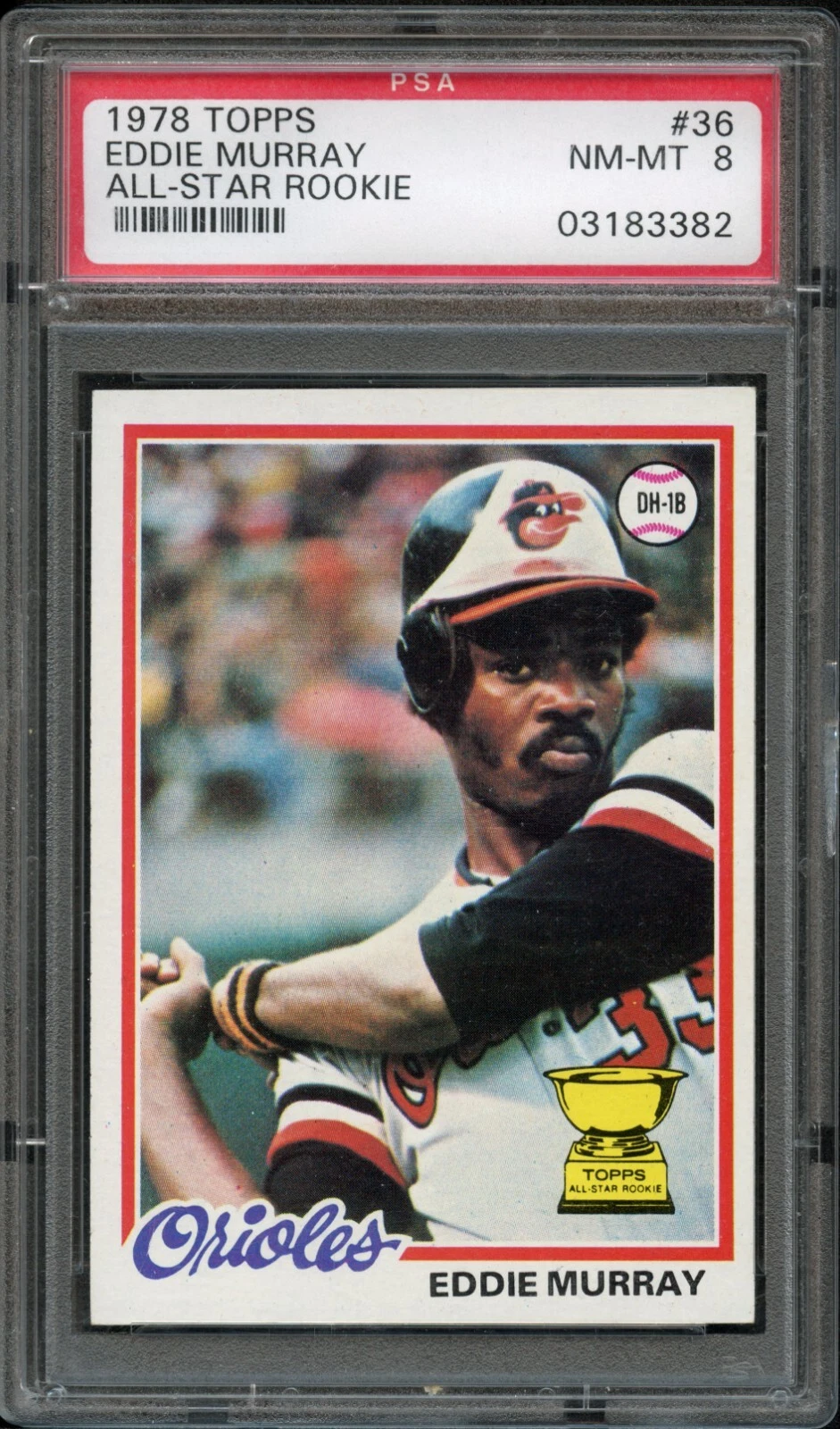
The 1978 design places the team in script near the bottom, with a small baseball at the upper right identifying position; many All-Star cards use a shield there instead. Eddie Murray has an individual rookie card. The four-player Rookie Shortstops card includes Paul Molitor and Alan Trammell, so both names belong in a precise record of that card.
Do not confuse a shared rookie with separate individual rookie cards merely because listings emphasize one future star. Record its number and full checklist identity. On ordinary player cards, inspect the broad photo for print clarity and the small position graphic for damage or a claimed design variation.
1978 variations and print distribution
The Larry Hisle card is known with and without stitching on the small baseball graphic. This is a visible, card-specific detail. A listing that advertises the variant should provide a photograph sharp enough to establish it rather than relying on a general stock image.
PSA also notes that part of the set was printed more often to fit the sheet layout. That production fact does not supply a current market price or prove that any particular card is available in your desired condition. Use it as checklist context, then examine actual comparable examples and the card being offered.
1979 Topps: the lower-corner baseball logo
The 1979 design moves the small baseball with the Topps logo to the lower left. Ozzie Smith’s rookie is a prominent collecting target, with centering an especially useful comparison point. The set also includes team-based Prospect group cards, so the rookie portion should be read by actual card identity rather than by a star-only list.
Inspect the balance of all four borders and the placement of the printed image. A visually tilted or narrow border deserves attention even when the face is sharp. Compare both sides before deciding which example has the eye appeal you want.
Bump Wills: Rangers and Blue Jays wording
The 1979 Bump Wills card exists with Blue Jays and Rangers team identification. The Rangers version corrects the erroneous Blue Jays designation. The visible team wording, not a seller’s generic error-card label, establishes which example is present.
Keep both versions distinct in a variation collection. Avoid repeating unsupported production percentages or assuming that an error designation guarantees a premium. If purchasing specifically for the variation, retain the front photograph and the exact catalog attribution alongside the condition record.
Planning the end-of-decade collection
A two-year player or team run provides a manageable alternative to two complete 726-card sets. Decide whether leader cards, All-Stars and shared rookies count toward your goal. A complete-set project should track marked checklists and the condition of important rookies individually instead of assigning one vague grade to the entire box.
Use the same inspection sequence for ordinary cards and stars: identity, front, corners and edges, reverse, then any certification record. Save source photographs and note whether the image is the actual item. Matching issue, variant and condition makes later comparisons useful and prevents a familiar player name from concealing a different card.
Sources & further reading
Primary references for the terminology and factual details discussed above.
Explore the actual listings.
Read the item description, photographs, condition notes and terms on eBay. Selection and availability change.
Browse Current Sports Cards Inventory ↗Explore Graded & Vintage Baseball Cards ↗